Quick Answer
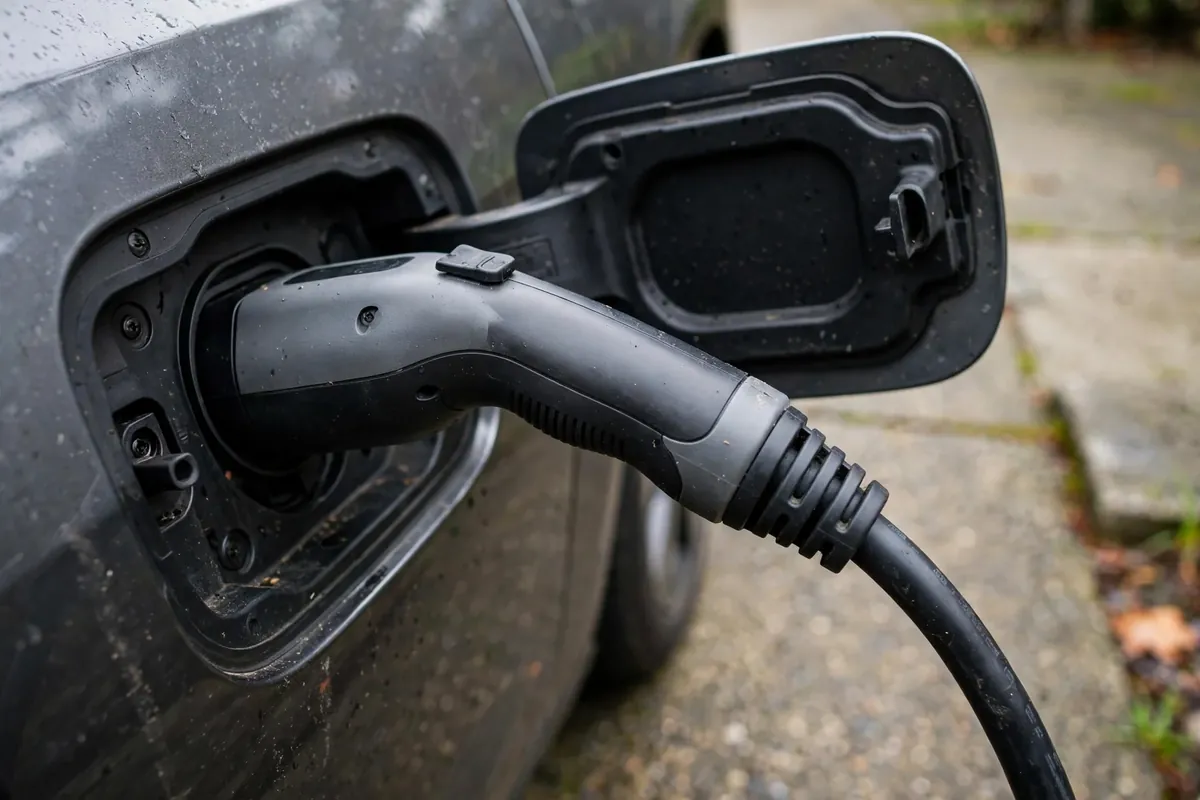
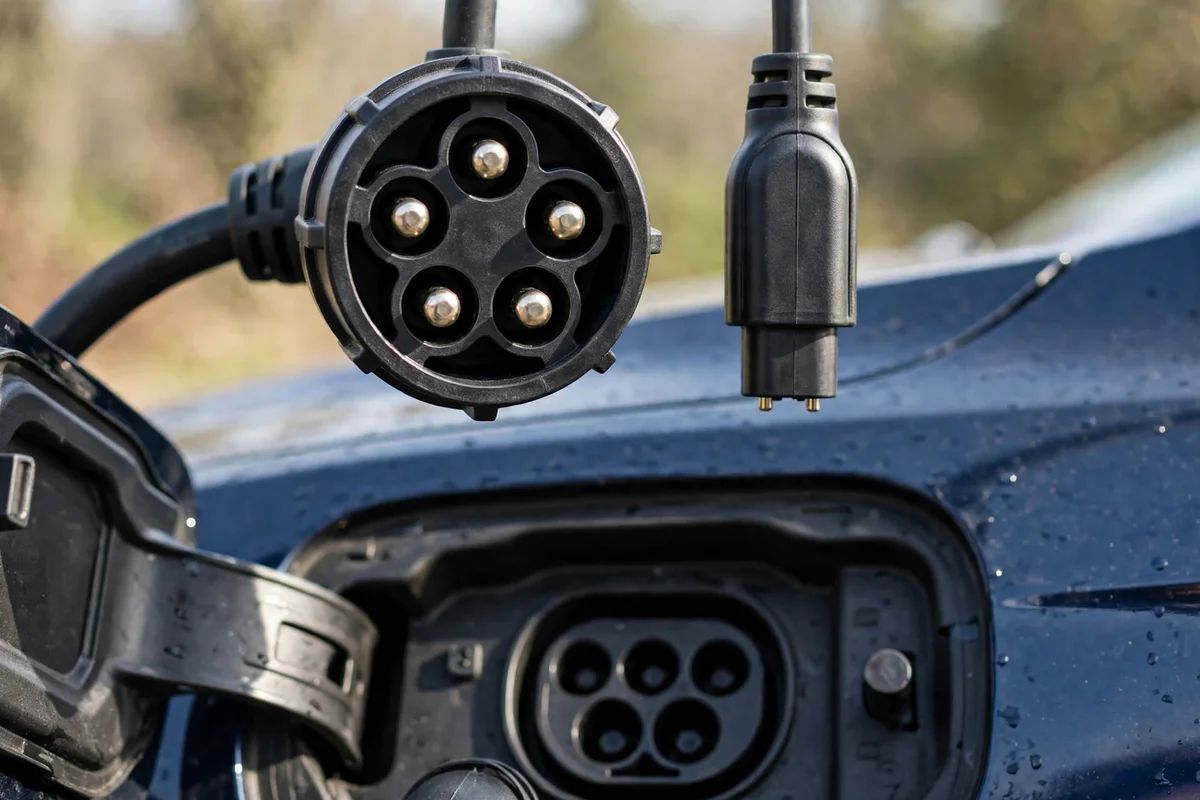
At home, an EV charges on alternating current (AC) through one of two connectors. The first is J1772, the round five-pin connector used by most non-Tesla cars sold in North America for home charging. The second is NACS, the slimmer connector used by Tesla cars, which other makers have been adopting for newer models. A home charger comes with one of these connectors attached to its cable, and the car's charging port accepts one of them. When the two do not match, an adapter — a short bridging device that converts one connector shape to the other — closes the gap for AC charging.
That is the whole system at the level most owners need, but the details matter in practice: adapters have limits, cable length is a daily convenience question that cannot be fixed cheaply after installation, extension cords are not a safe substitute for a longer cable or a relocated charger, and the plug-in versus hardwired choice changes which connector question you are even asking. This guide walks through each of those details for Orlando households, including households with two cars of different makes, households planning a car change, and households whose parking layout makes cable length a real constraint.
Two cautions up front. First, the fast-charging connector you see at public DC stations — CCS, with its two extra large pins below the AC connector — is a different subject from home charging, and it is covered only briefly here, in section 8, because it does not change what you install at home. Second, this guide is about connectors and adapters, not about choosing a charger model or sizing a circuit. For circuit sizing, see the breaker and wire sizing guide; for the plug-in versus hardwired decision, see the NEMA 14-50 versus hardwired comparison; for the Tesla-specific ownership picture, see the Wall Connector ownership guide.
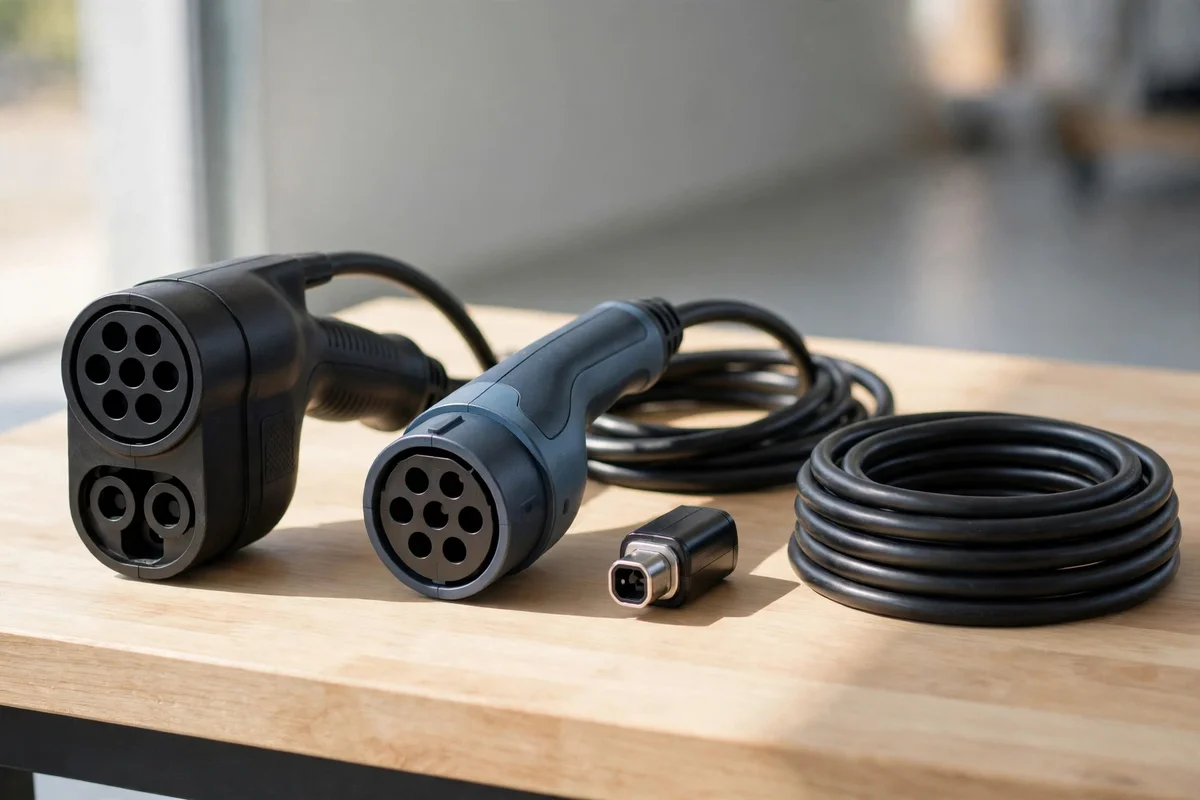
1. The Two Home Connectors: J1772 and NACS
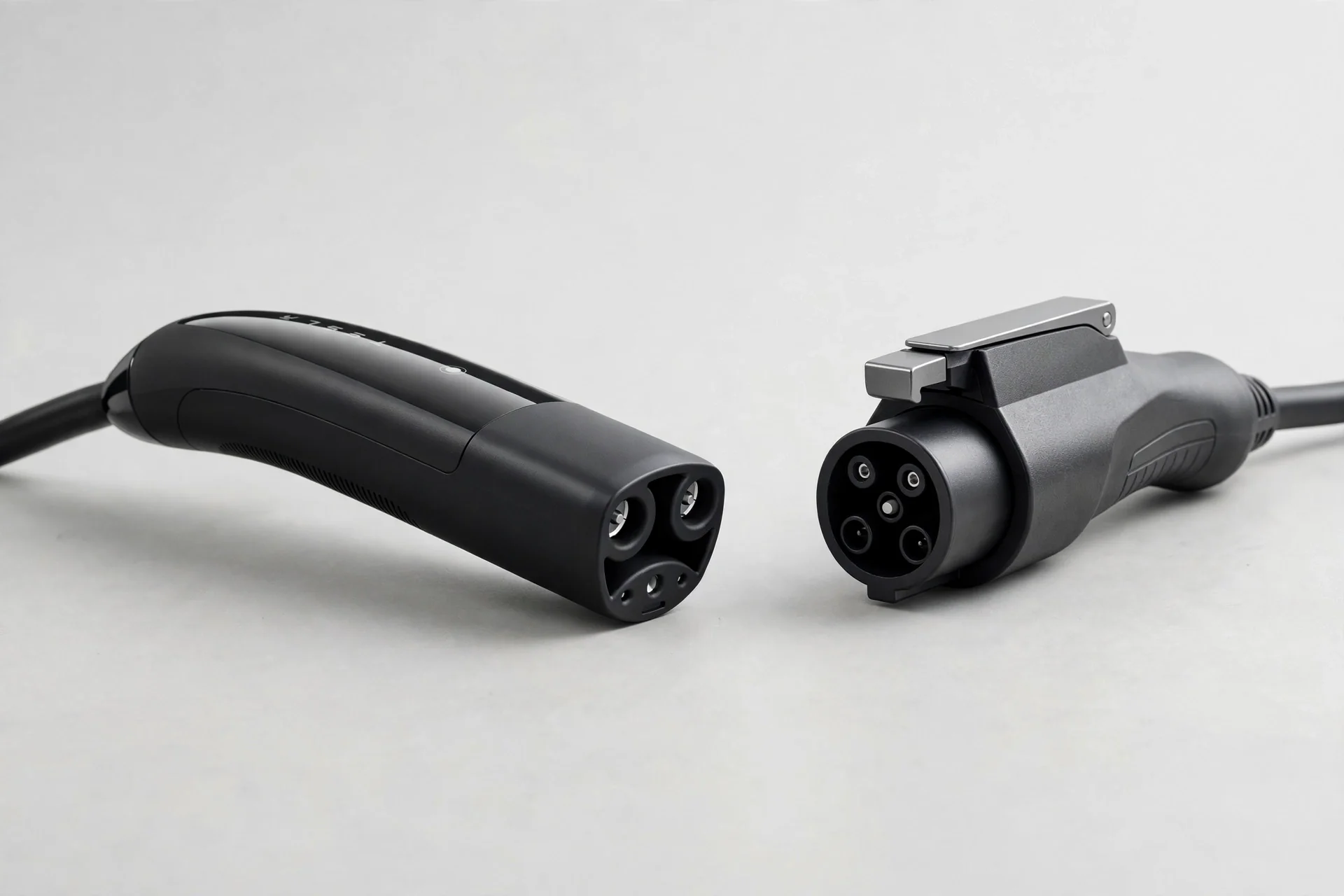
J1772 is the long-standing North American standard for AC charging. It is a round connector with five pins, it latches into the car's port with a thumb release, and it has been fitted to the great majority of non-Tesla electric cars for home charging. If your car is not a Tesla and it was built for the North American market, its home charging port is very likely J1772, and a charger with a J1772 handle plugs straight in with no adapter at all. The connector is also the one public AC charging posts commonly use, which is why a J1772 car charges at most public Level 2 posts without any extra equipment.
NACS is Tesla's connector, slimmer than J1772 because it combines AC and DC charging into a single smaller plug shape. Tesla cars use it natively, and Tesla's home charger — the Wall Connector — carries it. In recent years, several other car makers have announced a move to NACS for new models, which means the connector landscape for new cars is in transition: a car bought today may use J1772, while the same maker's next model year may use NACS. That transition is the reason adapters have become a household item rather than a niche accessory, and it is also the reason a charger choice made today should consider the next car, not just the current one.
The practical difference between the two at home is only the plug shape. Both deliver AC power to the car's onboard charger, both charge at the same Level 2 currents when the circuit allows, and neither is inherently faster at home than the other. Speed at home is set by the circuit, the charger's configured current, and the car's onboard charger limit — not by whether the handle says J1772 or NACS. Owners sometimes assume the slimmer connector must be the faster one, or the larger one must be the more capable one. Neither assumption holds. What matters is that the handle fits the port, the circuit supports the current, and the car accepts it.
2. Which Connector Fits Your Car
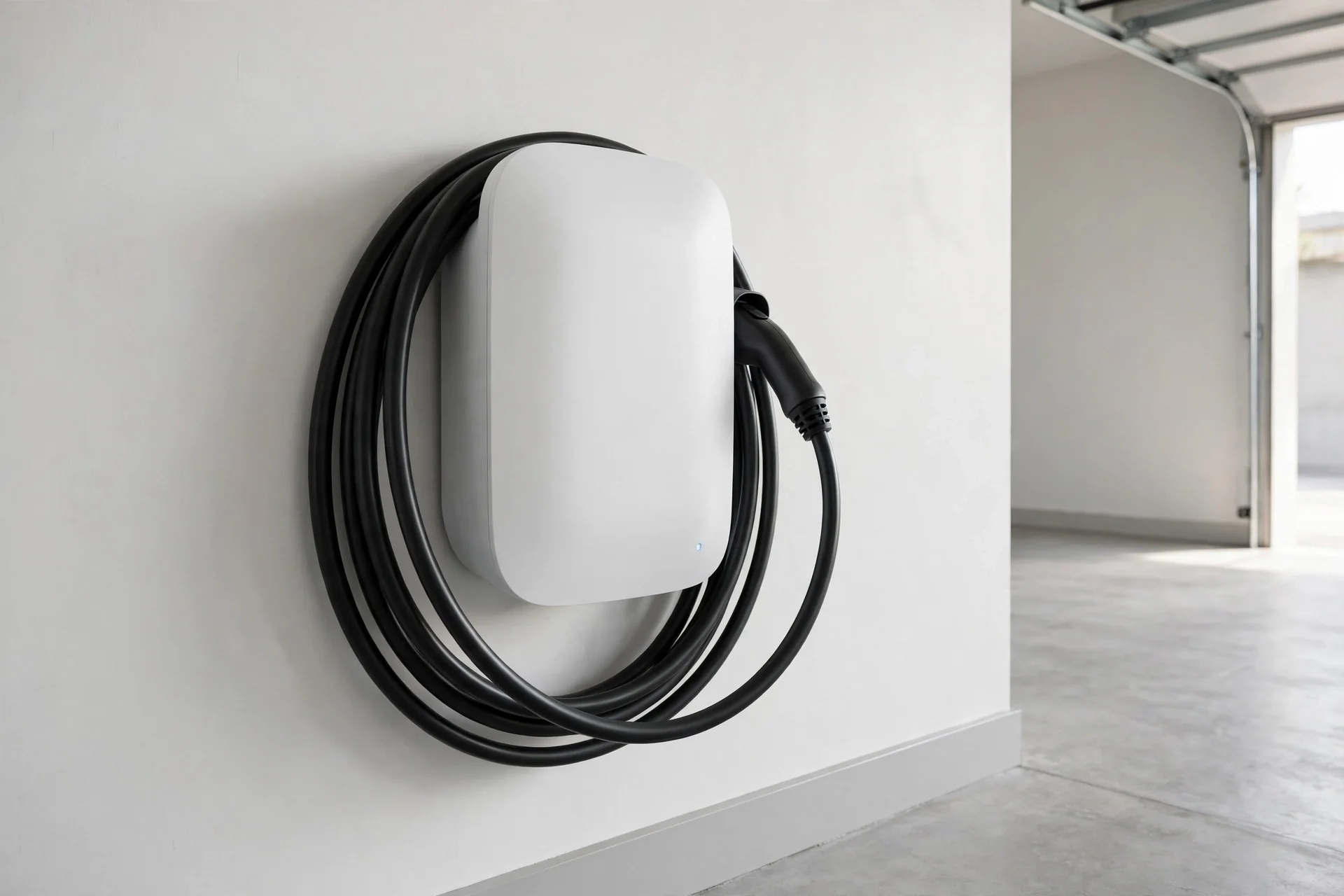
The reliable way to answer this is to look at the car, not at a list. Open the charging port door and compare the port shape with the two descriptions above, or check the charging section of the car's manual, which names the connector type. For a Tesla, the answer is NACS. For most other makes, the answer is J1772, with newer models increasingly arriving with NACS. If you are buying a car and have not taken delivery yet, ask the dealer to confirm the connector type in writing, because a charger ordered before the car arrives is a common source of mismatch.
Households with two cars need this answer twice, and the two answers may differ. A Tesla and a non-Tesla in one garage is now an ordinary combination, and it is covered in depth in the two-EVs guide. The connector question for such a household has three possible solutions: a charger with a built-in dual connector (such as a Universal Wall Connector, which carries an adapter built into the handle), one charger per car with each charger matched to its car, or a single charger plus a separate adapter for the second car. Each solution works; they differ in convenience, in what you carry, and in what happens when a guest or a future car enters the picture. The adapter section below covers the third solution's limits.
A related question is what happens when you change cars. A J1772 charger does not become useless when a NACS car arrives, and a NACS charger does not become useless when a J1772 car arrives — an adapter bridges either direction for AC charging, as section 3 explains. What changes is convenience: a household that changes connector types will be handling an adapter on every session unless it changes the charger handle or the charger. That is a reason to think about the next car when choosing a charger, and to prefer, where the choice is open, a charger whose handle can be adapted or whose maker offers a handle swap. The replace-or-upgrade guide covers the charger-change decision more broadly.
3. Adapters: What They Do, and What They Do Not Do
An AC charging adapter is a short device with one connector type on one end and the other on the other end. You attach it to the charger's handle, plug the combined assembly into the car, and charge normally. Adapters for home AC charging are passive devices — they change the plug shape and pass the current through — and they are rated for AC charging at the currents home chargers deliver. Used within those limits, an adapter is an ordinary part of a charging setup, not a workaround to be embarrassed about.
Adapters also have firm limits, and respecting them is the whole safety story. First, an AC adapter is for AC charging only. It must never be used to connect a car to a DC fast charger it was not designed for, and it must never be used to adapt a DC connector shape at a public fast-charging post. The DC fast-charging world has its own adapters, its own ratings, and its own risks, and the two must not be mixed. Second, an adapter has a current limit, and it must suit the charging current the setup will actually use. An adapter rated below the charger's configured current is the wrong adapter for that setup, however well it fits mechanically. Third, an adapter must be in good condition: cracked housing, bent pins, heat discoloration, or a loose fit are all reasons to retire it, not to keep using it while watching for trouble.
Heat is the practical check for adapter use. A correctly matched adapter in good condition should not run more than mildly warm during a session. If an adapter feels hot, if the car reports a charging fault, or if charging repeatedly stops early when the adapter is in use, stop using it and have the setup checked. Heat at a connection point means resistance at that connection, and resistance at a connection carrying sustained current is a problem to solve, not a nuisance to tolerate. The noise-and-heat article explains the same principle for chargers generally: warmth is normal, heat is a signal.
One more adapter caution: buy adapters from the car maker, the charger maker, or a supplier whose product is listed for the purpose, and avoid unbranded adapters of unknown provenance for a circuit that carries sustained current for hours. The adapter is the smallest and cheapest part of the charging chain, and it is also the part most often bought hastily. A listed adapter from a known source, matched to the charging current, is a small purchase that protects a large one.
4. Cable Length: The Decision You Live With Every Day
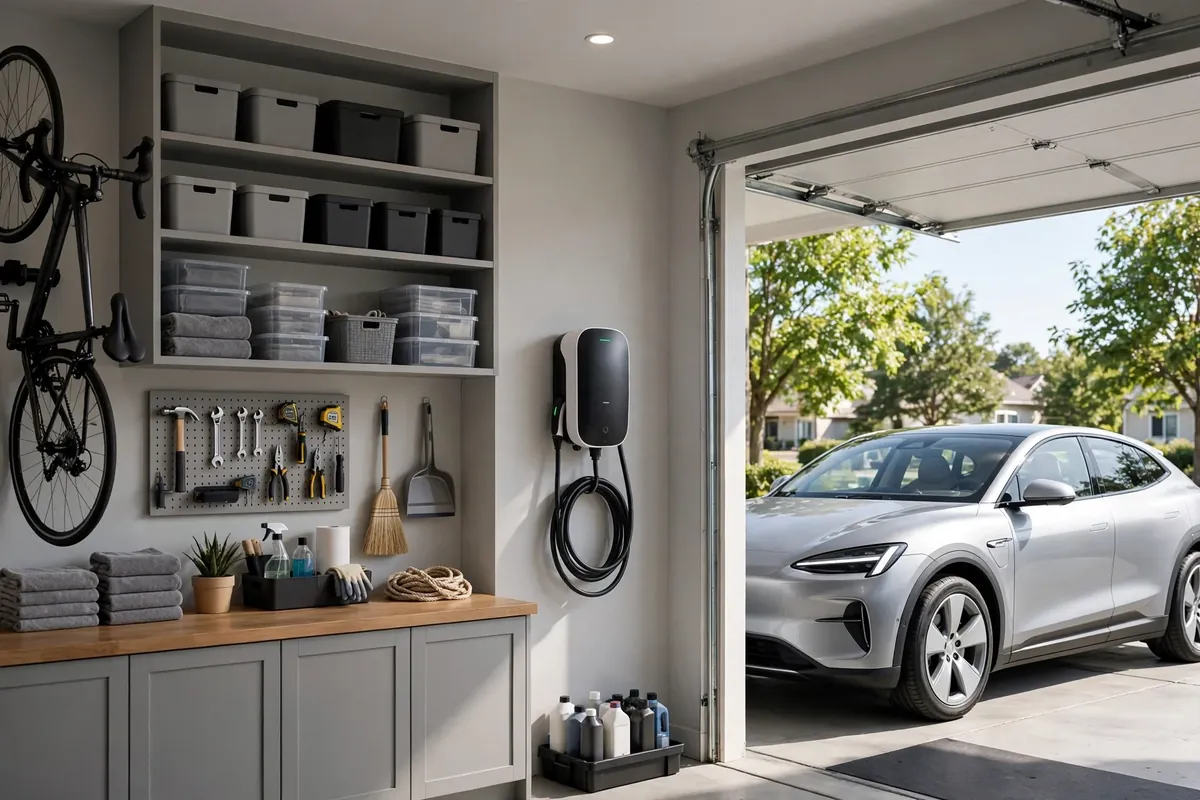
Cable length is the most underestimated decision in a home charging installation, because it is the one you interact with on every single session. A cable that is slightly too short means parking in exactly one position, stretching the cable across a walkway, or discovering on a rainy night that the car cannot reach the charger from where it is parked. A cable that is generously long means parking anywhere in the bay, routing the cable safely along the wall, and never thinking about it again. The difference between those two experiences is usually a few feet of cable chosen at purchase time, and it cannot be fixed afterwards without changing the charger, moving the charger, or buying a different cable — all of which cost more than choosing correctly at the start.
The right way to choose is to measure, not to guess. Park the car where it will normally sit, measure from the charger's planned position to the car's charging port along the route the cable will actually take — along the wall, around any obstruction, with slack for the cable to hang or rest without pulling — and add a margin for the days the car parks slightly differently. Port position varies by car: some cars carry the port on the front fender, some on the rear quarter, some at the nose. A charger position that works for a front-port car may be awkward for a rear-port car, and a household planning a car change should measure for both positions or choose a charger position and cable length that serve both.
Common home charger cable lengths run from around 18 feet to around 25 feet, with some units offering shorter or longer options. For a single-car garage with the charger on the wall beside the parking bay, the shorter end of that range is usually plenty. For a two-car garage where one charger may serve either bay, for a driveway installation where the car parks at varying distances, or for a charger mounted on a wall that is not adjacent to the parking position, the longer end is the safer choice. The outdoor installation article covers cable routing and protection for driveway and exterior installations, where length and exposure interact.
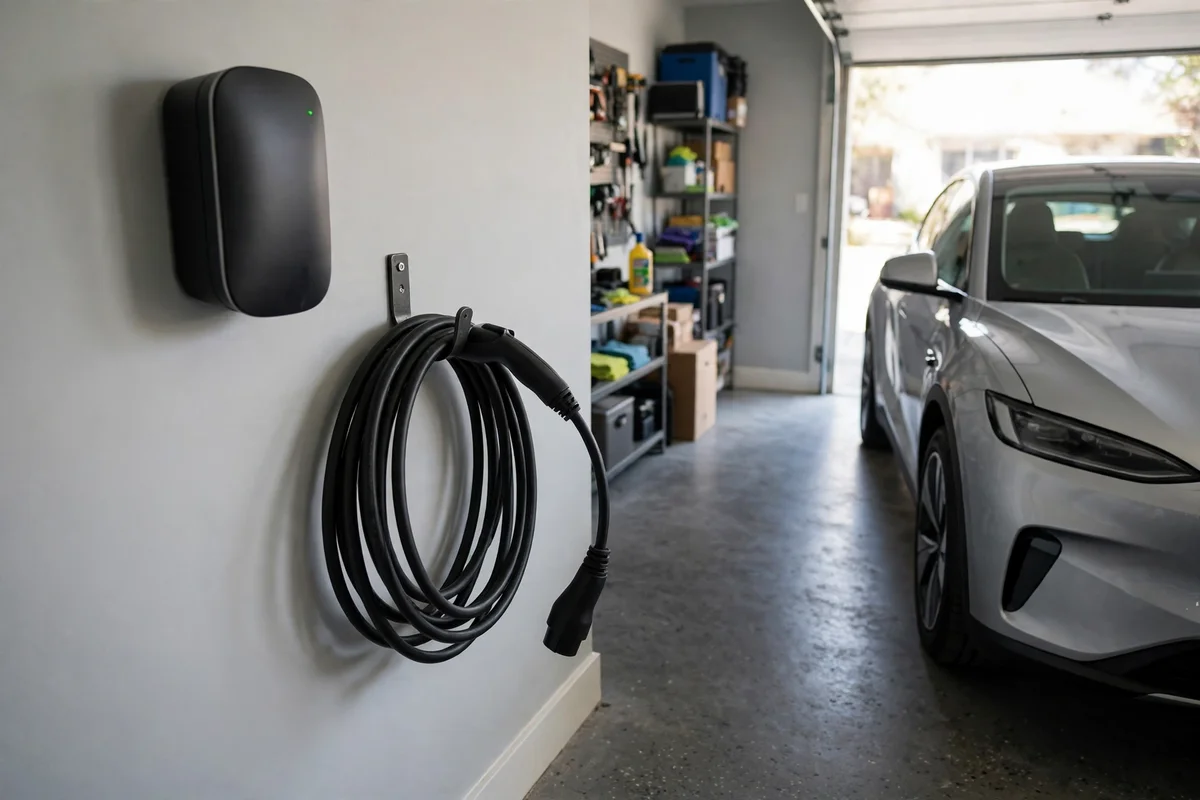
Cable management is part of the length decision. A long cable that is left on the ground gets driven over, tripped over, and damaged, which is why chargers include a holster or hook for the handle and why a cable management hook or reel is worth fitting at installation time. The habit matters as much as the hardware: dock the handle after every session, keep the cable off the floor, and keep the connector clean and dry. The maintenance guide covers the inspection routine, and the lifespan guide covers what wears out first — usually the cable and connector, which is exactly why protecting them pays.
5. Extension Cords: Why They Are Not a Charging Solution
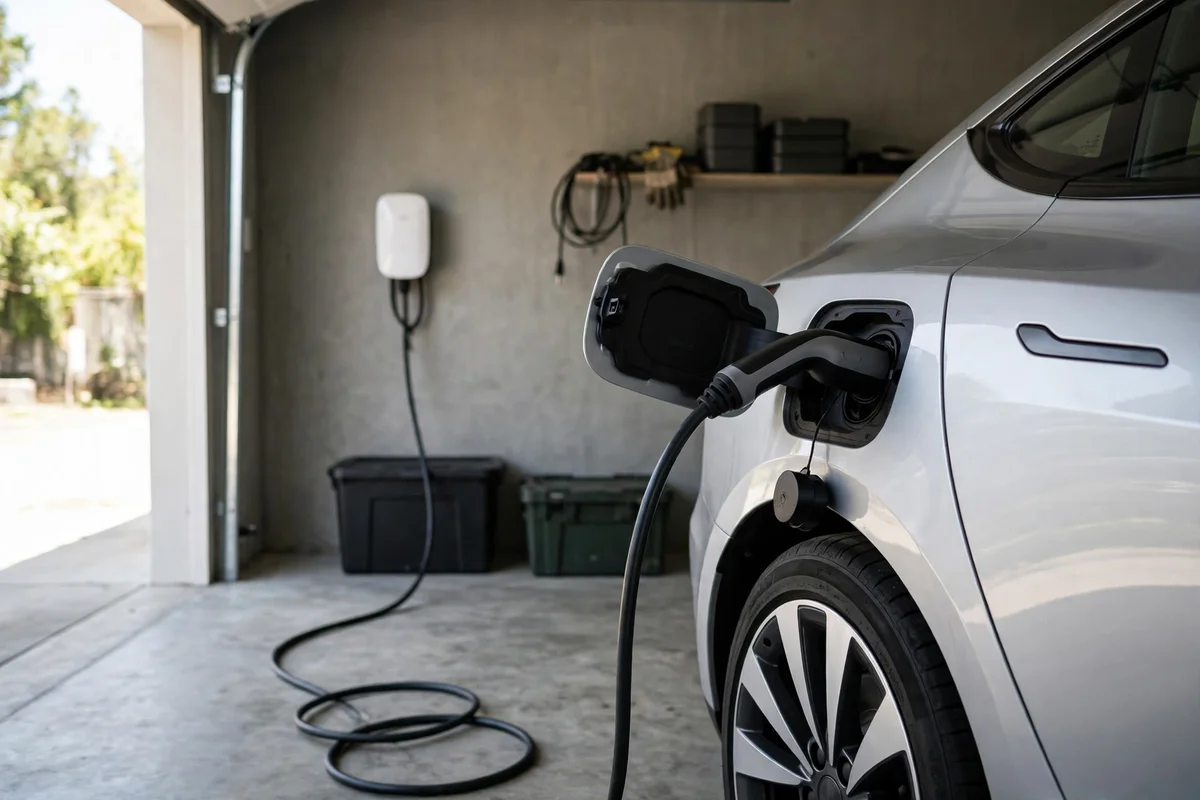
This section can be short, because the answer is short: do not use an extension cord to extend an EV charging cable. Home EV charging draws sustained current for hours, and ordinary extension cords are not designed for that duty. Even a heavy-duty cord introduces extra connection points, each of which can heat up, loosen, or admit moisture, and a cord run across a garage floor or driveway is a trip hazard and a damage risk. The connection between the charger cable and an extension cord is also an unprotected joint in exactly the place where rain, dust, and foot traffic are most likely to reach it.
If the cable does not reach, the correct remedies are, in order of preference: move the car closer to the charger, relocate the charger to a better position on a properly installed circuit, choose a charger with a longer cable, or install a second charging point. All of those are real work with real scope, and the cost-factors article explains why distance changes installation scope. None of them is as cheap as an extension cord, and that is the point: the extension cord looks cheap because it moves the risk off the invoice and onto the household. A charger installation that needs an extension cord to function is an installation whose charger position or cable length was not planned correctly, and the fix is to correct the plan, not to extend the cord.
There is one narrow exception worth naming so it is not confused with the general rule: some charger makers supply a manufacturer-approved extension or a longer replacement cable for their own units, designed and listed for that unit. A maker-supplied cable for the same unit is a different thing from a generic extension cord, and it is the only extension worth considering. If your charger maker does not offer one, that is the answer. Generic cords, dryer-outlet splitters, and multi-outlet adapters have no place in a home charging setup, and the DIY versus professional article explains the dryer-outlet version of this warning in detail.
6. Plug-In Outlets and Their Plugs: NEMA 14-50 and Friends
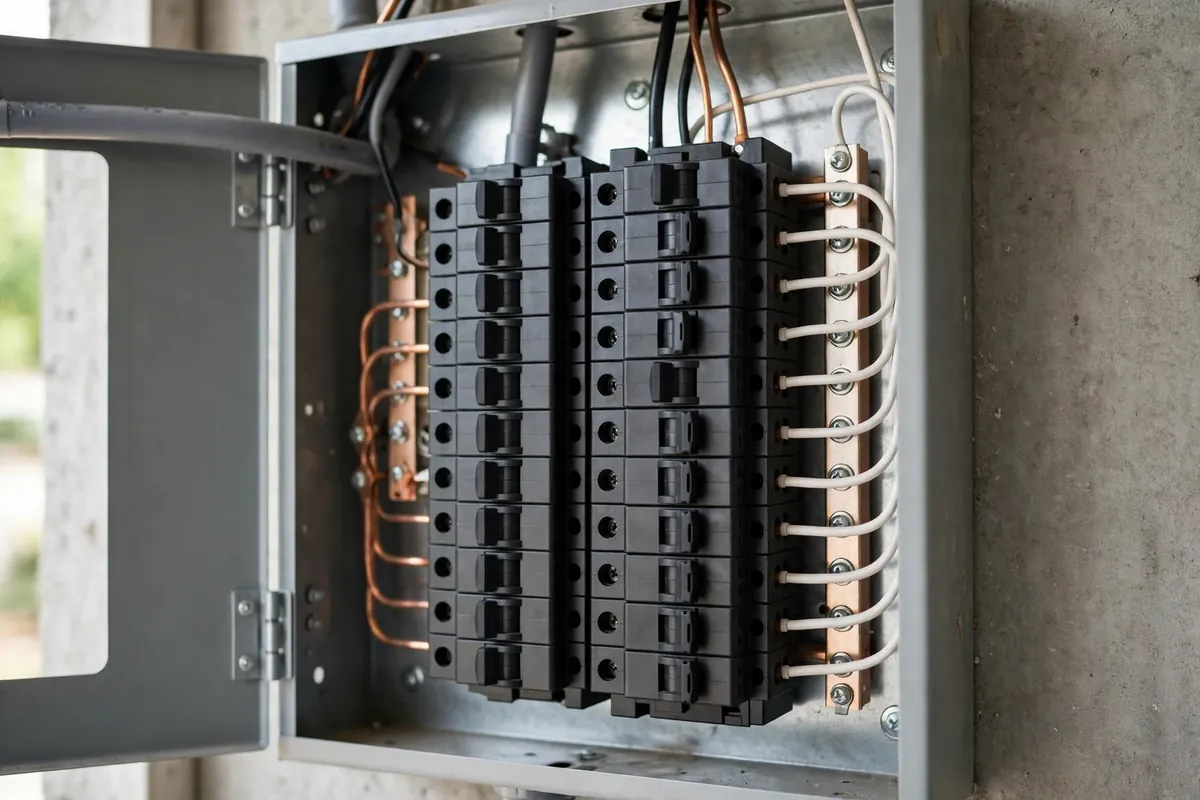
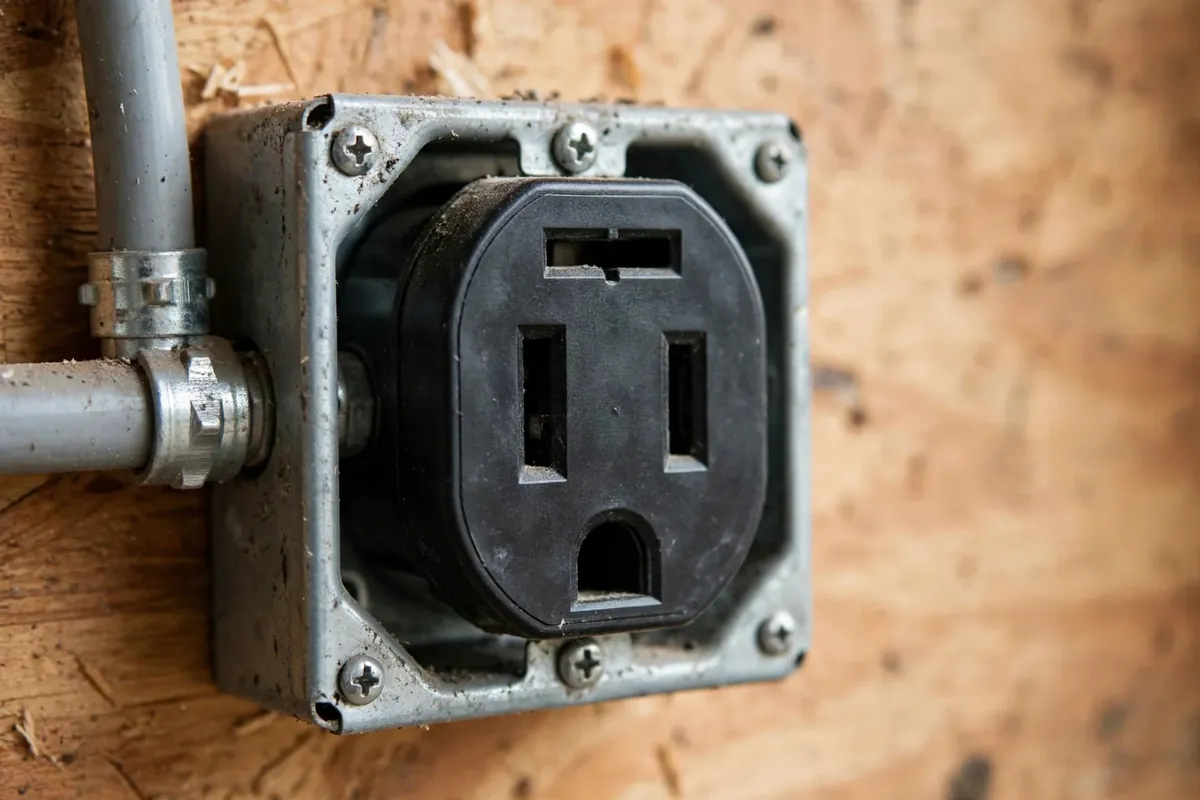
A plug-in charger does not plug into an ordinary household outlet. It plugs into a dedicated high-current outlet, most commonly the NEMA 14-50, a four-prong 50-amp receptacle that is also used for electric ranges. The 14-50's shape is distinctive, its circuit is dedicated, and its continuous-charging ceiling is 40 amps, as the breaker and wire guide explains. A second outlet type you may meet is the NEMA 6-50, a three-prong 50-amp receptacle used for welders and some older charger installations. Both are 50-amp outlets, both cap plug-in charging at 40 amps, and the difference between them is the plug shape and the wiring behind it — a charger with a 14-50 plug does not fit a 6-50 outlet, and no adapter should be used to force the fit for sustained charging.
The outlet's quality matters as much as its type. A receptacle that carries sustained EV current for hours should be an industrial-grade unit specified for the purpose, not a light-duty receptacle chosen for appearance or price. The difference is in the contact design and the materials, and it shows up over time: a light-duty receptacle can loosen, heat, and discolor under sustained load, while a properly specified one holds its grip session after session. If a plug-in installation is quoted, ask what receptacle is specified. The answer should be a named industrial-grade unit, and the installer should be able to explain why.
Outlet position is the plug-in equivalent of cable length planning. A plug-in charger hangs from its outlet, so the outlet's height and position decide where the charger sits, how the cable routes, and whether the handle docks neatly. An outlet placed too high, too low, or on the wrong wall creates the same daily friction as a short cable. Plan the outlet position with the car parked in its normal place, the cable route in mind, and the holster position decided — not as an afterthought once the circuit is run. The what-to-expect article describes the installation-day sequence, including the point at which outlet position is confirmed.
7. Connector Care: Keeping Plugs, Adapters, and Ports in Good Condition
Connectors fail slowly and then suddenly: a little dirt, a little moisture, a few drops onto concrete, a cable left to kink, and one day the handle does not seat, the car faults, or the connection runs hot. The care routine that prevents that is short and worth making habitual. Keep the handle docked when not in use, so the connector is not left on the floor or hanging in rain. Keep the connector and the car's port clean and dry; brush out dust and debris with a dry cloth or soft brush, never with water or solvents, and never force a handle that does not seat — check for debris first. Keep the cable coiled loosely or hung on its hook, without sharp bends or kinks, and never drive over it. And inspect the connector and cable on a regular schedule, as the maintenance guide describes, looking for cracks, cuts, heat discoloration, or a latch that no longer clicks firmly.
Outdoor connectors need one extra habit: a rain cover or a sheltered dock position, as the outdoor installation article describes, and a check after storms for water in the connector or the port. Florida's rain is not a reason to avoid outdoor charging — outdoor chargers are designed for it — but it is a reason to keep the connector protected when idle and to dry it before use if it has been exposed. A connector that is wet inside should be allowed to dry before a session, and a connector that shows corrosion or pitting should be assessed rather than used until it fails.
Adapter care follows the same routine with one addition: store the adapter where it will be used. An adapter kept in a drawer at home is useless to a car that needs it at a public post, and an adapter kept loose in the car can be damaged by sliding around. Keep it in the car's charging kit or attached to the handle where the design allows, inspect it with the same schedule as the connector, and retire it at the first sign of damage or heat. Adapters are consumable safety items in the same sense as cables: cheap to replace, expensive to ignore.
8. The CCS Question, and Planning for the Next Car
Owners sometimes ask whether they should plan for CCS at home, because CCS is the connector they see at public fast-charging stations. The answer is no: CCS is a DC fast-charging connector, and DC fast charging is not a home installation for ordinary households. Home charging is AC charging through J1772 or NACS, and the car's onboard charger converts that AC to DC for the battery. The level comparison article explains the AC and DC distinction in full, including why a Level 3 DC unit at home is not a realistic household installation. If your car has a CCS port, its upper AC portion is the J1772 connector, and that is the part a home charger uses.
Planning for the next car is the forward-looking version of the connector question, and it has a simple answer: prefer flexibility where it costs little. A charger with a built-in dual connector serves both connector types without a separate adapter. A charger whose handle can be swapped by the maker preserves the circuit investment when the connector changes. And a circuit sized for the charging current you expect to need — rather than the minimum for today's car — avoids rework when the next car charges at a higher current, as the breaker and wire guide explains. None of these choices requires predicting the market. They require only recognising that cars change more often than circuits do, and that the circuit and the charger position are the long-lived parts of the installation.
Key Takeaways
- Home AC charging uses two connectors: J1772 for most non-Tesla cars, and NACS for Tesla cars and an increasing number of newer models.
- Connector shape does not set charging speed at home; the circuit, the charger's configured current, and the car's onboard charger limit set the speed.
- AC adapters bridge J1772 and NACS for home charging, within their current limit and in good condition, and must never be used for DC fast charging.
- Choose cable length by measuring the real parking position and cable route, with margin — a short cable is a daily frustration that is expensive to fix afterwards.
- Extension cords are not a charging solution; if the cable does not reach, move the car, relocate the charger, or choose a longer cable.
- A plug-in charger on a NEMA 14-50 outlet is capped at 40 amps of charging current, and the outlet should be an industrial-grade unit specified for sustained load.
- Dock the handle, keep connectors clean and dry, inspect cable and adapter regularly, and retire any connector or adapter that runs hot, cracks, or seats loosely.
- CCS is a public DC fast-charging connector, not a home installation question; home planning should focus on J1772 and NACS flexibility for the next car.
What is the difference between a J1772 plug and a NACS plug?
J1772 is the round five-pin AC connector used by most non-Tesla cars for home charging, while NACS is Tesla's slimmer connector, which combines AC and DC charging in one smaller plug shape. At home, both deliver AC power to the car's onboard charger, and neither is inherently faster than the other — charging speed is set by the circuit, the charger's configured current, and the car's onboard charger limit. The difference that matters day to day is fit: the handle must match the car's port, or an AC adapter must bridge the two.
Will using an adapter slow my charging?
An adapter that is matched to the charging current and in good condition should not slow charging in any meaningful way, because it is a passive device that passes current through. What can slow charging is an adapter used beyond its current limit, a damaged or loose adapter that causes faults, or a charger setting that was lowered when the adapter was fitted. If charging slows only when the adapter is in use, check the adapter's condition and current suitability first, and have the setup assessed if the adapter runs more than mildly warm.
Is it safe to leave an adapter attached to the charger handle?
For a charger that serves one car type most of the time, leaving a matched adapter attached to the handle is common practice and is fine, provided the adapter stays clean, dry, and firmly seated, and the handle is docked after each session. For a charger that serves cars of both connector types, keeping the adapter attached means the other car type needs it removed, which is a small daily step. Either way, inspect the adapter on the same schedule as the connector, and retire it if it cracks, loosens, or runs hot.
Can I use an extension cord with my home EV charger?
No. Home EV charging draws sustained current for hours, and ordinary extension cords are not designed for that duty. Extra joints can heat up, loosen, or admit moisture, and a cord across a floor or driveway is a trip and damage risk. If the cable does not reach, the correct remedies are to move the car, relocate the charger on a properly installed circuit, or choose a charger with a longer cable. The only extension worth considering is a maker-supplied longer cable or extension designed and listed for that specific charger unit.
How long should my charging cable be?
Long enough to run from the charger's position to the car's charging port along the real route — along the wall, around obstructions, with slack — plus a margin for parking slightly differently. Measure with the car in its normal position and allow for the port position of the next car if a change is planned. For a single bay with the charger beside it, the shorter end of the common range is usually enough; for a two-bay garage, a driveway installation, or a charger that is not adjacent to the parking position, choose the longer end. A cable that is slightly too long and well managed beats a cable that is slightly too short every day.
Can I charge at home with a CCS plug?
Not as a home installation. CCS is a DC fast-charging connector used at public fast-charging stations, and DC fast charging is not an ordinary household installation. At home you charge on AC through the upper portion of a CCS-equipped car's port, which is the J1772 connector, using a J1772 home charger or a NACS charger with an AC adapter. The CCS lower pins, which carry DC current at public stations, play no part in home charging.
Related Posts
- What Size Breaker and Wire Does a Level 2 EV Charger Need?
- NEMA 14-50 Outlet vs Hardwired EV Charger: Which Is Right for You?
- Charging Two EVs at Home: One Charger or Two?
- Tesla Wall Connector Ownership Guide: Daily Use, App Settings, and a Second EV
Unsure which connector or cable length suits your car and garage? Call now at (407) 555-0100 — we match the charger, connector, and cable to your car and parking layout across Orlando.
Sources consulted: J1772 and NACS connector documentation for home AC charging, charger maker guidance on adapter use and cable options, and NEC Article 625 provisions for EV charging circuits.