Quick Answer
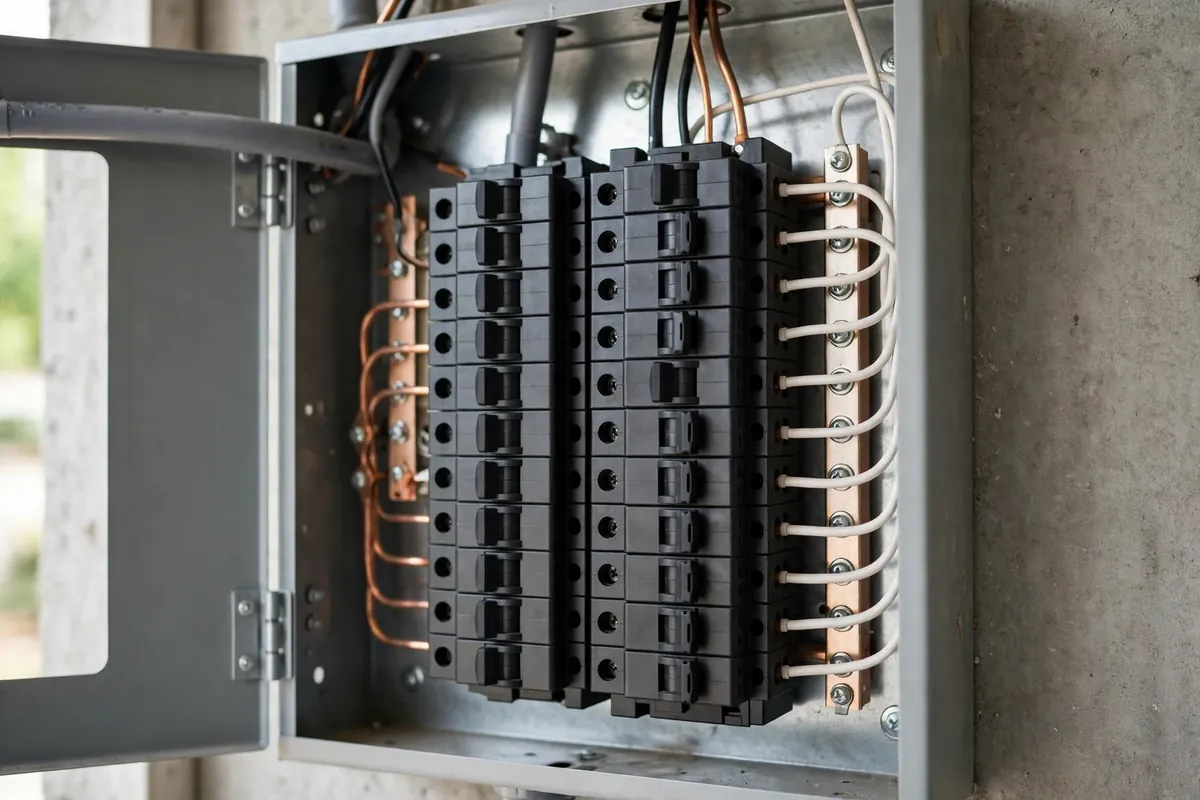
An EV charger trips its breaker when the circuit experiences one of the conditions a breaker exists to stop: more current than the circuit should carry, a short or ground fault, or heat buildup at a weak point. On a dedicated, correctly installed charger circuit, the most common culprits are a breaker that is wearing out, connections that have loosened and are heating under load, a circuit shared with something it should not share, a charger set to draw more than the circuit was built for, or — on plug-in installations — the charger's built-in ground-fault protection arguing with a GFCI breaker or receptacle. One trip can be a fluke. A pattern is a message.
1. First, Read the Pattern: When It Trips Tells You Why
Before anyone opens a panel, the timing of the trips narrows the suspect list dramatically. Notice which of these matches your situation:
- Trips immediately when charging starts. Points to a hard fault: a short, a serious ground fault, a miswired circuit, or a charger drawing far beyond the circuit rating from the first second.
- Trips 30 to 90 minutes into a session. The classic signature of heat. Charging is a continuous load — hours at full current — and marginal connections, a tired breaker, or an undersized circuit tolerate it briefly, then heat up until the breaker lets go. This is the most common pattern of all.
- Trips only on hot afternoons or when the garage is hottest. Heat again, with ambient temperature as the accomplice. Breakers are thermal devices; a breaker in a sun-baked panel starts its day closer to its trip point.
- Trips when something else in the house runs. The circuit is not as dedicated as you thought, or the panel is near its overall capacity and the dryer, oven, or pool pump tips it over.
- Trips randomly, sometimes mid-session, sometimes at plug-in. Ground-fault protection nuisance behavior — common on plug-in chargers behind GFCI breakers — or an intermittent fault in the cable or connector.
Write down your pattern, including the weather and what else was running. That note is worth real money in diagnosis time, whether you troubleshoot further yourself or hand it to an electrician.
2. Cause One: The Charger Is Set Higher Than the Circuit Allows
EV chargers are adjustable, and they must be configured to the circuit they are actually on. A charger capable of 48 amps needs a 60-amp circuit, because charging is a continuous load and the electrical code sizes continuous loads at 125 percent — the charger may only draw 80 percent of the breaker rating. Put a charger configured for 48 amps on a 50-amp circuit built for 40, and you have built a slow-motion trip machine: it may run for weeks in cool weather, then start tripping as summer arrives.
This mismatch happens more often than it should. A charger gets replaced with a more powerful model on the old circuit. A homeowner raises the amperage in the app because the option is there. A unit gets moved from one house to another with a smaller panel. The fix is unglamorous: configure the charger to the circuit it actually has, or have the circuit properly built for the setting you want — which may mean new wire, not just a new breaker, a distinction the next sections return to.
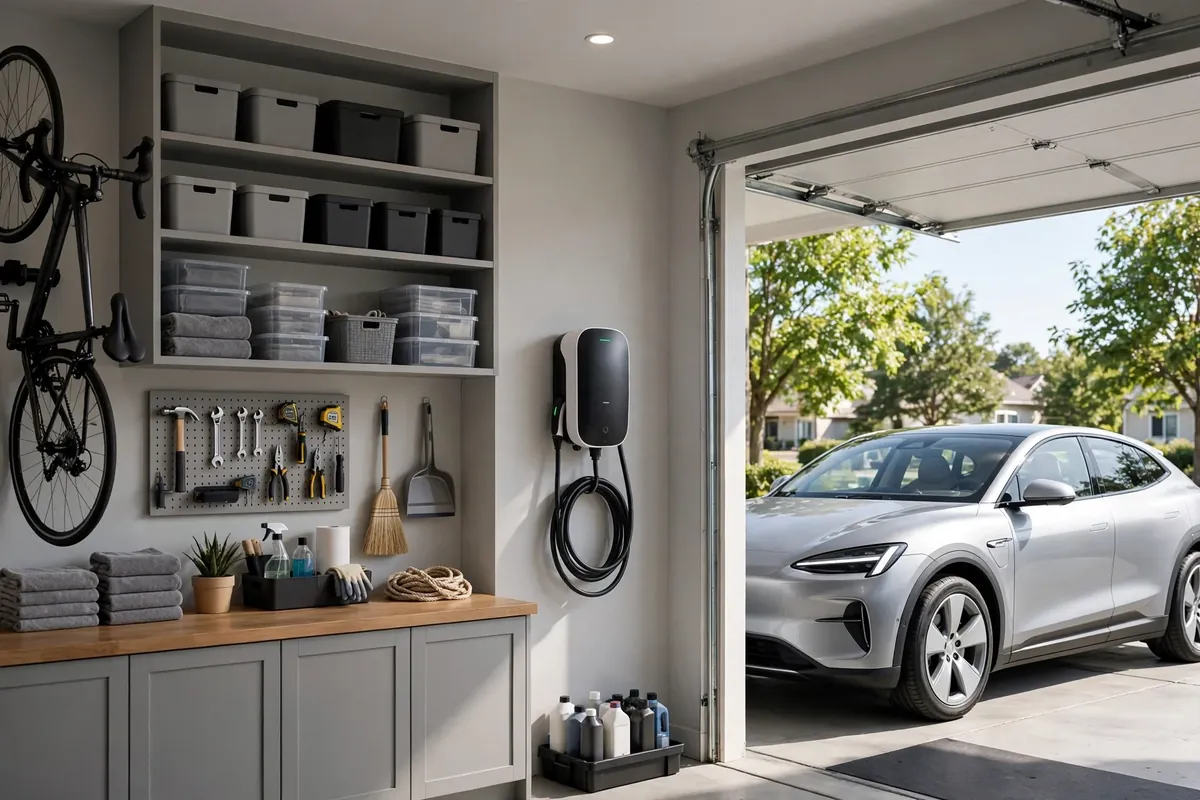
Our Level 2 EV charger installation page explains how circuit sizing is supposed to work when a charger is installed from scratch.
3. Cause Two: A Breaker That Is Wearing Out
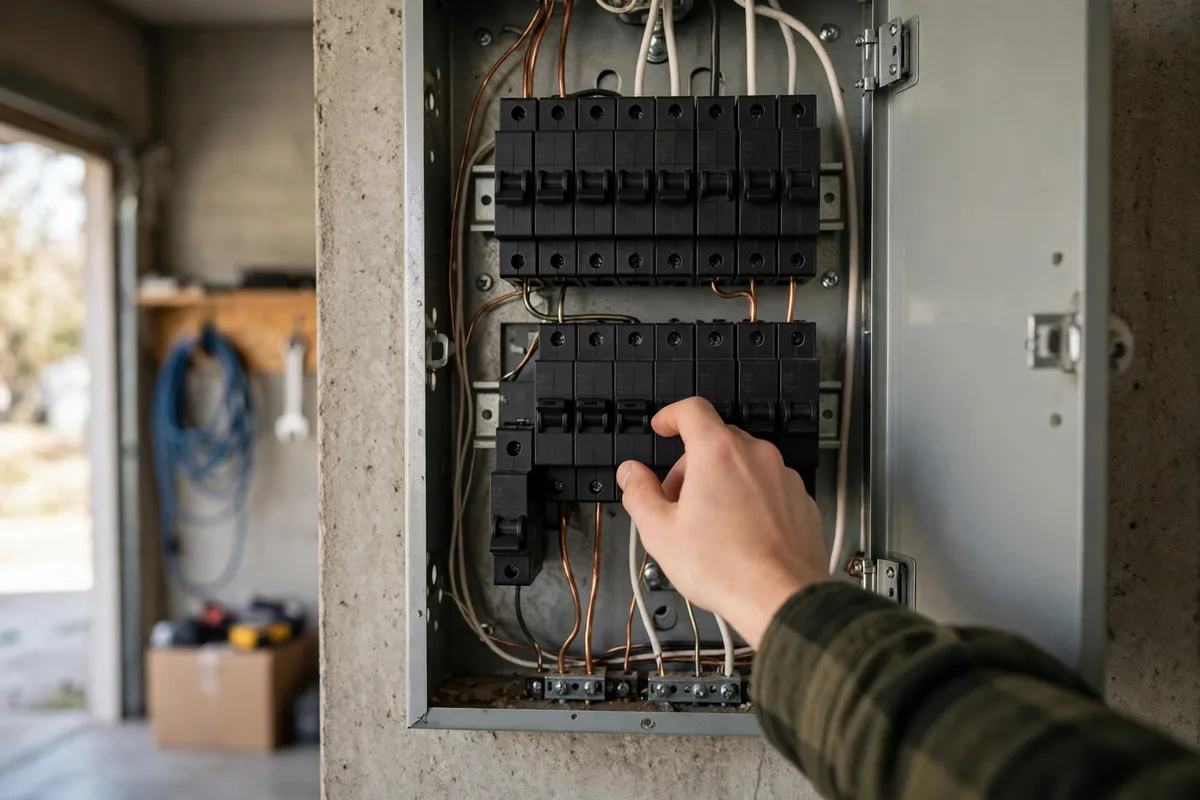
Breakers are mechanical devices with springs and thermal elements, and they age. A breaker that has carried a heavy continuous load for years — exactly what an EV charger gives it — can weaken until it trips below its rated limit. Heat cycles from a hard-working garage panel accelerate this. The tell: trips that happen at the same point in a session, getting gradually more frequent over months, on a circuit that was fine for years, with no changes to the charger or the house.
A related variant is the warm breaker. After a charging session, a breaker for the charger circuit that feels noticeably warm compared with its neighbors is showing stress — from its own wear, from a loose termination where the wire lands on it, or from carrying more than it should. Warmth plus trips is a combination to take seriously and promptly.
Breaker replacement is panel work: a licensed electrician's job, not a Saturday project. The replacement must match the panel's listed breaker types — the era of "any breaker that fits" ending badly is well documented in electrical forums.
4. Cause Three: Loose Connections Heating Up
Electricity passing through a loose connection generates heat at that point, and heat is what thermal breakers sense. Connections loosen over time through thermal cycling: every charging session heats the wire and terminals, every cooldown relaxes them, and years of expansion and contraction can back a marginal connection out to the point where it runs hot under load.
The suspects, in order: the breaker terminals in the panel, the receptacle contacts on a plug-in install (a receptacle's grip on the plug blades weakens with heat cycles and repeated plugging), junction box splices along the run, and the terminations inside a hardwired charger. The pattern is the mid-session trip from section 1, often with a warm breaker, a warm receptacle face, or — the unmistakable late stage — discoloration or a faint electrical smell at the receptacle.
This cause is the strongest argument against the "just keep resetting it" strategy. A loose connection that trips the breaker is being protected from itself. Defeat or ignore the protection and the next chapter is heat damage. Finding and correcting it means opening the panel and the receptacle box with the power off — electrician territory — and it is a core part of what our EV charger repair service checks first on a tripping complaint.
5. Cause Four: Ground Faults and the GFCI Argument
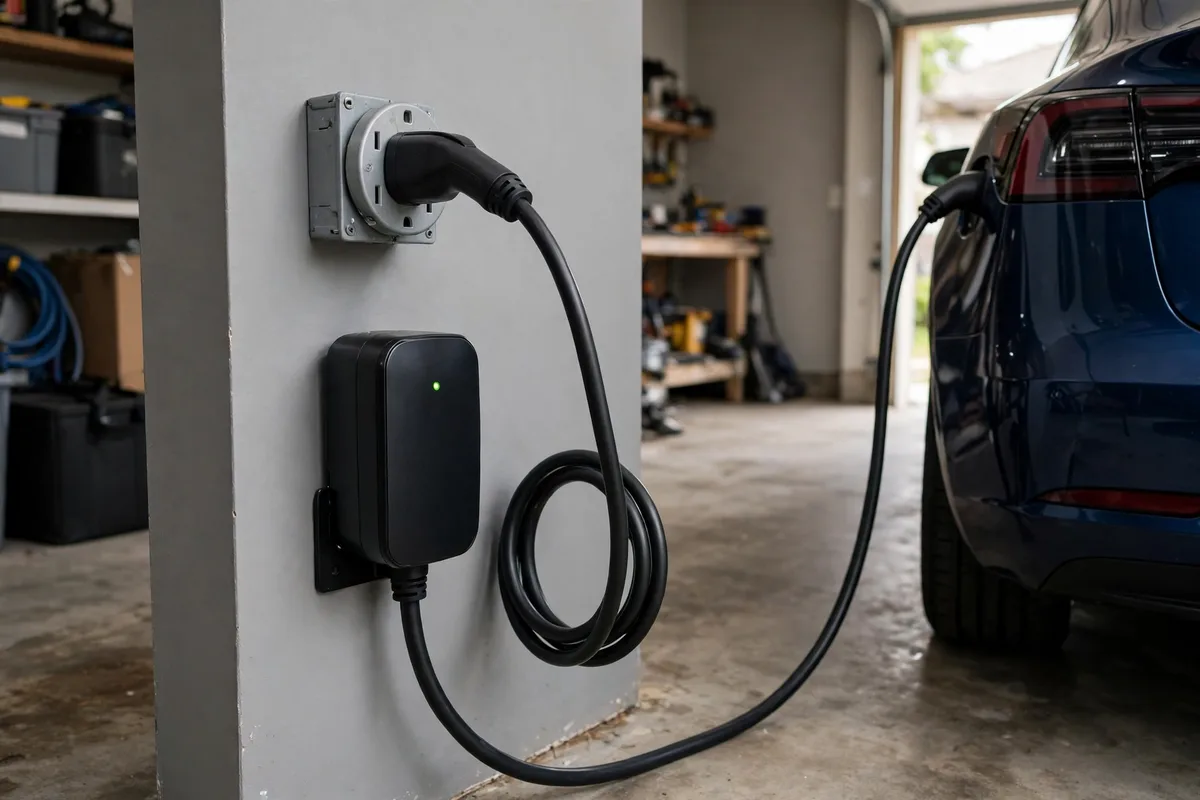
Every modern EV charger contains ground-fault protection of its own — it continuously watches for current leaking where it should not. Plug-in installations add a second protector: code requires GFCI protection for the receptacle, often as a GFCI breaker. Two sensitive ground-fault devices in series can argue, with the breaker tripping on leakage levels the charger considers normal, or on the charger's own self-test pulses. The result is the famously annoying pattern: trips at random moments, sometimes at plug-in, sometimes hours in, with nothing measurably wrong.
The common resolutions: hardwiring the charger (a hardwired unit on a standard breaker, using its internal protection, which code accepts) or correcting whichever device is out of tolerance. What not to do is remove ground-fault protection from a receptacle circuit to stop the trips — that trades an annoyance for a genuine safety gap.
Actual ground faults also exist, of course: moisture in an outdoor receptacle box, a nicked conductor, a charger with water intrusion after a storm. Those trips tend to correlate with rain or washing the car, and they are the protection doing real work. If trips track wet weather, treat it as a fault to find, not a nuisance to silence.
6. Cause Five: The Circuit Is Not Really Dedicated
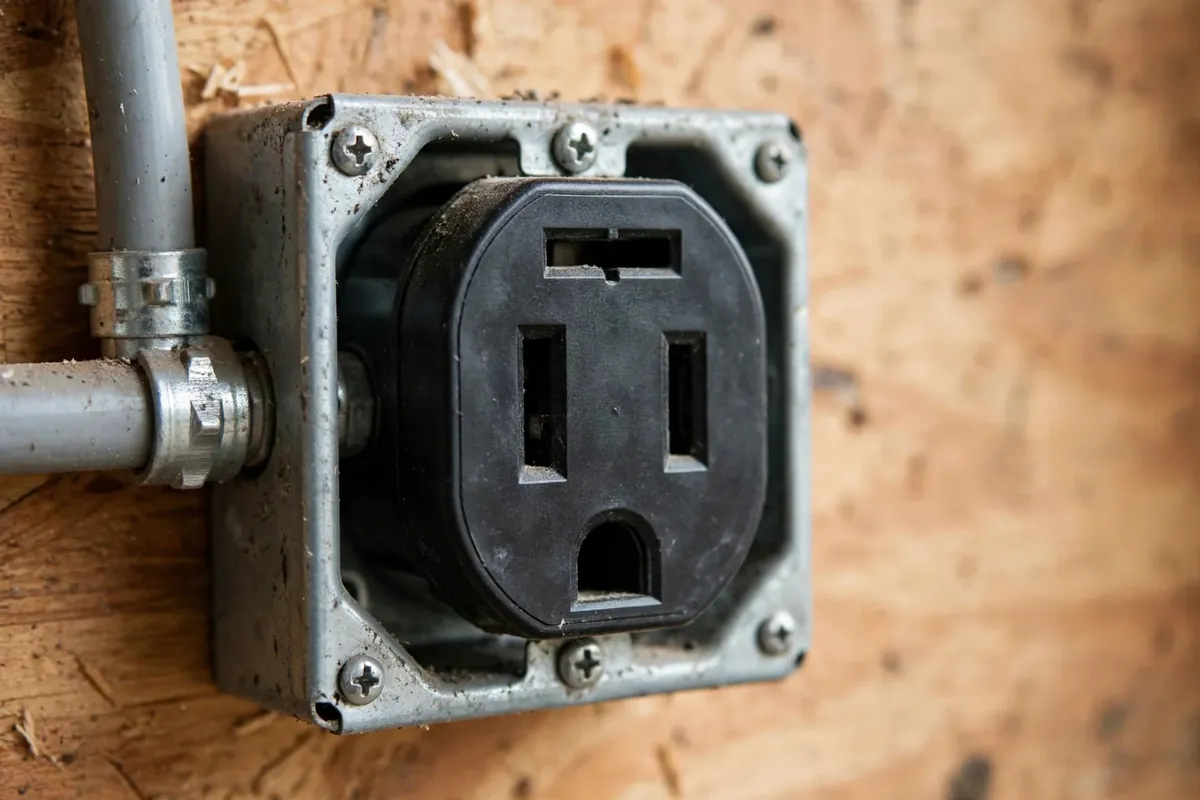
A charger circuit should serve the charger alone. Sometimes it does not. Houses accumulate surprises: a previous owner's handyman tapped the garage circuit for outlets, a freezer joined the run, the "dedicated" circuit turns out to feed the garage door, lights, and a workbench too. The charger alone is within limits, but charger plus chest freezer plus a space heater in January is not.
The panel can also be the shared resource. Whole-house loads peak in the early evening — cooking, air conditioning, laundry, pool equipment — and a marginal main or a heavily loaded panel can let go when charging joins the peak. If trips correlate with dinner hour rather than with the session itself, suspect arithmetic, not the charger.
Load management exists for exactly this situation: devices and charger features that watch the home's total draw and throttle charging to fit. Our guide on charging two EVs at home covers how power sharing applies the same idea between two cars, and our panel upgrade guide covers when capacity itself is the honest answer.
7. The One Fix You Must Never Make
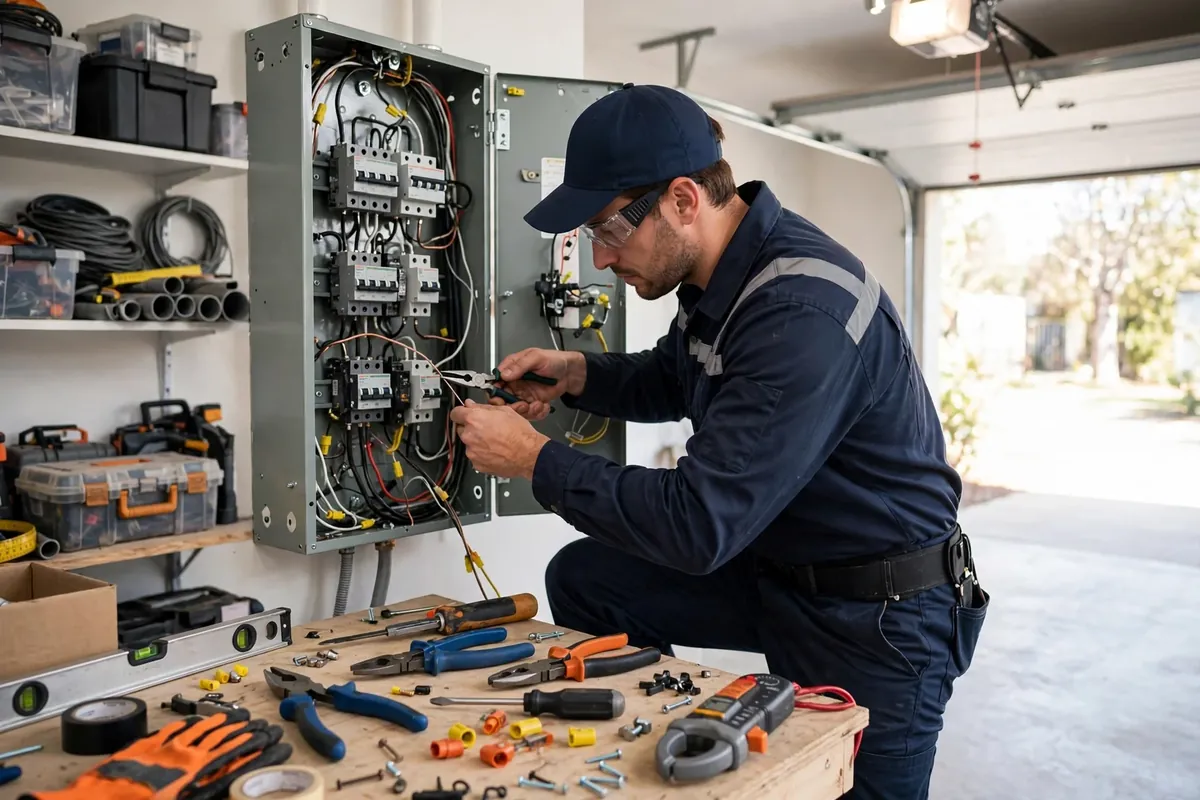
When a breaker trips repeatedly, someone eventually suggests installing a bigger breaker. Understand clearly why that is the dangerous answer: the breaker is sized to protect the wire in the wall, not the appliance. A 40-amp circuit's wire can safely carry 40 amps' worth of heat; a 60-amp breaker on that wire would happily let it carry far more, silently, inside your wall, until insulation fails. Breaker size follows wire size, always. If the circuit needs to be bigger, the wire gets replaced along with the breaker — by an electrician, with a permit where required.
Related bad ideas in the same family: holding a breaker in the on position, replacing a tripping breaker with an identical one repeatedly without asking why the new one also trips, and moving the charger to a random other circuit "to see if it works." Every one of these treats the messenger as the problem.
8. What You Can Check Yourself — and Where to Stop
Safe, no-tools-needed checks:
- Confirm the charger's configured amperage in its app or settings, and compare it with the breaker size: continuous charging should be at or under 80 percent of the breaker rating (40A charger on a 50A breaker, 48A on 60A, 32A on 40A).
- Note the pattern — timing, weather, other loads — before resetting anything.
- Feel, do not open. After a trip, a receptacle face or plug that is hot to the touch is a stop-and-call finding. A breaker handle that is distinctly warm deserves the same respect.
- Look for water. Outdoor receptacle or charger after a storm? Let things dry, inspect for intrusion, and note the correlation.
- Try the car at a public charger if you suspect the vehicle. If the car charges fine elsewhere and trips only at home, the fault lives at home.
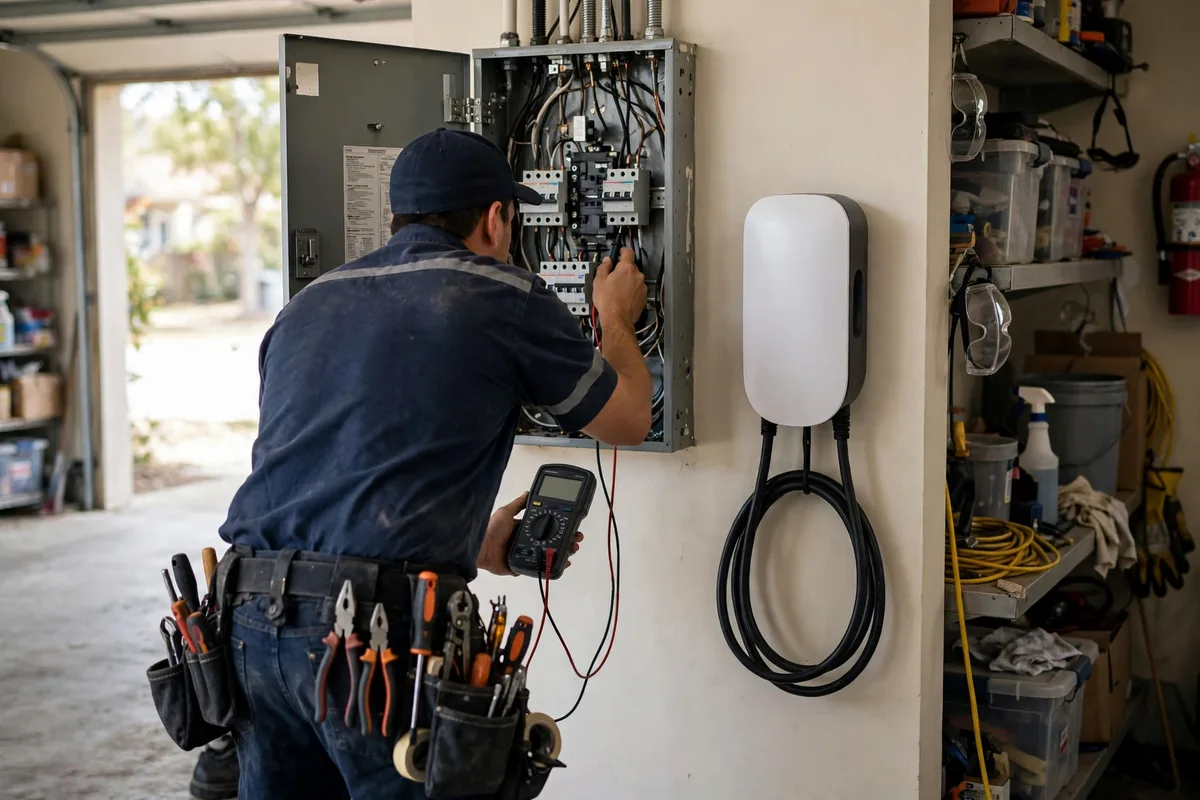
Stop there. Everything beyond — panel covers, receptacle replacement, breaker swaps, torque checks — is licensed-electrician work, and in Florida it is also permit-and-inspection territory when circuits change. Our Orlando EV charger permit guide explains where those lines sit.
Key Takeaways
- The tripping pattern is the diagnosis: immediate trips suggest a hard fault, mid-session trips suggest heat, random trips suggest ground-fault conflict, and dinner-hour trips suggest an overloaded panel.
- A charger configured above its circuit's continuous rating (80 percent of the breaker) is a built-in trip waiting for warm weather.
- Breakers weaken with years of heavy continuous loads, and loose connections heat up until the breaker intervenes — both get worse if you just keep resetting.
- Plug-in chargers behind GFCI breakers can nuisance-trip from dueling ground-fault protection; hardwiring is the common resolution.
- Never install a larger breaker on existing wire. Breaker size protects the wire; a bigger circuit means new wire too.
- Warm breakers, hot receptacles, discoloration, or burning smells mean stop using the circuit and call an electrician.
Why does my EV charger trip the breaker after an hour of charging?
That delayed pattern almost always means heat. Charging is a continuous, hours-long load, and a marginal point in the circuit — a loosening connection, a weakening breaker, a receptacle losing its grip — tolerates the current while cool, then heats until the breaker's thermal element trips. It is the most common tripping pattern and one of the most important to fix rather than reset, because the heat is real whether or not the breaker catches it every time.
Why does the breaker trip only on hot afternoons?
Because breakers are thermal devices living in your panel's ambient temperature. A breaker in a sun-heated garage panel starts the afternoon already warm, so the additional heat from a full-current charging session reaches its trip point sooner than the same session at midnight. Marginal circuits often pass all winter and start failing in June for exactly this reason. Scheduling charging for cooler hours can reduce trips temporarily, but the underlying marginality — a tired breaker or loose connection — still deserves a proper fix.
Can a GFCI outlet cause a plug-in EV charger to trip?
Yes — this is a well-known nuisance pattern. Your charger has ground-fault protection built in, and the receptacle circuit adds its own GFCI protection; the two devices can react to each other's normal behavior, producing random trips with nothing actually wrong. The usual durable fix is hardwiring the charger, which code accepts on its internal protection with a standard breaker. Removing GFCI protection from a receptacle to stop the trips is not an acceptable fix — it removes protection people rely on.
Is it dangerous if my EV charger trips the breaker once?
A single trip, by itself, is the protection system working as designed, and it happens occasionally for transient reasons — a surge, a momentary fault. Note what was happening, reset once, and watch. It becomes dangerous when it repeats: repeated trips mean a real condition exists, and repeatedly resetting into it can cook connections or mask a developing fault. Once is an event; a pattern is a warning. Treat the second and third trips as the signal to investigate.
Why does my Tesla Wall Connector keep tripping its breaker?
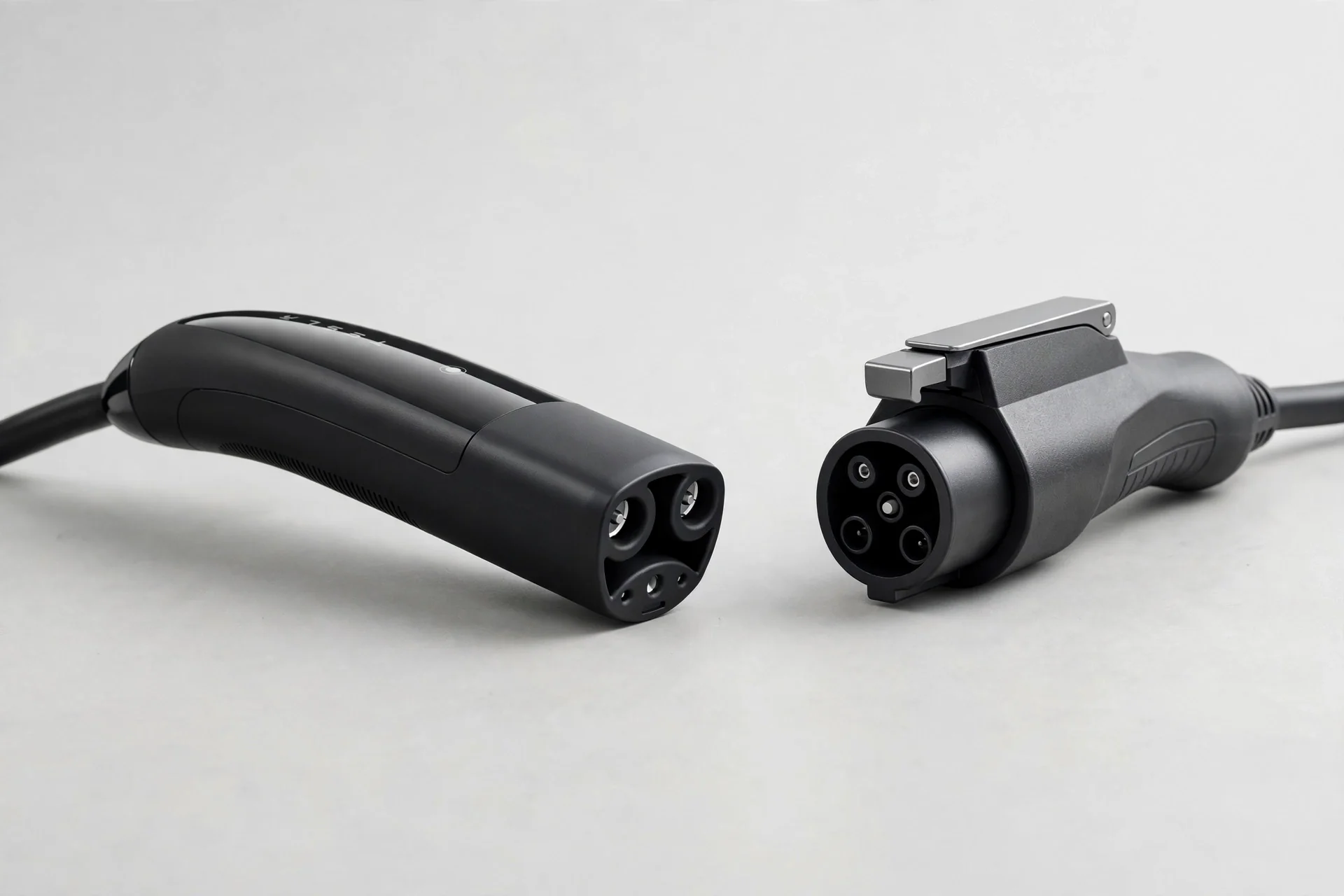
The causes are the same ones in this article, and Wall Connectors add two specifics worth checking. First, its configured current: a Wall Connector set to 48 amps must be on a 60-amp circuit — on anything smaller it will eventually trip under sustained load. Second, heat at its terminals: like any hardwired unit, its connections can loosen with thermal cycling over years. In power-sharing groups, a misconfigured group limit can also push a shared circuit past its rated limit. An electrician can verify configuration and terminal condition in one visit.
Should I install a bigger breaker if my EV charger keeps tripping?
No — this is the one response that turns a protected problem into an unprotected one. The breaker exists to protect the wire inside your walls, and it is sized to that wire. A bigger breaker on the same wire lets the wire carry more current than it can safely shed as heat. If your charger genuinely needs a larger circuit, the wire, breaker, and often the receptacle are replaced together as a properly sized circuit, installed by a licensed electrician. Any tripping cause — tired breaker, loose connection, ground fault — also has to be found and fixed on its own terms.
Related Posts

- How Long Does an EV Charger Last? Lifespan, Wear Signs, and Making Yours Last
- EV Charger Maintenance Guide: Keep Your Home Charger Running for Years
- Do You Need a Panel Upgrade for an EV Charger?
Breaker keep tripping? Call now at (407) 555-0100 — we diagnose tripping charger circuits across Orlando: breaker condition, connections, configuration, and the circuit itself, fixed at the cause rather than the symptom.
Sources consulted: NEC Article 220/625 continuous-load sizing provisions (125 percent rule); Tesla Wall Connector installation and power-sharing documentation; electrician troubleshooting discussions (Mike Holt forum, r/evcharging); manufacturer ground-fault guidance (ChargePoint, Emporia).