Quick Answer
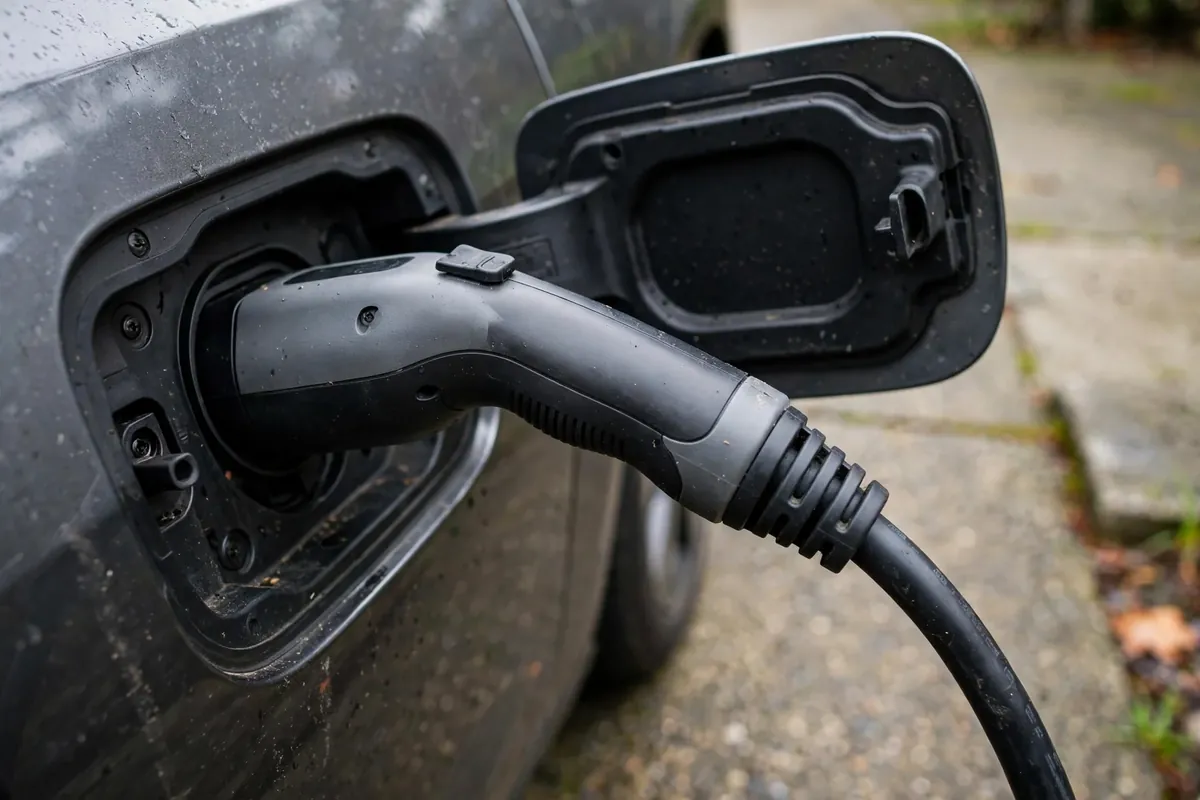
Yes, an EV charger can live outside in Florida, and many do. The charger itself must be rated for outdoor use — look for an outdoor-suitable enclosure class on the product specification, commonly IP55 or IP65 on current models, which describes protection against dust and water jets — and it must be installed the way its manual describes for outdoor locations. The rest of the job is placement and protection: a wall or pedestal that holds the unit clear of pooled water, a cable that can be stored off the ground, a circuit with ground-fault protection where required, and a route from the panel that survives sun, rain, and lawn equipment. Get those right and an outdoor charger is as ordinary as an outdoor air-conditioning unit or pool pump. Get them wrong — an indoor-only unit under an open sky, a cable lying in a puddle, a low mount in a spot that floods — and the weather will find the weakness sooner or later.
This guide covers the decisions in the order an installer thinks through them: the unit, the spot, the mount, the circuit, the cable, and the storm plan. It is written for Orlando-area homes, where afternoon thunderstorms are a daily summer event and hurricane season runs from June through November, but the principles apply anywhere in Florida.
1. Start With a Charger Built for Outdoors
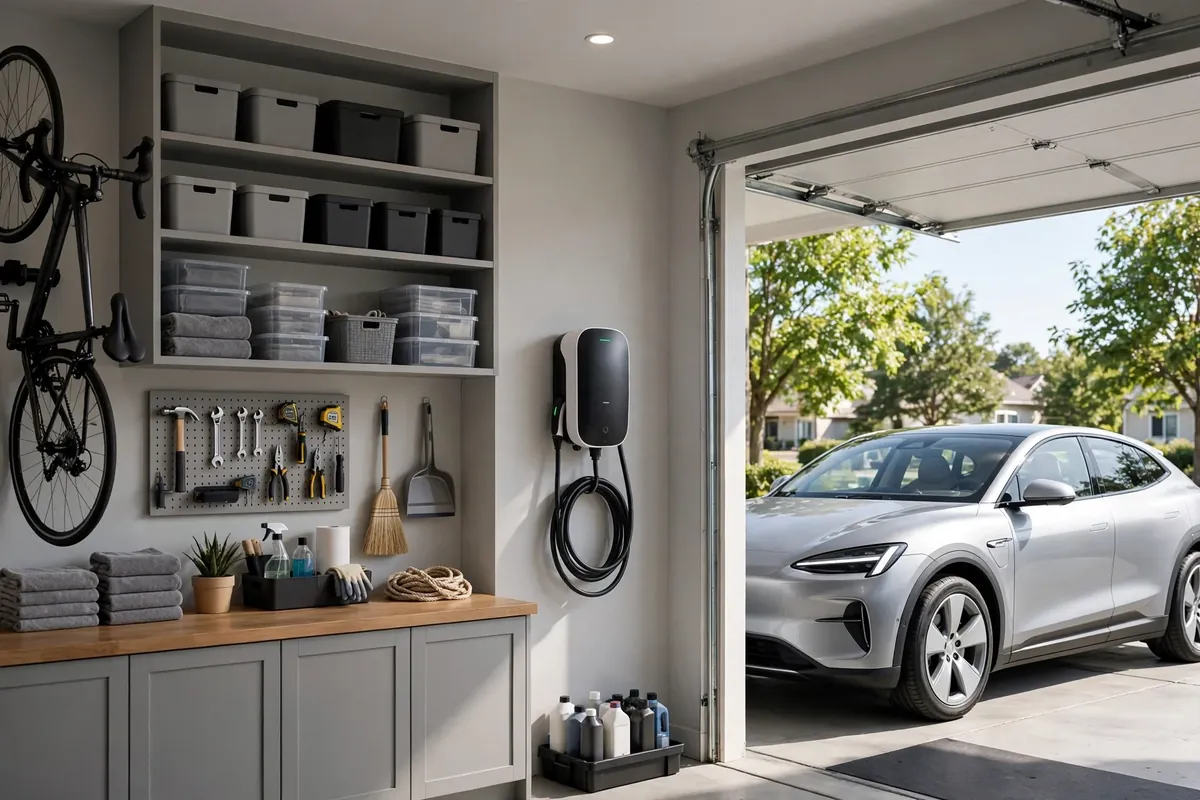
Not every home charger is an outdoor charger. Some units are designed for a garage wall and a dry environment, and their manuals say so plainly. Installing one of those outside, even under a carport roof, is asking for moisture intrusion, corroded contacts, and a shortened life. The first check, before anything else, is the product specification: it should state outdoor suitability and carry an enclosure class for outdoor use. Units built for outdoors have sealed cases, gaskets around covers and cable entries, and connectors designed to shrug off rain while plugged in. Our existing overview of home chargers notes which current models carry outdoor-suitable enclosures, and the site's charger lifespan guide discusses how outdoor exposure affects longevity over the years.
Two details matter beyond the headline class. First, the plug and the car's charge port: the connection between them is exposed to rain while charging, and outdoor-suitable units are designed so that the mated connection sheds water rather than pooling it. Second, the cable entry into the unit and into any junction box: these are the points where a sloppy outdoor installation lets water in, and a careful one seals them. A unit with the right enclosure class, installed with sealed entries, handles a Florida downpour without drama. A unit without it does not, no matter how good the roof above it looks.
Sun matters as much as rain in Central Florida. A charger mounted on a south- or west-facing wall spends its afternoons in direct sun, and the case can run far hotter than the air temperature. Heat does not usually stop a charger working — units slow their output when internal temperatures climb, which our article on charger noise and heat explains — but sustained heat ages electronics and cable jackets faster. Where there is a choice, a shaded wall or a small rain shield above the unit is worth more than it costs. The goal is not to hide the charger from the weather entirely; it is to avoid the worst of both sun and standing water.
2. Choosing the Spot: Wall, Pedestal, or Carport
Most Orlando homes with a driveway and a garage face a simple choice. If the garage wall is within cable reach of where the car parks, wall mounting beside the garage door is the usual answer: the wall already exists, the run from the panel is usually short, and the charger sits under the roof overhang at least part of the way. If the car parks away from any wall — a long driveway, a detached parking pad, a side yard — a pedestal is the answer: a post set in a concrete footing that carries the charger at a comfortable height, with the circuit run underground in conduit to reach it.
Placement rules worth applying to either option:
- Height and reach. The charger should sit at a height where plugging in is easy without bending low or stretching high, and where the cable reaches the car's charge port with slack to spare but without dragging on the ground. Charge port locations vary by car — front, rear, left, right — so plan against the car you own and how it is parked, nose-in or backed-in. A mount that works for one car may leave the next car's port just out of reach.
- Clear of pooled water. Never mount a charger where water collects: the low corner of a driveway, the bottom of a slope, a spot the sprinklers soak daily. The unit should sit above the local high-water mark for ordinary rain, and its cable should never rest in a puddle. If the only available spot holds water, fix the drainage or pick another spot; do not mount low and hope.
- Clear of vehicle paths. The charger and its cable must sit where a car cannot clip them. A mount on the wall beside the parking spot, or a pedestal set back from the driving line and protected by its position, lasts longer than one at the corner a driver swings past every day.
- Clear of lawn equipment. String trimmers, edgers, and mowers destroy exposed cable and conduit. Keep the run and the stored cable out of the trimming line, or protect them with rigid conduit where they pass through it.
- Within reach of the panel, sensibly. The circuit run is part of the job's scope — a long run across a house, through an attic, or trenched across a yard changes the work involved, which is one of the factors our article on installation price factors walks through. Short, direct, protected runs are cheaper to build and easier to inspect.
3. Wall Mounting Done Properly
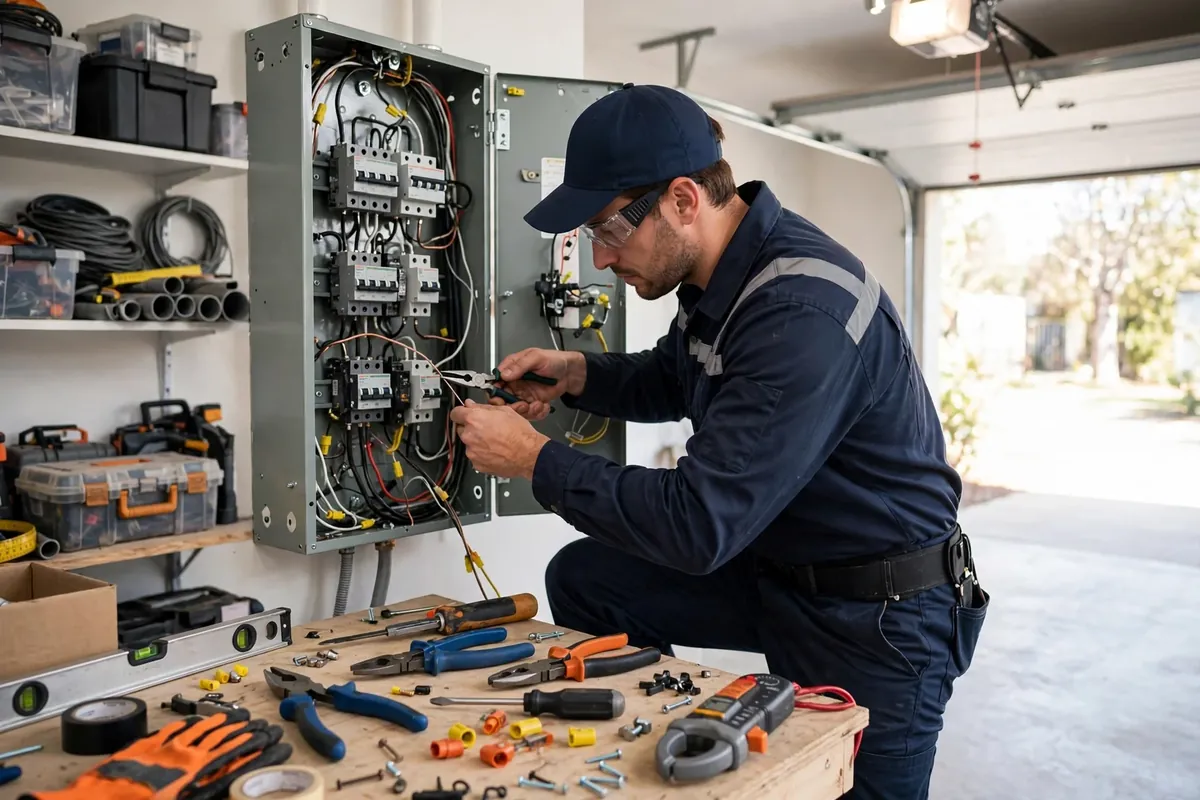
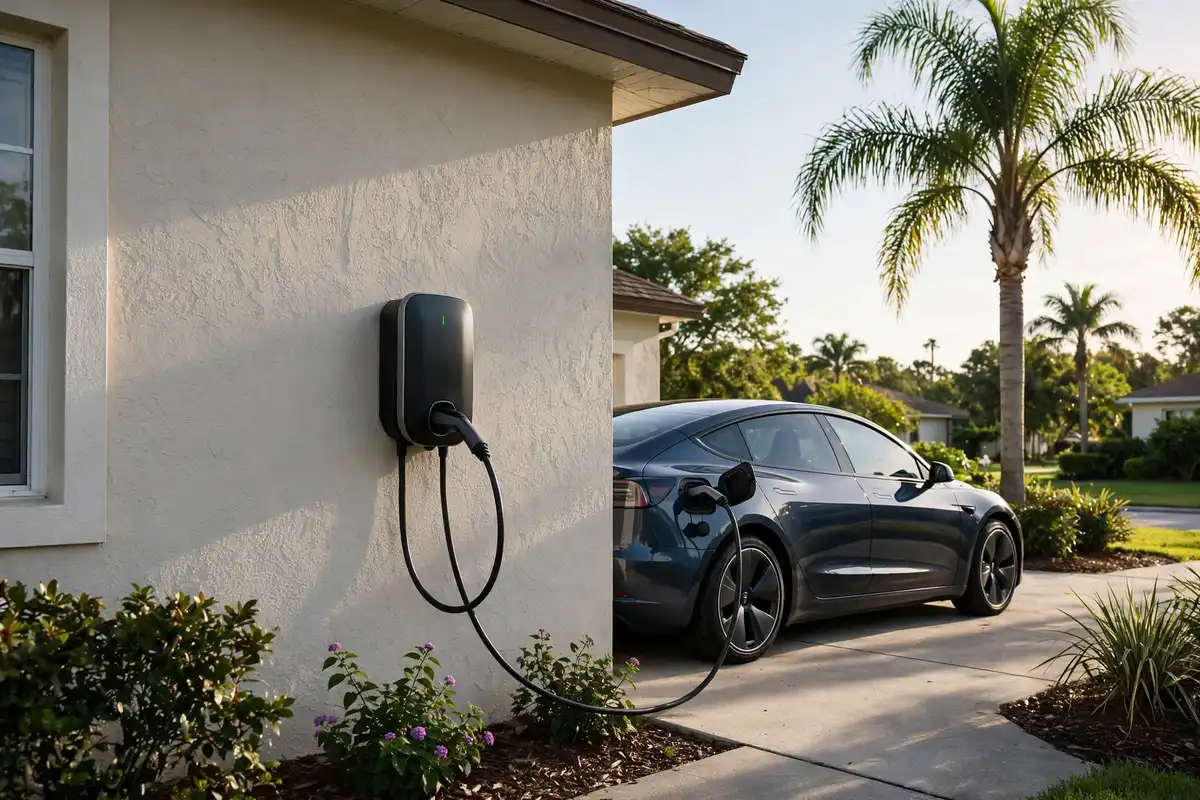
Wall mounting outdoors is straightforward, but the details separate a lasting installation from a leaking one. The mounting surface should be solid — masonry, a structural stud behind siding, or a mounting board fixed to structure — not hollow siding alone. The unit should be level, firmly fixed, and mounted at the height its manual specifies, with clearance around it for ventilation and for the cable to hang and coil without kinking.
Cable entries and junction boxes need outdoor-rated fittings and seals. Conduit entering from below should be arranged so water cannot track down into the box, and any box on the wall should have a cover rated for outdoor use with its gasket intact. These are small parts of the job, but they are the parts that keep rain out of the electrical connections year after year. An installer who rushes the sealing has built a problem that appears two rainy seasons later as corrosion, nuisance tripping, or a dead unit.
A rain shield or small canopy above the unit is optional for a properly sealed outdoor unit, and it can help in two ways: it keeps direct sun off the case in the afternoon, and it keeps the connector drier while you plug in during a storm. It is not a substitute for an outdoor-suitable unit, though — a shield over an indoor-only charger is still an indoor charger outdoors, and the first wind-driven rain will prove it.
4. Pedestal Mounting for Driveways and Detached Parking
A pedestal solves the no-wall problem and suits homes where the parking pad sits away from the house. The pedestal itself is a sturdy post — metal or a manufactured charging post — set in a concrete footing deep enough to resist a bump and stable enough to stay plumb. The circuit reaches it underground in conduit, buried at the depth the code requires for the location, with warning tape or markers where appropriate and a route that avoids tree roots, irrigation lines, and future digging.
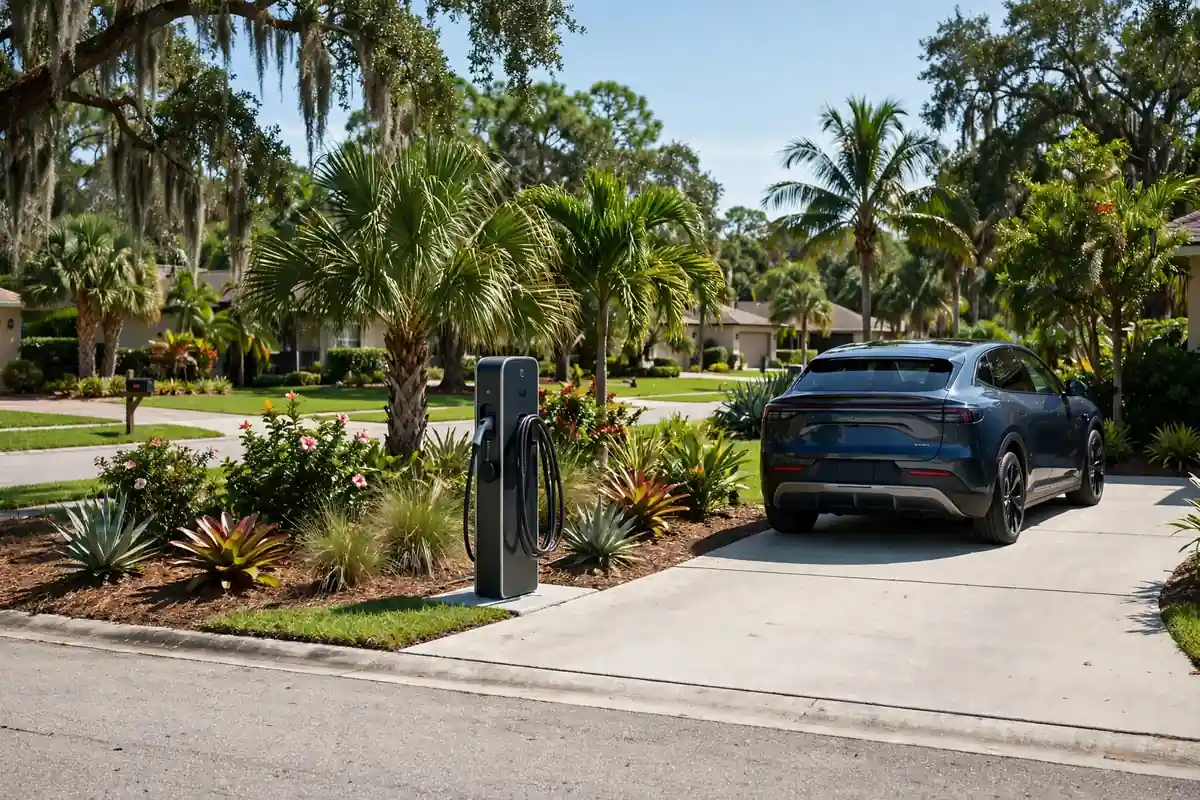
Pedestal placement deserves a slow walk around the parking area before anything is dug. Stand where the car parks, check the cable reach to the port, check the driver's door swing and the path a passenger walks, and check where water flows in a heavy rain. A pedestal at the head of the parking pad, set slightly to one side, usually serves the port without sitting in the driving line. Two pedestals, or one pedestal with two chargers, serve two-car households whose cars park side by side — the two-EV setups in our charging two EVs at home guide adapt to pedestals the same way they adapt to garage walls.
The underground run is the part of a pedestal job that cannot be inspected later without digging, so it should be done once and done well: correct conduit, correct depth, sealed joints, and a route recorded so future yard work does not cut it. If the run crosses a sidewalk or driveway, the crossing method — boring under or cutting and restoring — is part of the plan, not an afterthought.
5. The Circuit: Outdoor Electrical Protections

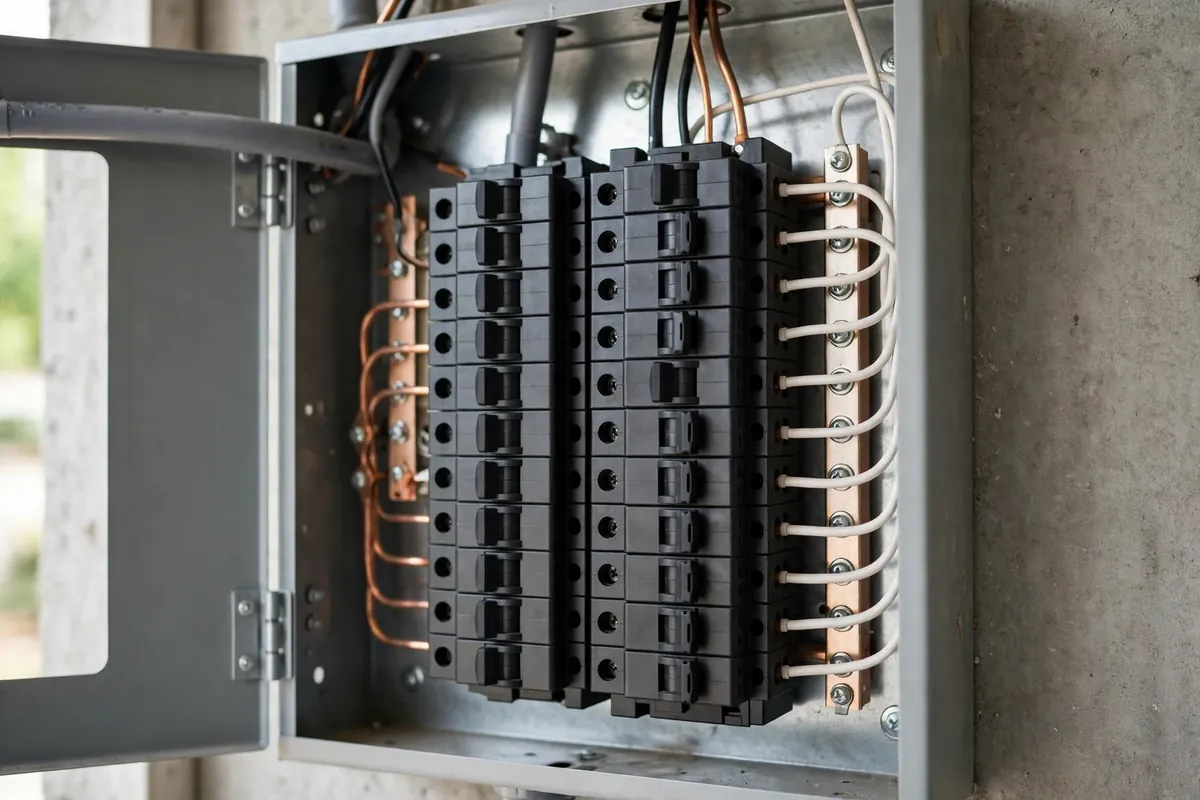
Outdoor circuits carry protections that indoor garage circuits sometimes do not, and the installer applies the code as it stands for the location. Ground-fault protection is the headline one: outdoor receptacles and many plug-in charger circuits require it, because wet conditions raise the risk of a fault finding a path through a person. Hardwired units have their own internal protections and are wired under different provisions, which is one of the practical differences between hardwired and plug-in setups covered in our NEMA 14-50 versus hardwired comparison.
Other circuit considerations for outdoors include surge exposure — Florida lightning is a real factor, and a whole-home or panel-level surge device is a sensible conversation with your electrician, especially for a charger that lives outside — and the disconnect and breaker arrangement, which should be accessible and clearly labeled. Permits and inspection apply to outdoor circuit work the same way they apply indoors; the Orlando permit guide explains the process, and an inspection is the moment an independent eye confirms the outdoor protections are actually in place.
One caution that applies outdoors more than anywhere: never adapt, extend, or jury-rig a connection to reach an outdoor parking spot. Extension cords and adapters between a charger and its supply are not a solution for a short cable or a far parking spot; they are a hazard, especially wet. If the cable does not reach, move the charger, change the parking arrangement, or have the circuit extended properly.
6. Cable Care Outdoors
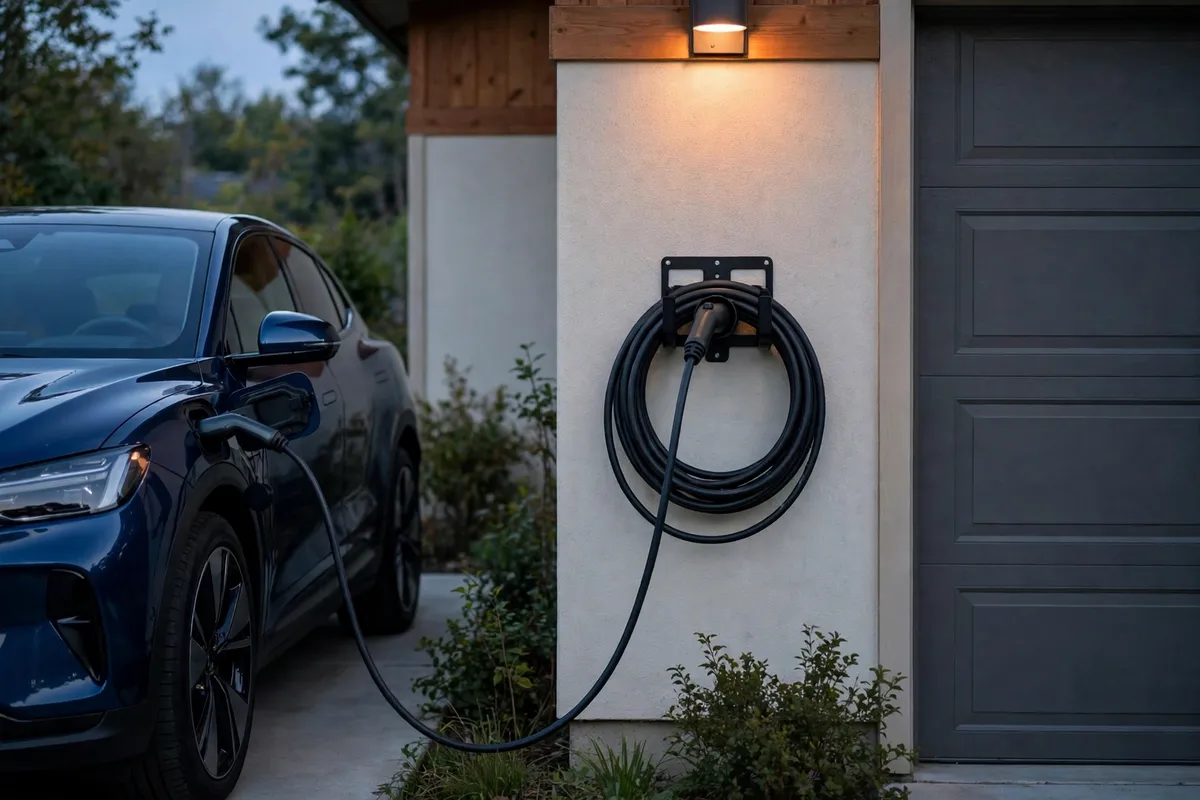
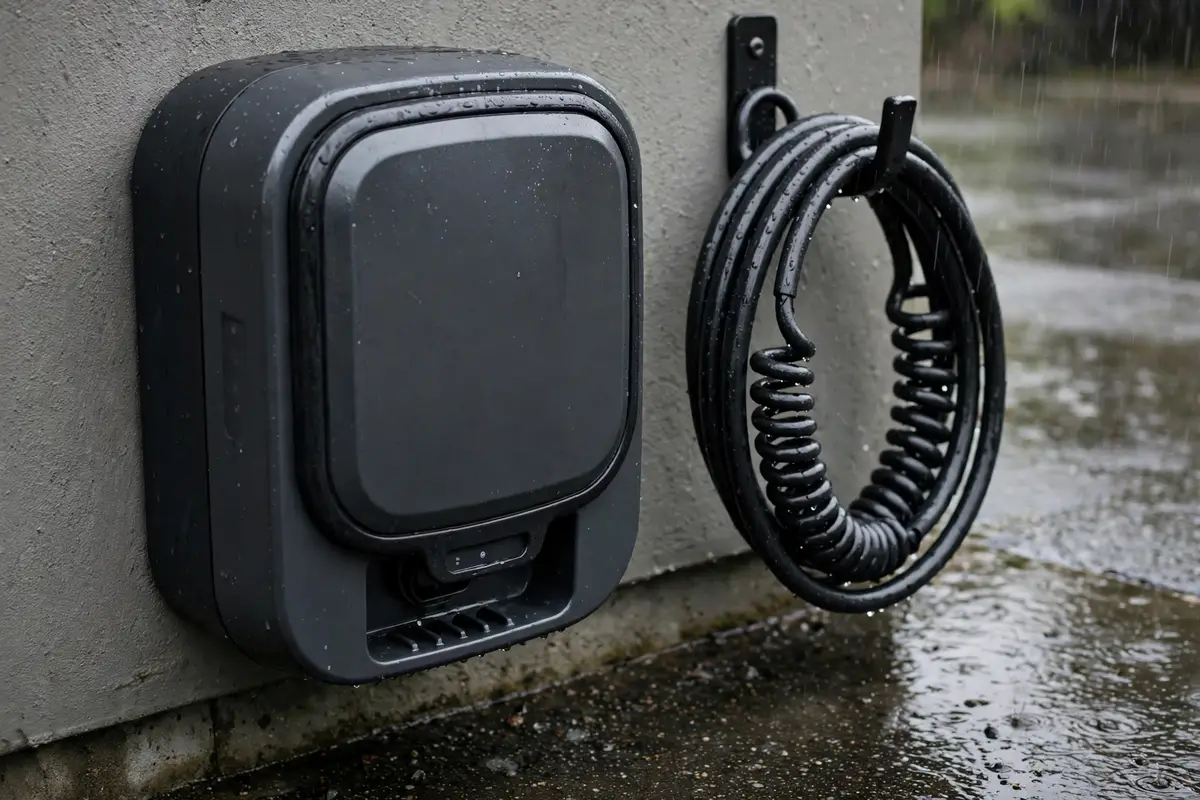
The cable is the part of an outdoor charger you handle every day, and it is the part the weather wears first. Store it off the ground, on the unit's holster or a wall hook, coiled loosely without tight bends or kinks. <!-- IMAGE: Outdoor electric vehicle charging cable neatly wound on a wall-mounted cable holder next to a garage exterior wall -->
A cable left lying on a driveway gets driven over, soaked, sun-baked, and chewed by lawn equipment, in that order. A cable stored on its hook stays clean, dry, and out of the way, and its connector stays out of dirt and standing water.
Inspect the cable and connector on a simple rhythm — monthly is a reasonable habit, and more often after storms. Look for cracked or stiffened jacketing, a connector that no longer seats firmly, discoloration or pitting on the pins, and any sign of water inside the connector. A cable that shows damage should be taken out of service until it is checked: a damaged outdoor cable in wet conditions is not a cosmetic issue. The charger maintenance guide sets out a fuller inspection routine that works for outdoor units too.
In daily use, plug in with the connector dry. If the connector has been sitting in rain, shake it out and wipe it before mating it; do not force a wet, gritty connector into the car's port. After charging in rain, return the connector to its holster rather than leaving it hanging where it can fill with water. Small habits, repeated daily, are what keep an outdoor charger working for years rather than seasons.
7. Storms, Hurricanes, and Power Outages
Florida's storm season deserves its own plan, because an outdoor charger faces weather a garage charger never meets. For an ordinary afternoon thunderstorm, the charger is designed to keep working: do not unplug a charging session mid-storm out of alarm, and do not handle a wet connector with wet hands during active lightning. The sensible thunderstorm habit is simple — plug in before the storm or wait until it passes, and leave the equipment alone while lightning is overhead.
For a tropical storm or hurricane, the plan changes. Before the storm arrives, stop charging, unplug the car, stow the cable on its holster, and switch the charger off at its breaker if you are leaving or if flooding is expected at the location. An outdoor charger in a flood zone should never be energized while standing in water, and after any flooding, the unit should be inspected before it is used again — water inside an enclosure or a connector is not always visible from outside. After the storm, check the mount, the conduit, and the cable for wind or debris damage, and check the breaker and any surge device before resuming charging. If the unit took a direct hit from debris or sat in floodwater, have it inspected rather than testing it by plugging in.
Power outages after a storm raise a separate question: whether the charger can run from a generator or a home battery. A Level 2 charger draws a large, continuous load, and most portable generators and many home batteries are not sized for it alongside the rest of the house. Do not improvise a generator connection to a hardwired charger; if backup charging matters to you, discuss it with your electrician as a designed system, not as a storm-day improvisation.
8. Condos, HOAs, and Shared Outdoor Parking
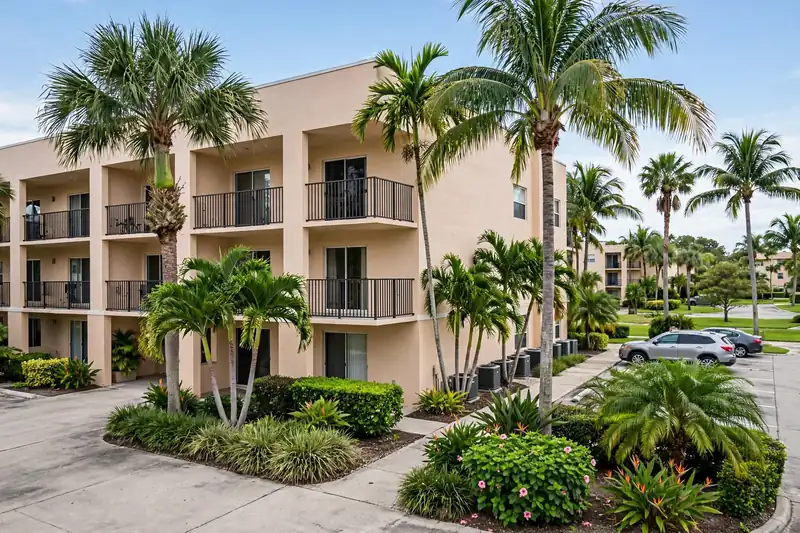
Outdoor chargers in shared parking — condo lots, townhome rows, HOA common areas — add a permission layer on top of the technical one. Florida law gives condo owners specific rights around charger installation in their parking spaces, which our Florida HOA and condo charger rights guide explains in detail, but the practical questions still need answers: who owns the pedestal and the circuit, who pays for the electricity, how the charger is secured against use by others, and what happens if the parking space is reassigned. Access-control features on many chargers — app-based locking, scheduled access, or vehicle-only authorization — exist precisely for shared locations, and they are worth configuring from day one rather than after someone else has used the charger.
For single-family HOA communities, the architectural review step usually covers the visible parts of the job: the unit on the wall, the pedestal in the yard, the conduit run. A tidy installation with a protected cable and no cable across a walkway passes that review more easily than a loose cable and a leaning post. Photograph the finished installation for your own records; it helps in any later discussion about what was approved.
9. What an Outdoor Installation Visit Looks Like
A typical outdoor installation visit follows the same shape as an indoor one, with the site survey doing more of the work. The installer walks the parking area and the route from the panel, confirms the panel's capacity with a load calculation, checks the mounting surface or pedestal location, and confirms drainage and cable reach. The circuit is run — through walls, along protected exterior routes, or underground for a pedestal — the unit is mounted and sealed, the circuit is tested including its ground-fault protection, and a test charge confirms the car and charger communicate properly. The visit ends with the owner being shown the holster, the breaker, and the basic care routine. If the survey turns up a complication — a long underground run, a panel that needs work first, a drainage problem at the only mounting spot — a good installer says so before work starts, not halfway through it. Our what to expect during installation article describes the visit in more detail, and the panel upgrade guide covers the case where the panel itself is the constraint.
Key Takeaways
- Outdoor charging is normal in Florida when the charger is built for outdoors, with a sealed enclosure class suited to dust and water exposure.
- Wall mounting by the garage door suits most homes; a pedestal suits driveways and parking pads away from any wall.
- Mount clear of pooled water, vehicle paths, and lawn equipment, at a height where the cable reaches the car's port without dragging on the ground.
- Outdoor circuits need the protections the code requires for wet locations, including ground-fault protection where it applies, plus sealed conduit and junction boxes.
- Store the cable on its holster, inspect it monthly and after storms, and never charge through an extension cord or adapter.
- Before a hurricane, unplug, stow the cable, and switch the charger off; after flooding or debris damage, have the unit inspected before using it again.
- Shared parking adds permission and access-control questions — settle ownership, metering, and access before the installation, not after.
What height should an outdoor EV charger be mounted at?
Mount it at a comfortable working height where you can plug in without crouching or reaching overhead, following the height range in the unit's manual, and high enough that the connector and the lowest part of the unit sit clear of pooled water and splashback. The practical test is the cable: with the car parked in its usual spot, the cable should reach the charge port with slack, hang in a gentle loop when stored, and never rest on the ground. If the mount height that suits your reach leaves the cable dragging, move the mount closer to the port rather than lowering it into the splash zone.
Can an outdoor charger stay plugged in during a Florida thunderstorm?
A properly installed outdoor-suitable charger is designed to operate in rain, and an active charging session does not need to be interrupted because rain starts. What you should avoid is handling a wet connector during active lightning, or plugging and unplugging with wet hands while a storm is directly overhead. The calm habit is to plug in before a storm arrives or wait until it passes, and to leave the equipment alone while lightning is close. After a severe storm, check the unit, cable, and mount for damage before the next session.
Does an outdoor charger need a cover or canopy over it?
Not as a requirement — an outdoor-suitable unit with sealed entries is designed to stand in rain without a roof over it. A small canopy or rain shield can still be worthwhile: it shades the case from afternoon sun, keeps the connector drier while you handle it, and makes plugging in during rain more pleasant. Treat it as a comfort and longevity addition, not as protection that turns an indoor-only unit into an outdoor one. The enclosure class of the unit itself is what makes it outdoor-safe; a canopy over the wrong unit changes nothing that matters.
How do I keep an outdoor charging cable from being damaged?
Store it on its holster or a wall hook after every session, coiled loosely with no tight bends, and keep it off the ground and out of the path of mowers and string trimmers. Inspect it monthly for cracked jacketing, a loose or pitted connector, and stiffness that suggests heat or sun damage, and take a damaged cable out of service until it is checked. Never run the cable across a walkway or driveway where it can be driven over or tripped on, and never extend it with an adapter or extension cord to reach a farther parking spot.
Is a pedestal charger a good option for a driveway without a nearby wall?
Yes, a pedestal is the standard answer when no wall is within cable reach of the parking spot. It is set in a concrete footing, fed by an underground conduit run, and positioned so the cable reaches the car's port without crossing a driving line or a walkway. The planning matters more than the hardware: walk the parking area, confirm cable reach for the car you own, check where water flows in heavy rain, and record the underground route so future yard work does not cut it. For two cars parked side by side, a pedestal carrying two chargers works the same way two wall chargers do.
What should I do with my outdoor charger before a hurricane?
Stop charging, unplug the car, stow the cable on its holster, and switch the charger off at its breaker, especially if flooding is expected at the location or you are leaving the property. Move anything loose near the unit that wind could turn into debris, and note the breaker's position so you can restore it deliberately after the storm. After the storm, inspect the mount, conduit, cable, and connector for wind and water damage, and do not re-energize a unit that sat in floodwater or took a debris hit until it has been inspected.
Related Posts
- How Long Does an EV Charger Last? Lifespan Guide
- EV Charger Noises and Heat: What's Normal, What's Not
- Charging Two EVs at Home: One Charger or Two?
- What an EV Charger Installation Price Actually Depends On
No garage, no problem. Call now at (407) 555-0100 — we survey the parking area, the panel, and the cable route, then install an outdoor charger built for Florida weather across Orlando.
Sources consulted: NEC Article 625 EV charging system provisions and outdoor receptacle ground-fault requirements; manufacturer outdoor enclosure specifications for current home charging units; Florida Division of Emergency Management hurricane preparedness guidance.