TL;DR
Problem: Every "best EV charger" list reads like a spec sheet, and none of them tell you which features actually matter in a real Orlando garage — Florida heat, two-EV households, and utility off-peak rates included.
Solution: Focus on six things: plug type (NACS vs J1772 vs universal), amperage, hardwired vs plug-in, smart/app features, outdoor rating, and power-sharing for two EVs. The popular 2026 models below differ mainly on these — pick the combination that fits your cars and your home.
When to call: Buying the charger is the easy part; making sure your panel and wiring support it is the part that needs a pro. Get a site survey before you order: Call Now.
Quick Answer
The most popular home EV chargers in 2026 include the Tesla Wall Connector (a favorite for Tesla households), the ChargePoint Home Flex (a flexible pick for mixed-EV households), the Emporia EV Charger (known for energy monitoring), the Wallbox Pulsar Plus (compact with power-sharing), the Enphase IQ EV Charger (a fit for solar homes), and the Grizzl-E (a rugged, simple workhorse). The right one depends on your cars, your panel, and whether you want smart features — not on any single "winner."
1. What Actually Matters When Comparing Home Chargers
Before the models, here is the short checklist experienced installers use. A charger that checks these boxes will serve you well regardless of brand:
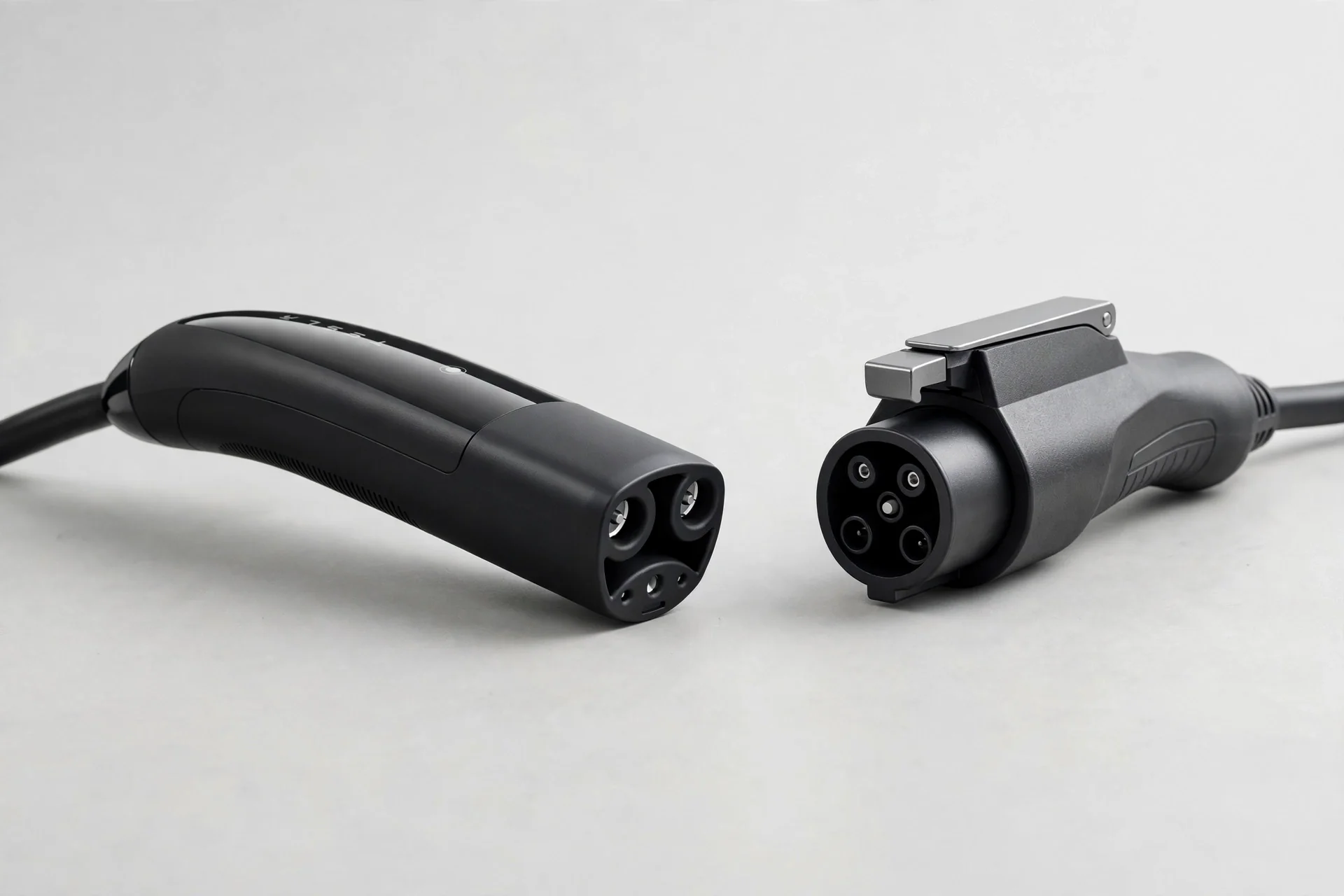
- Plug type. NACS (Tesla-style, now the SAE J3400 standard) for Tesla and newer EVs, J1772 for older non-Tesla EVs, or a universal unit with a built-in adapter that handles both.
- Amperage. 40 amps (on a 50-amp circuit) suits most drivers; 48 amps (on a 60-amp circuit) suits large-battery EVs and future-proofing. Check your car's onboard charger limit first.
- Hardwired vs plug-in. Hardwired units go to 48 amps with fewer failure points; plug-in units (NEMA 14-50) top out around 40 amps but are portable.
- Smart features. App control, scheduled charging for off-peak rates, and energy monitoring. Nearly standard on modern units — and genuinely useful in Florida, where overnight rates reward scheduled charging.
- Outdoor rating. If the unit lives outside or in an unconditioned Florida garage, confirm it is rated for outdoor use and heat.
- Power sharing. For two-EV households: some chargers can share one circuit intelligently instead of requiring two full circuits.
2. Tesla Wall Connector
Well-known for: Tesla households; clean design; deep integration with the Tesla app.
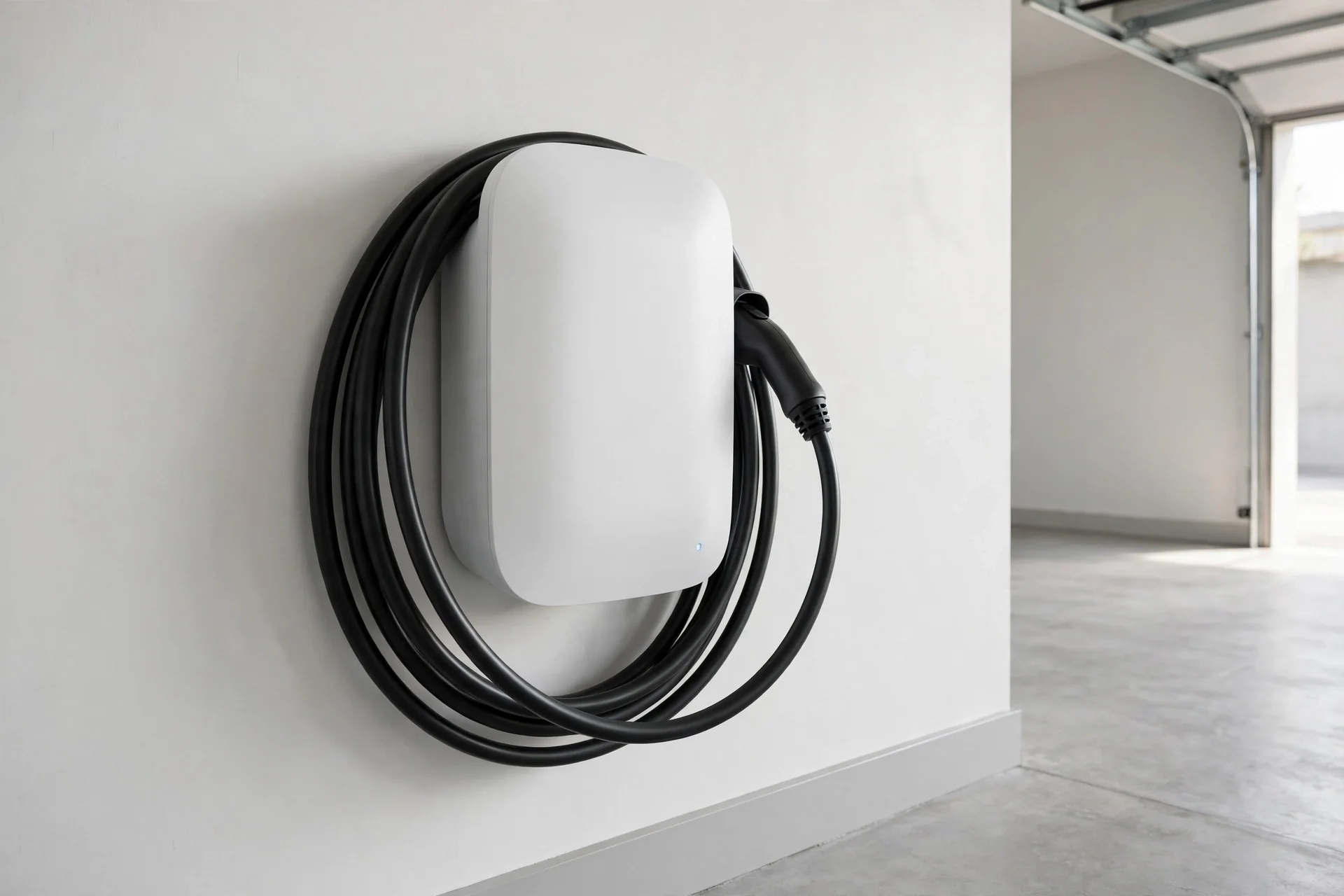
The Wall Connector is the default pick for all-Tesla garages, and for good reason — it is designed around the Tesla ecosystem, with charging scheduled and monitored right in the Tesla app. It supports up to 48 amps hardwired and can power-share across multiple Wall Connectors on a single circuit, which makes it a popular choice for two-Tesla households.
The Tesla Universal Wall Connector variant adds a built-in docked J1772 adapter, so the same unit charges non-Tesla EVs too — worth considering if your next car might not be a Tesla, or if guests with other EVs charge at your home. For a head-to-head on features, see our Tesla Wall Connector vs ChargePoint Home Flex comparison.
Consider it if: your household is Tesla (or might add a non-Tesla later — get the Universal), you want up to 48 amps, and you like managing everything in the Tesla app.
3. ChargePoint Home Flex
Well-known for: flexibility — adjustable amperage, plug-in or hardwired, wide vehicle compatibility.
The Home Flex is one of the most widely recommended units for mixed-EV households. Its standout feature is adjustable amperage: the installer sets it anywhere from 16 to 50 amps to match whatever circuit your panel can support, which makes it forgiving in homes where the load calculation only leaves room for a smaller circuit. It comes in both hardwired and NEMA 14-50 plug-in versions and in NACS and J1772 plug types.
The ChargePoint app handles scheduling, energy tracking, and reminders, and the unit integrates with many utility time-of-use programs. It is a popular choice for households that want one charger to serve whatever EVs come through the garage over the next decade.
Consider it if: you have (or might have) non-Tesla EVs, your panel capacity is uncertain, or you want maximum configuration flexibility.
4. Emporia EV Charger
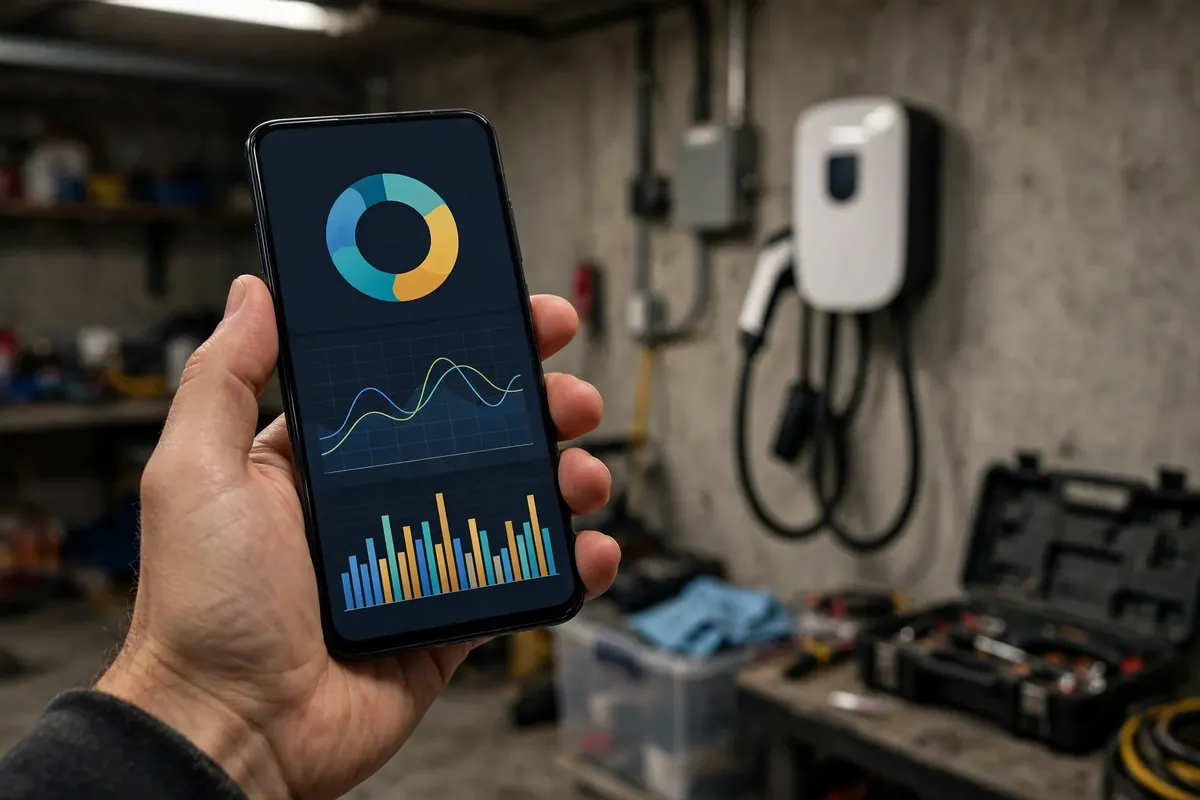
Well-known for: detailed energy monitoring at a friendly price point; pairs with Emporia's home energy monitors.
The Emporia stands out for data lovers: it tracks exactly how much energy goes into the car, which pairs naturally with scheduling around off-peak rates. It supports up to 48 amps hardwired and integrates with Emporia's Vue home energy monitoring system, so you can see EV charging in the context of your whole home's usage.
Consider it if: you want granular energy data, you already use (or plan to use) Emporia home energy monitoring, and you like a straightforward hardwired 48-amp setup.
5. Wallbox Pulsar Plus
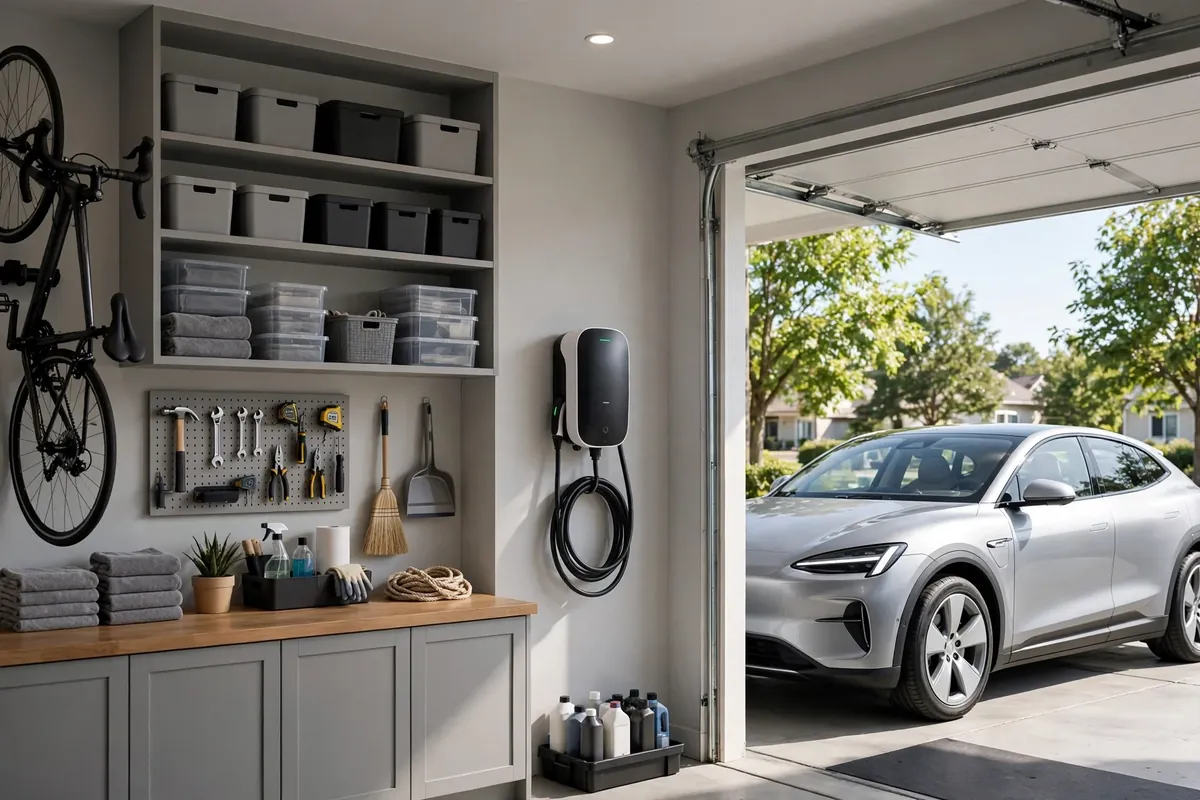
Well-known for: compact size; strong power-sharing for two-EV homes.
The Pulsar Plus is notably small — roughly the size of a lunchbox — which matters in tight garages. Its headline feature is power sharing: two Pulsar Plus units on one circuit automatically split available power between two cars, a clean solution for two-EV households that don't want to run two full circuits. It supports up to 48 amps and comes in NACS and J1772 versions with a polished app.
Consider it if: garage space is tight, you have two EVs (or plan to), and you want intelligent load sharing without panel work.
6. Enphase IQ EV Charger
Well-known for: solar integration; a natural fit for homes with Enphase solar systems.
If your roof already has Enphase microinverters, the IQ EV Charger slots into the same monitoring ecosystem — you can see solar production and EV charging in one app and prioritize charging from your own solar. It is a solid Level 2 unit on its own merits, but its real appeal is the integration for solar households.
Consider it if: you have (or are adding) Enphase solar and want charging and solar managed together.
7. Grizzl-E
Well-known for: rugged simplicity; a no-nonsense metal enclosure built for harsh conditions.
The Grizzl-E is the workhorse pick: a sturdy, no-frills Level 2 charger with adjustable amperage dip switches inside the unit. It is popular for outdoor and harsh-environment installs — relevant in Florida, where heat, humidity, and storms punish delicate electronics. Fewer smart features than the app-heavy units, but owners who want "mount it and forget it" like it for exactly that reason.
Consider it if: the charger will live outdoors, you value durability over app features, and you want adjustable amperage without fuss.
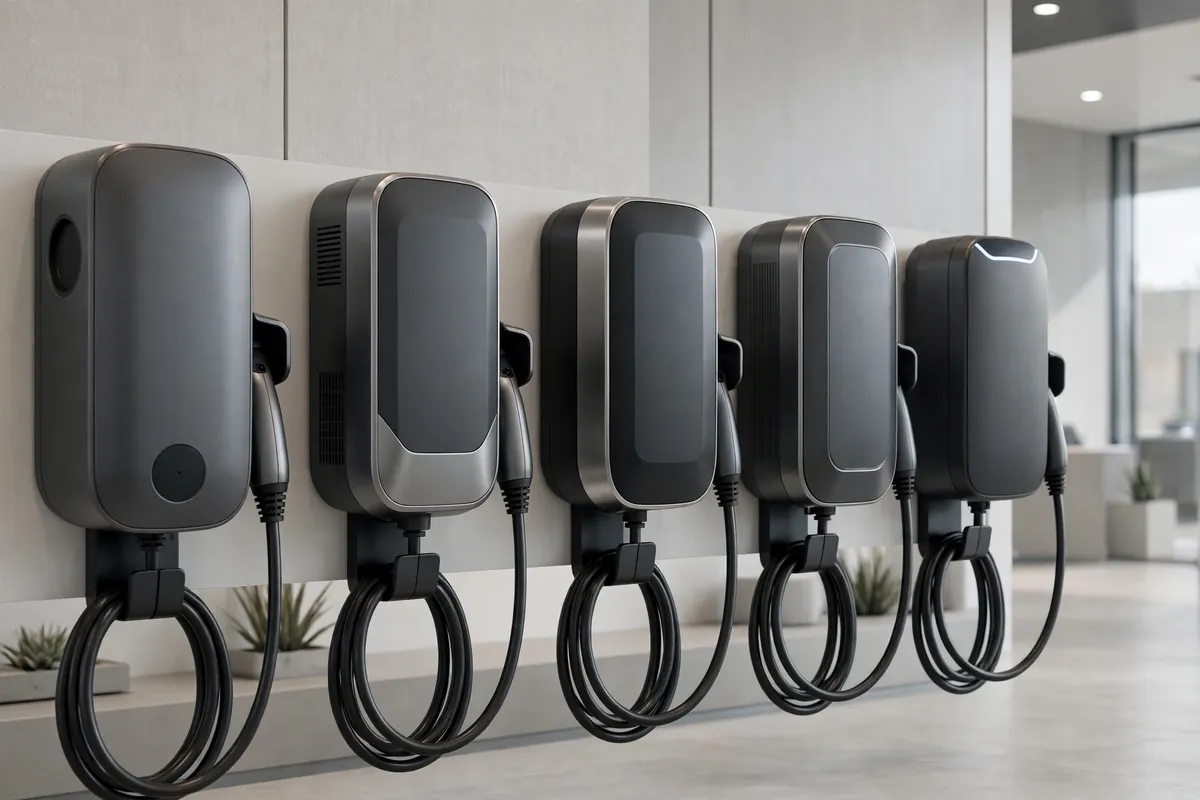
8. How to Choose: A Simple Decision Path
Still torn? Walk this path:
- What cars? All-Tesla → Tesla Wall Connector (or Universal for flexibility). Mixed or non-Tesla → ChargePoint Home Flex, Wallbox, Emporia, or Grizzl-E in the right plug type.
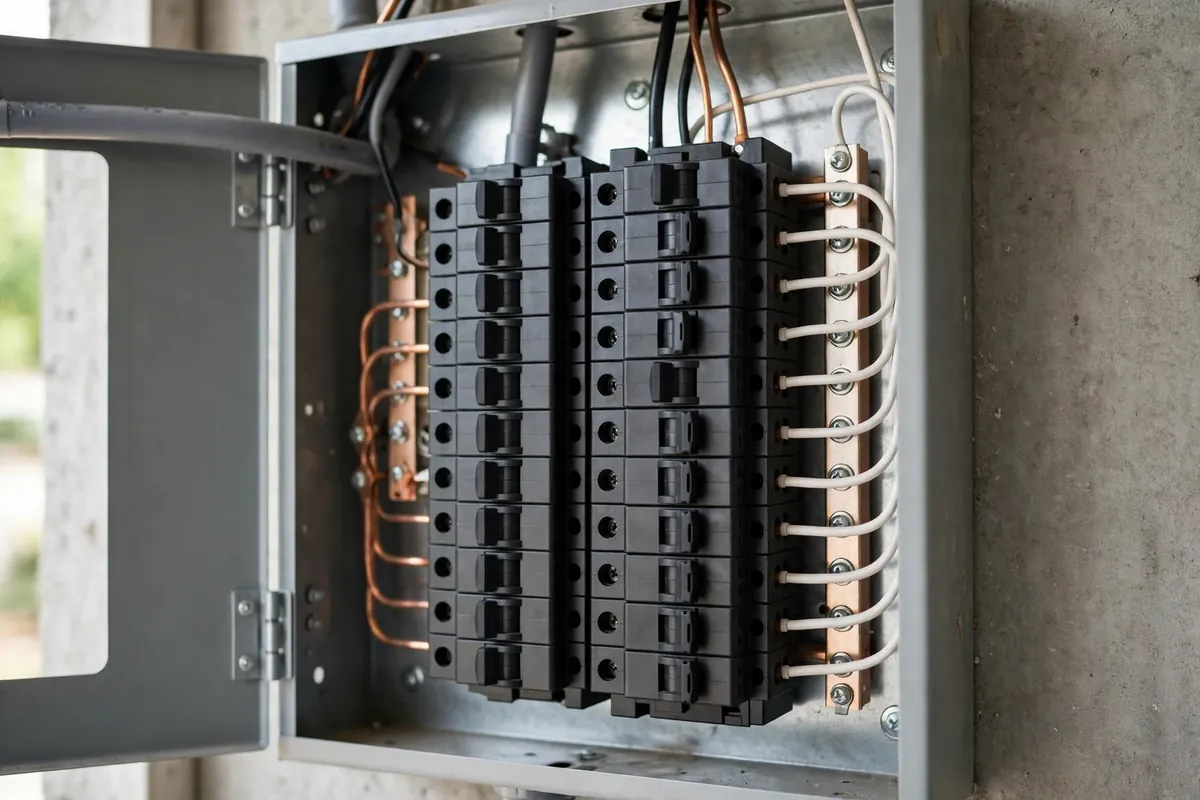
- What does your panel support? Get the load calculation first. If only a smaller circuit fits, pick an adjustable-amperage unit (Home Flex, Grizzl-E) rather than fighting the panel.
- Indoor or outdoor? Outdoor in Florida → confirm outdoor rating and consider rugged builds (Grizzl-E) or shaded mounting.
- One EV or two? Two → power-sharing capable units (Wall Connector, Pulsar Plus) can save you a second circuit.
- Solar? Enphase solar home → IQ EV Charger for unified monitoring.
- Data or simplicity? Energy nerds → Emporia. Set-and-forget → Grizzl-E.
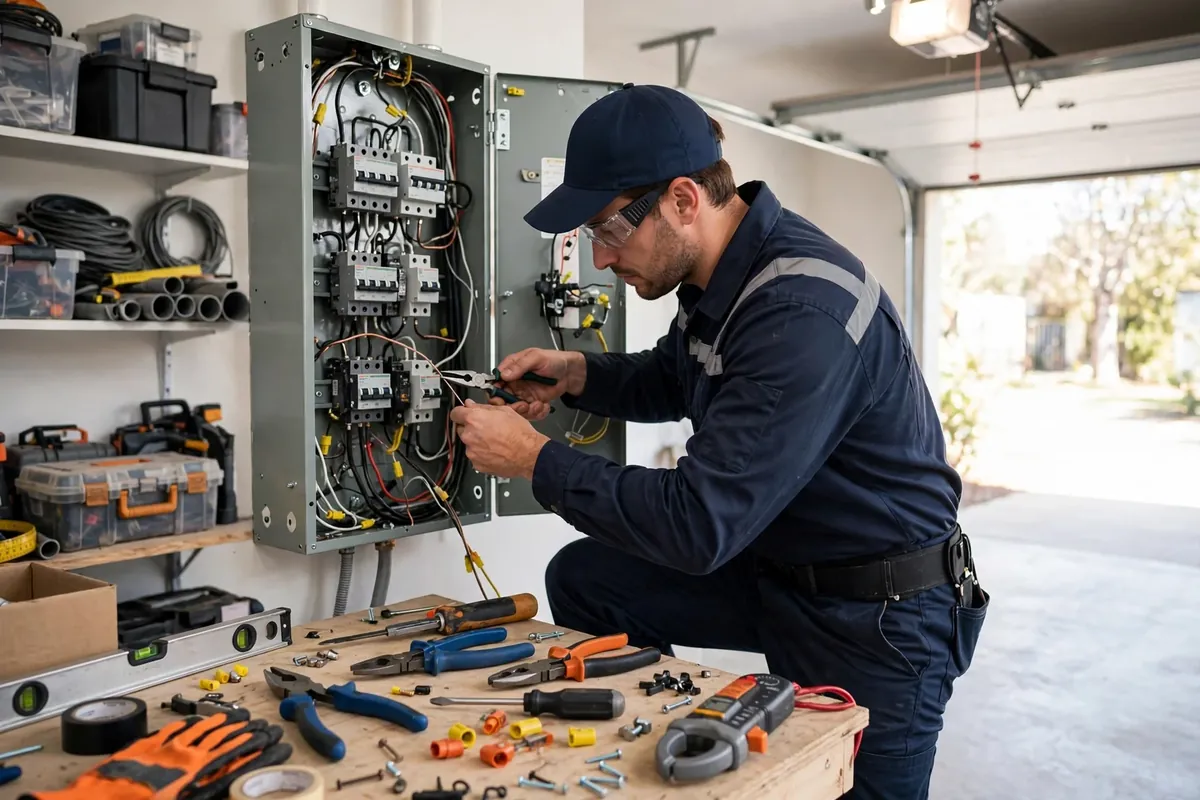
And the step everyone skips: confirm the choice with your installer before ordering. The right charger on paper is the wrong charger if your panel can't feed it.
Key Takeaways
- Compare chargers on plug type, amperage, hardwired vs plug-in, smart features, outdoor rating, and power sharing — not brand hype.
- Tesla Wall Connector suits Tesla households; ChargePoint Home Flex suits mixed-EV households with its adjustable amperage.
- Emporia is the energy-monitoring pick; Wallbox Pulsar Plus is the compact two-EV pick; Enphase IQ fits solar homes; Grizzl-E is the rugged outdoor pick.
- Check your car's onboard charger limit before paying for more amperage than it can use.
- Always confirm your panel can support the charger — with a load calculation — before you buy.
What should I look for when choosing a home EV charger?
Plug type (NACS, J1772, or universal), amperage matched to your car and panel, hardwired vs plug-in, smart scheduling features for off-peak rates, an outdoor rating if it will live outside, and power-sharing if you have two EVs. Match these to your situation and the brand decision gets easy.
What is the difference between a hardwired charger and a NEMA 14-50 receptacle?
A hardwired charger wires directly into the circuit — fewer failure points, up to 48 amps, and no GFCI-breaker complications. A NEMA 14-50 receptacle lets you plug a portable charger in (and take it when you move) but tops out around 40 amps and needs GFCI protection under current code. For a fresh install, electricians generally recommend hardwired.
Do smart/WiFi features on a charger actually matter?
More than you'd think — mainly for one reason: scheduled charging. In Florida, overnight off-peak rates make scheduled charging genuinely worthwhile, and app-based energy tracking shows you what charging really adds to your usage. If you will never open the app, a simpler unit is fine.
Are home EV chargers weatherproof enough for outdoor installation in Florida?
Many are — but check the rating before you buy. Look for a unit explicitly rated for outdoor use, mount it out of direct afternoon sun, and keep the cable off the ground. Florida heat, humidity, and driving rain shorten the life of electronics that aren't built for them.
Where is the best place to install an EV charger at home?
Where the car parks every night, with the cable able to reach the charge port without stretching across walkways. Inside the garage on the wall nearest the panel is ideal; outdoors, choose a shaded spot near the parking space. Avoid spots where the cable becomes a tripping hazard.
Where do I buy the EV charger — from the installer or separately?
Either works. Buying separately lets you shop around; buying through the installer means the unit arrives matched to the planned circuit and is often covered under the same installation visit. What matters most is confirming the model with your installer before it ships — the wrong amperage or plug type is an annoying return.
Related Posts
- Level 1 vs Level 2 vs Level 3 EV Charging Explained
- Tesla Wall Connector vs ChargePoint Home Flex
- What to Expect During EV Charger Installation in Orlando
Already picked a charger? Make sure your home is ready for it — schedule a site survey: Call Now
Sources: Manufacturer feature documentation (Tesla, ChargePoint, Emporia, Wallbox, Enphase, Grizzl-E); SAE J3400/NACS adoption coverage; ElectricianTalk pro forum on hardwired vs receptacle installs; Google autocomplete research on "best home EV charger 2026" buyer questions; Amazon product-listing Q&A themes.