Quick Answer
Yes, two EVs can charge at one home, and most two-EV households do not need two full-power circuits to manage it. One shared charger works when driving is light and schedules cooperate. Two chargers with power sharing — where the units communicate and divide one circuit's capacity between them — work for the great majority of households, because cars sit parked far longer than they need to charge. Two independent full-power circuits are the right answer mainly for high-mileage households with panel capacity to spare. The decision starts with a load calculation, not with a shopping cart.
1. Start With the Math of Two Cars
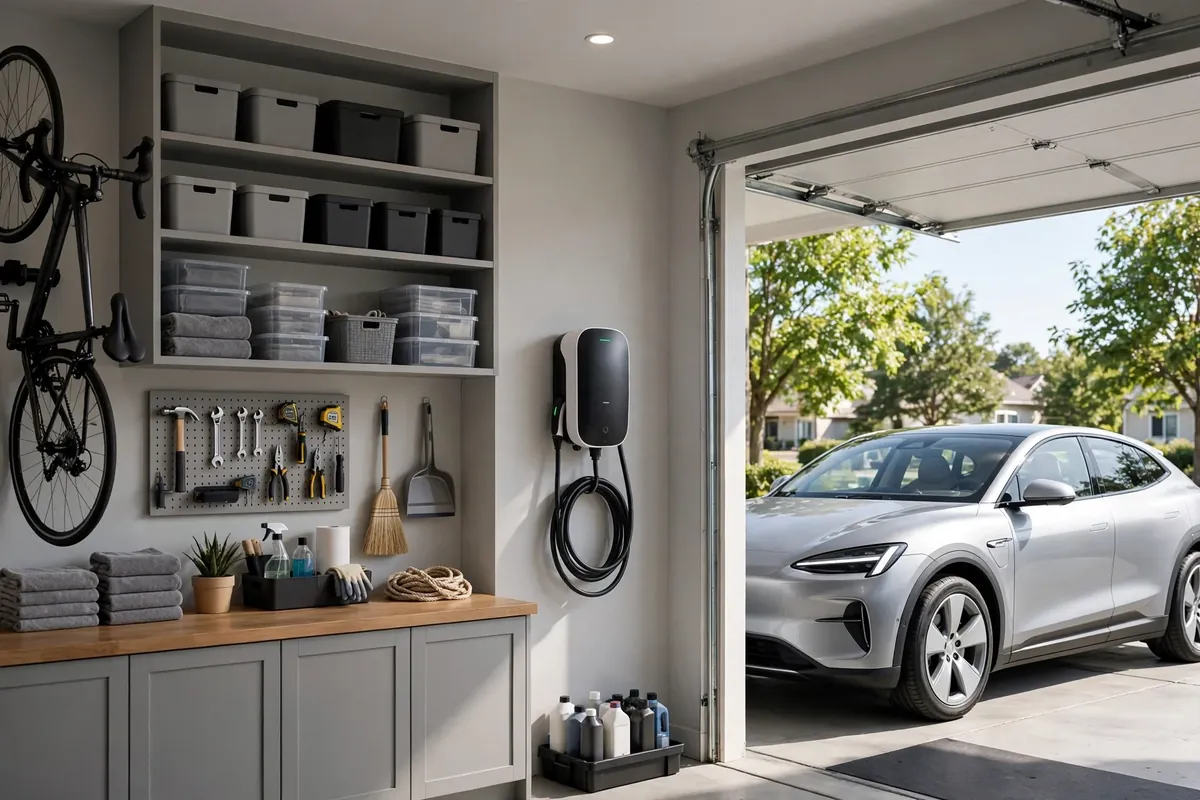
Before choosing hardware, add up what the two cars actually need. The useful unit is miles per day, because home charging replaces miles, not percentages. A car driven 35 miles a day needs roughly four hours on a modest Level 2 setting to recover those miles; a car driven 60 miles needs about seven. Most households discover their two cars together need somewhere between five and nine hours of charging on a typical day — and the cars are parked at home for ten to fourteen hours overnight. That gap between charging needed and time available is the whole ballgame. It is why sharing works: the constraint is rarely total energy, it is plugs and habits.
Also note when each car is home. Two cars that both arrive at 6 PM and leave at 7 AM can time-share almost anything. A household where one car works nights and one works days effectively owns two separate charging windows and can share a single charger without any negotiation at all. And be honest about the worst week, not the average one — the setup has to survive the road-trip-return Sunday night when both cars come home nearly empty.
If your household is at the low end — two modest commutes, staggered hours — option one below may be all you ever need. If both cars do serious miles, skip ahead to power sharing.
2. Option One: One Charger, Two Cars, a Routine
The simplest setup is the charger you already have, plus a routine. The cars alternate nights, or the higher-mileage car gets weeknights and the other tops up on weekends, or whoever gets home first plugs in and the cable swaps at bedtime. It costs nothing, it needs no electrician, and for the right household it works indefinitely.
Its limits are human rather than electrical. Someone has to remember the swap. A forgotten night becomes a low-battery morning. Guests, schedule changes, and one car hogging the plug all erode the system. There is also a wear consideration: one charger doing double duty accumulates connector and cable wear at roughly twice the rate — our EV charger lifespan guide covers what that means over the years.
The verdict: one shared charger is a legitimate long-term answer for light-driving, staggered-schedule households, and a perfectly good trial period for everyone else. Live with two EVs for a month before deciding; the cars will tell you which option you need.
3. Option Two: Two Chargers That Power-Share
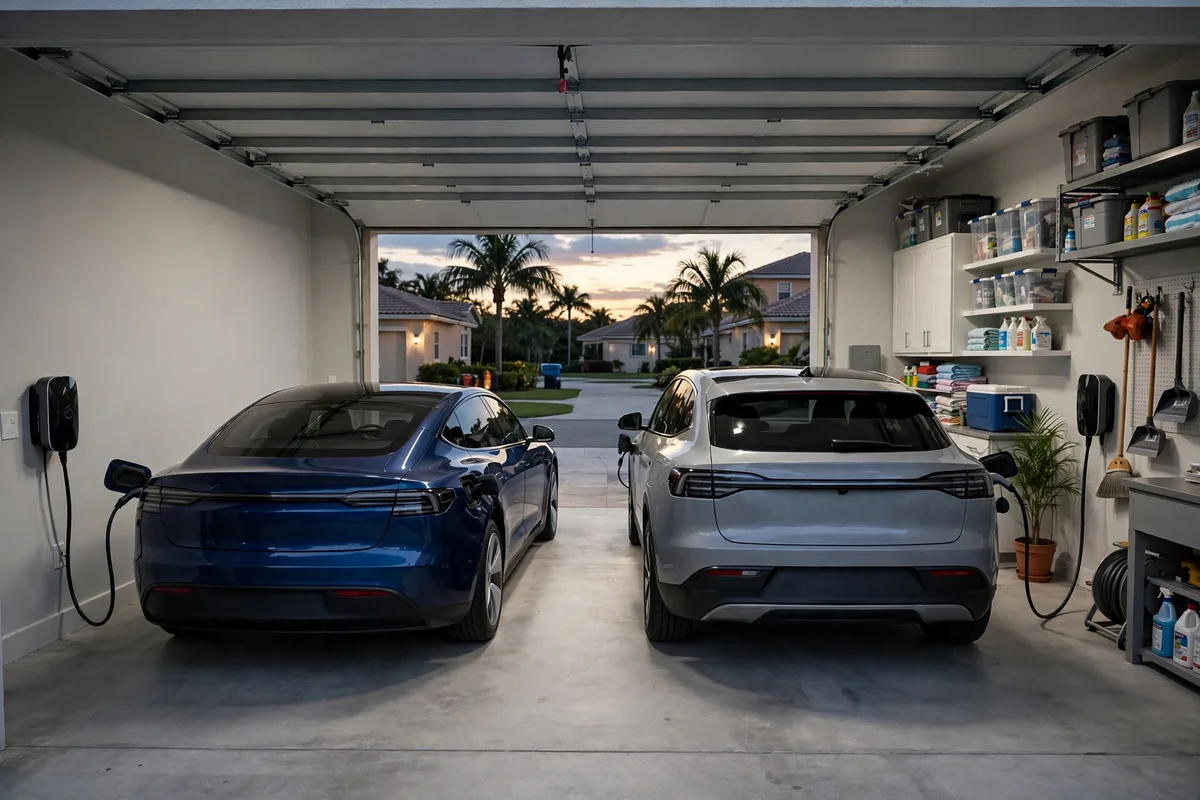
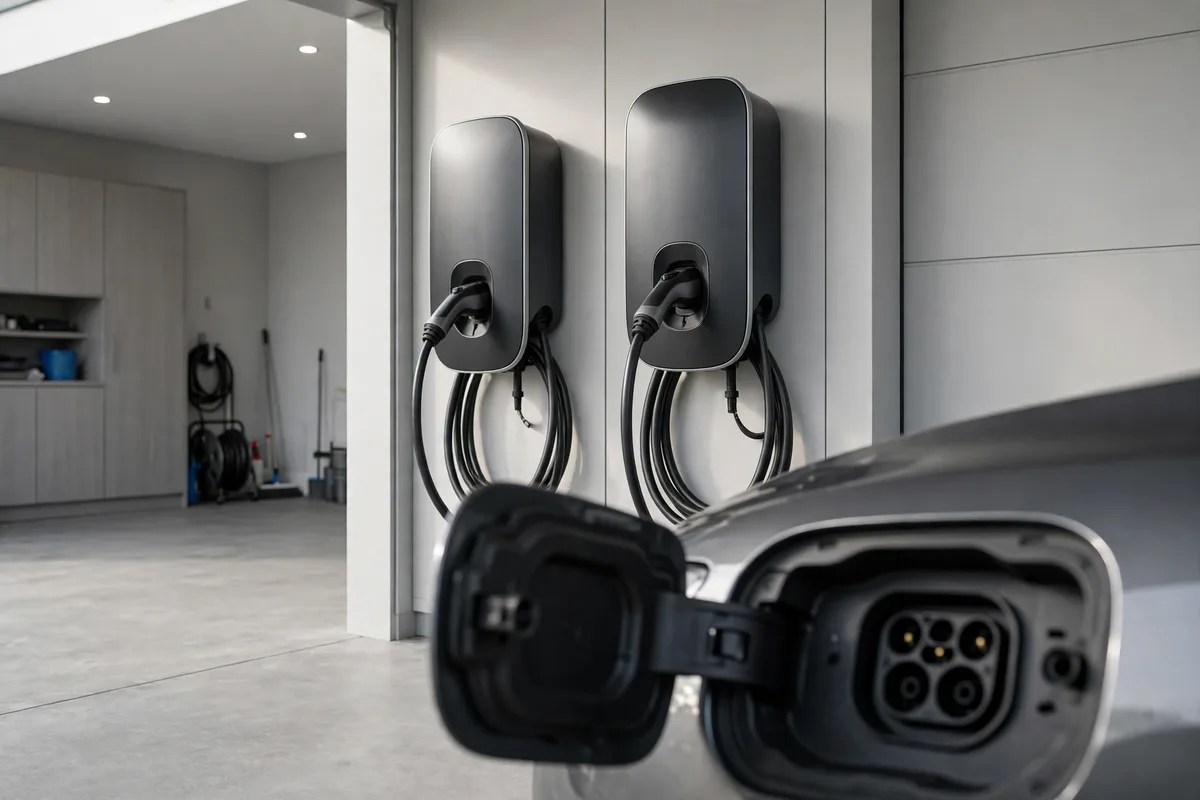
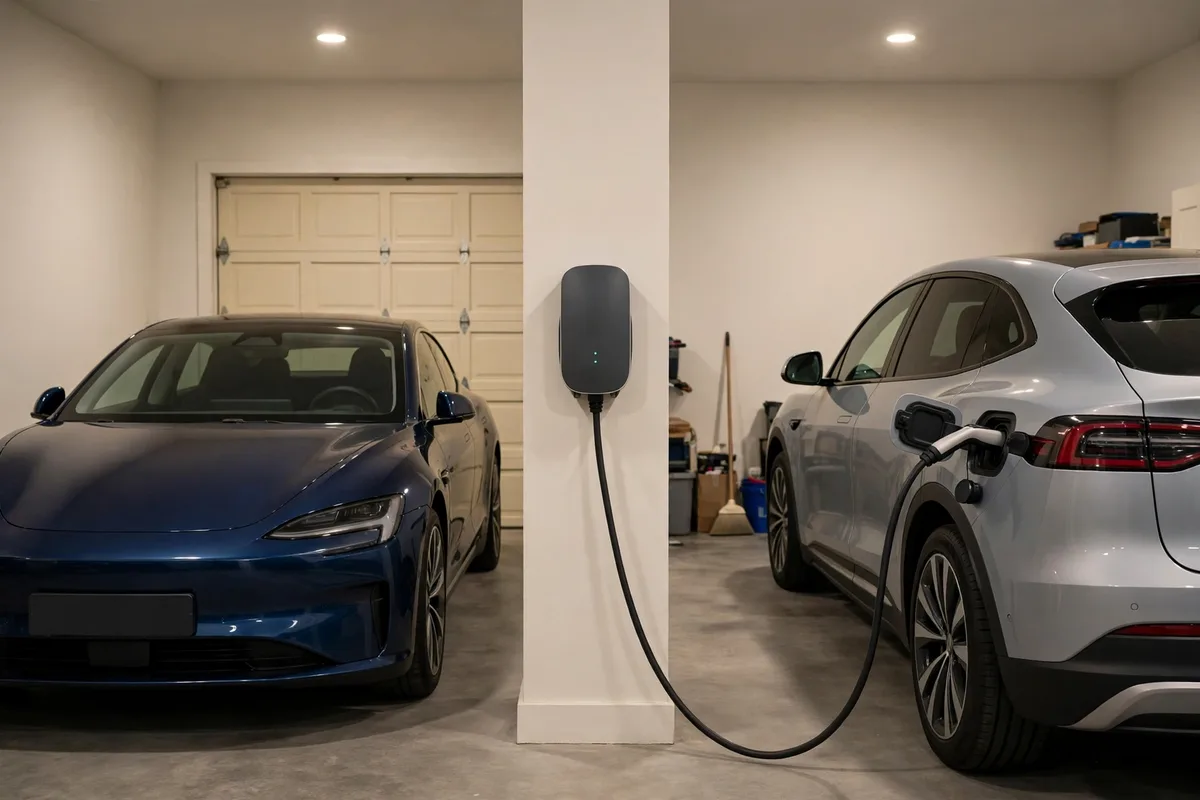
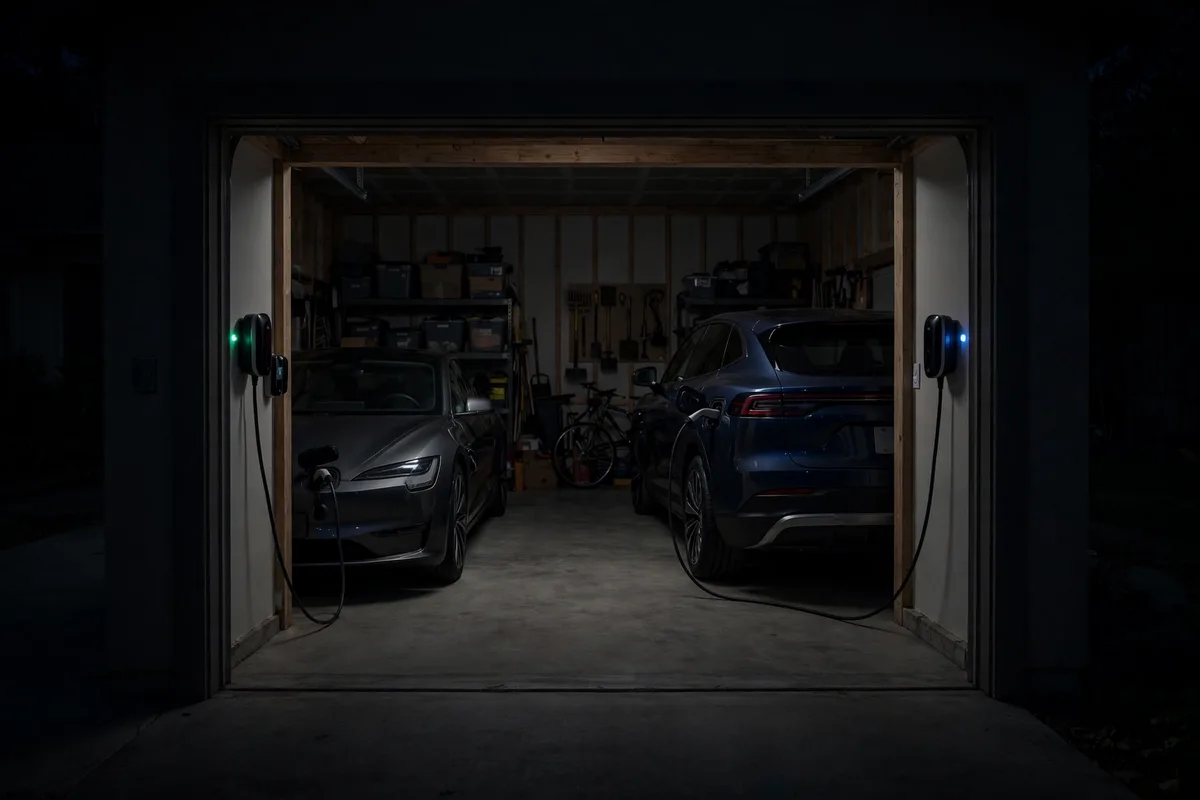
Power sharing (also called load sharing or group power management) is the feature designed precisely for this problem. Two or more chargers are installed — often on a single circuit — and they communicate with each other, wired or wirelessly, to divide the available current. One car plugged in gets the circuit's full charging speed. Plug in the second car and the two split the capacity, each charging at roughly half. Unplug one, and the other speeds back up automatically. The combined draw never exceeds what the circuit was built for, which is what makes it panel-friendly.
Tesla documents this for its Wall Connectors as Group Power Management, allowing up to six Gen 3 Wall Connectors to share power under one managed limit, and other manufacturers offer equivalent features — the site's existing comparison of Tesla Wall Connector vs ChargePoint touches on how the ecosystems differ. The practical effect for a two-car home: a single 60-amp circuit, which alone serves one car at 48 amps, can serve two cars at 24 amps each when both are plugged in — and 24 amps still replaces well over a hundred miles across a night's parking. For most households, that is not a compromise at all. It is invisible.
Power sharing also solves the panel problem elegantly. A home whose load calculation cannot support two independent charger circuits can often support one shared circuit comfortably. And because the second charger rides the same circuit run, installation is typically simpler than a second full run to the panel — though how much simpler depends on where the cars park relative to each other and the panel, which is a site-specific question.
4. Option Three: Two Independent Circuits
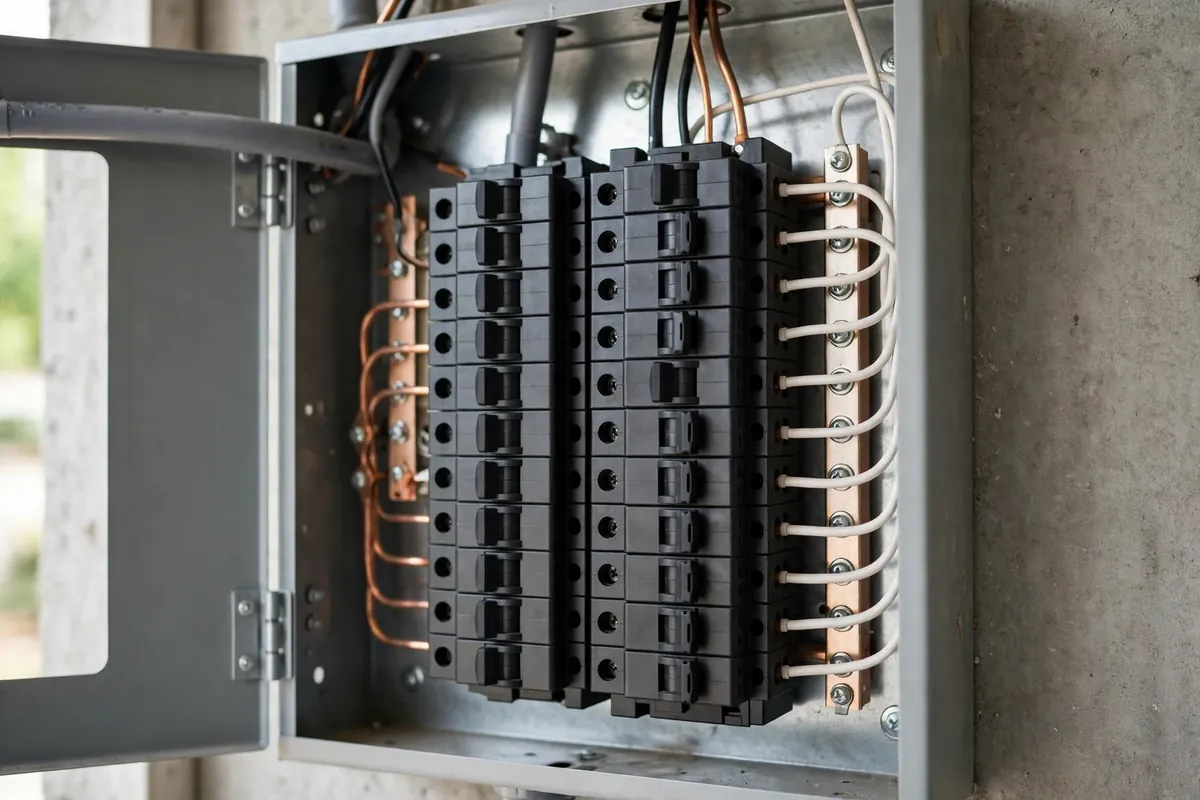
The maximum-flexibility setup: each charger gets its own dedicated circuit and breaker, and both cars can charge at full speed simultaneously, every night, regardless of each other. This is the right choice when both cars genuinely need it — two long commutes, a home business with vehicles returning empty, a rideshare driver in the household — and when the panel has the capacity to feed both circuits alongside everything else the house runs.
Capacity is the catch. Two 60-amp charger circuits represent a large block of a 200-amp panel's realistic budget once air conditioning, cooking, laundry, and pool equipment take their shares, and many 100-amp panels cannot host even one additional full circuit, let alone two. The load calculation decides. When the numbers do not fit, the choices are power sharing, a load management system that throttles chargers against whole-house demand, or a panel or service upgrade — our panel upgrade guide walks through that decision honestly, and our article on Level 2 charging on a 100-amp panel covers the tightest case in detail.
5. The Details That Make Two-Charger Life Easy
Court placement matters. Put the chargers where both cars' charge ports are reachable without cable acrobatics. Charge port locations vary by car — front, rear, left, right — and a two-car setup should be planned against both cars' ports and how each is parked (nose-in versus backed-in).
Cable length is a real constraint. Standard cables reach comfortably within a bay or two. Cars parked in the driveway change the geometry; outdoor-rated units by the garage door can serve both a garage car and a driveway car in some layouts.
Scheduling smooths everything. Most chargers and cars can schedule charging windows. Off-peak scheduling — which our electric bill article discusses from the cost side — also staggers loads naturally: the high-mileage car charges early in the night, the other later.
Think about the third car. Not a joke in Florida multigenerational households: if a third EV is plausible in a few years, a power-sharing system that can add units under one managed limit is far easier to extend than independent circuits consuming panel space one by one.
6. What a Two-Charger Installation Involves
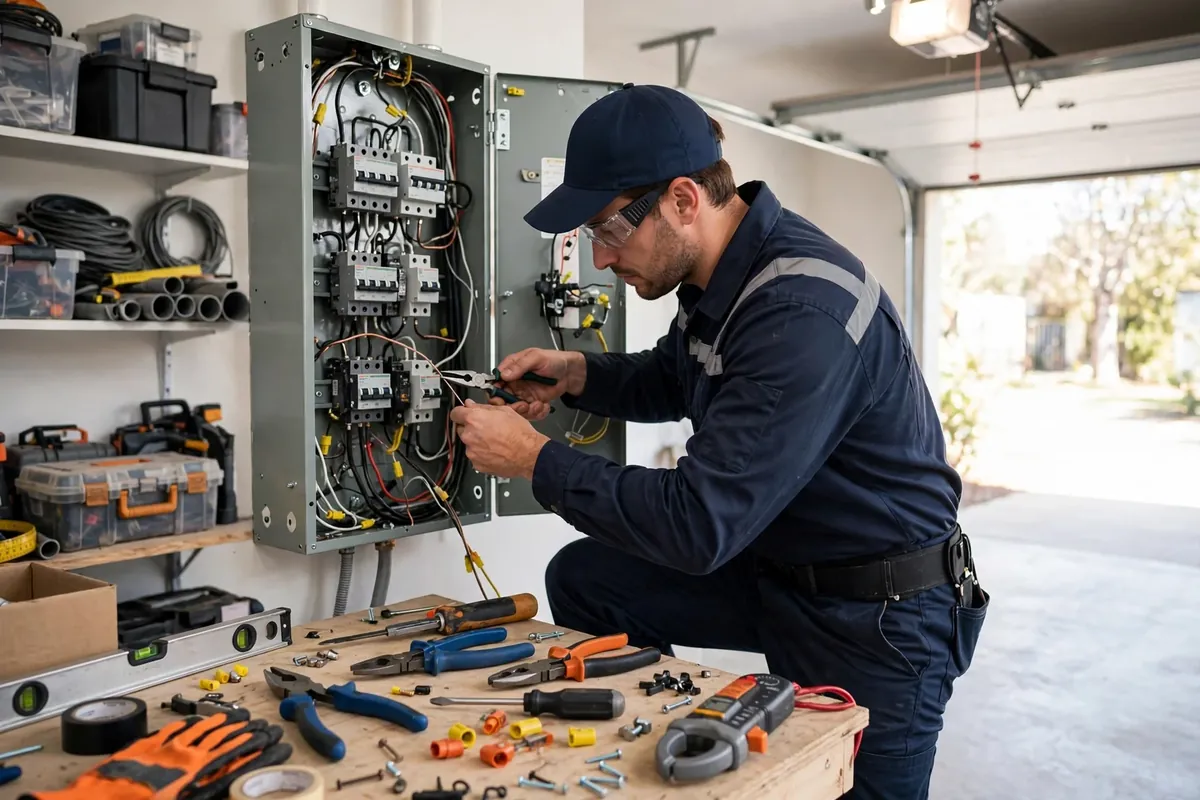
For the shared-circuit route, an installer evaluates the panel with a load calculation, confirms the circuit size the sharing group will live on, runs the circuit to the first charger and onward to the second where the layout allows, mounts and configures both units, sets the group's total current limit so the pair can never exceed the circuit, and verifies the sharing behavior with both cars plugged in. For independent circuits, it is two of everything in our Level 2 installation description, plus the panel arithmetic to support both.
Either way, permits and inspection apply to the new circuit work in the Orlando area — the permit guide explains the process — and the configuration step matters as much as the wiring: a power-sharing group whose limit was never set correctly is no safer than two chargers guessing. Done properly, the system is set-and-forget: plug in either car, any time, and the chargers sort out the arithmetic themselves.
7. Choosing: A Simple Decision Path
- Both cars under ~40 miles a day, staggered schedules? Start with one shared charger. Revisit only if the routine frays.
- Typical two-commuter household, cars home overnight together? Two chargers with power sharing on one circuit. This is the sweet spot for most Orlando homes.
- Two heavy-mileage cars, or vehicles that must both be full every single morning? Independent circuits if the load calculation allows; if it does not, load management or a panel upgrade becomes part of the honest plan.
- Panel already tight with one charger? Do not add a second full circuit on hope. Power sharing or managed charging is designed for your exact situation.
Key Takeaways
- Two cars usually need five to nine hours of charging between them nightly, and they are parked for ten to fourteen — sharing works because time is plentiful even when power is shared.
- One charger plus a routine is a real solution for light-driving households, and the right trial before spending anything.
- Power sharing lets two chargers divide one circuit intelligently: full speed for one car, split speed for two, never over the circuit's limit.
- Two independent circuits are for high-mileage households whose panels pass the load calculation — many 100-amp and loaded 200-amp panels cannot host them.
- Placement, cable reach, and scheduling decide daily happiness as much as amperage does.
- Start with a load calculation. It is the difference between a system that just works and a breaker that objects at 2 AM — see why chargers trip breakers if yours already does.
Can two EVs share one home charger?
Yes, and many households do it permanently. The cars alternate — different nights, or a mid-evening cable swap — and as long as the combined daily miles are modest, one Level 2 charger keeps both cars ahead of their driving. It works especially well when the cars are home at different hours. The weaknesses are practical, not technical: forgotten swaps, both cars arriving empty on the same night, and double wear on one charger's cable and connector.
How does power sharing between two chargers actually work?
The chargers form a managed group with one total current limit matched to their circuit. They communicate — wirelessly in most current systems — and divide that limit among whichever cars are plugged in. One car alone receives the full rate; two cars split it; when one finishes or unplugs, the other automatically speeds up. The group never draws more than the circuit allows, which is why power sharing is the standard answer for two chargers on a panel that cannot feed two independent circuits.
Do both cars charge at half speed when two chargers share a circuit?
When both cars are charging at the same time, yes, roughly — each gets about half the shared capacity. But half of a Level 2 circuit is still several times faster than a wall outlet, and across a full night parked, both cars typically finish with hours to spare. In practice the split rarely matters, because the limiting factor for overnight charging is time parked, not peak speed. It matters only for genuinely high-mileage cars on short parking windows.
Can a Tesla and a non-Tesla share the same charging setup?
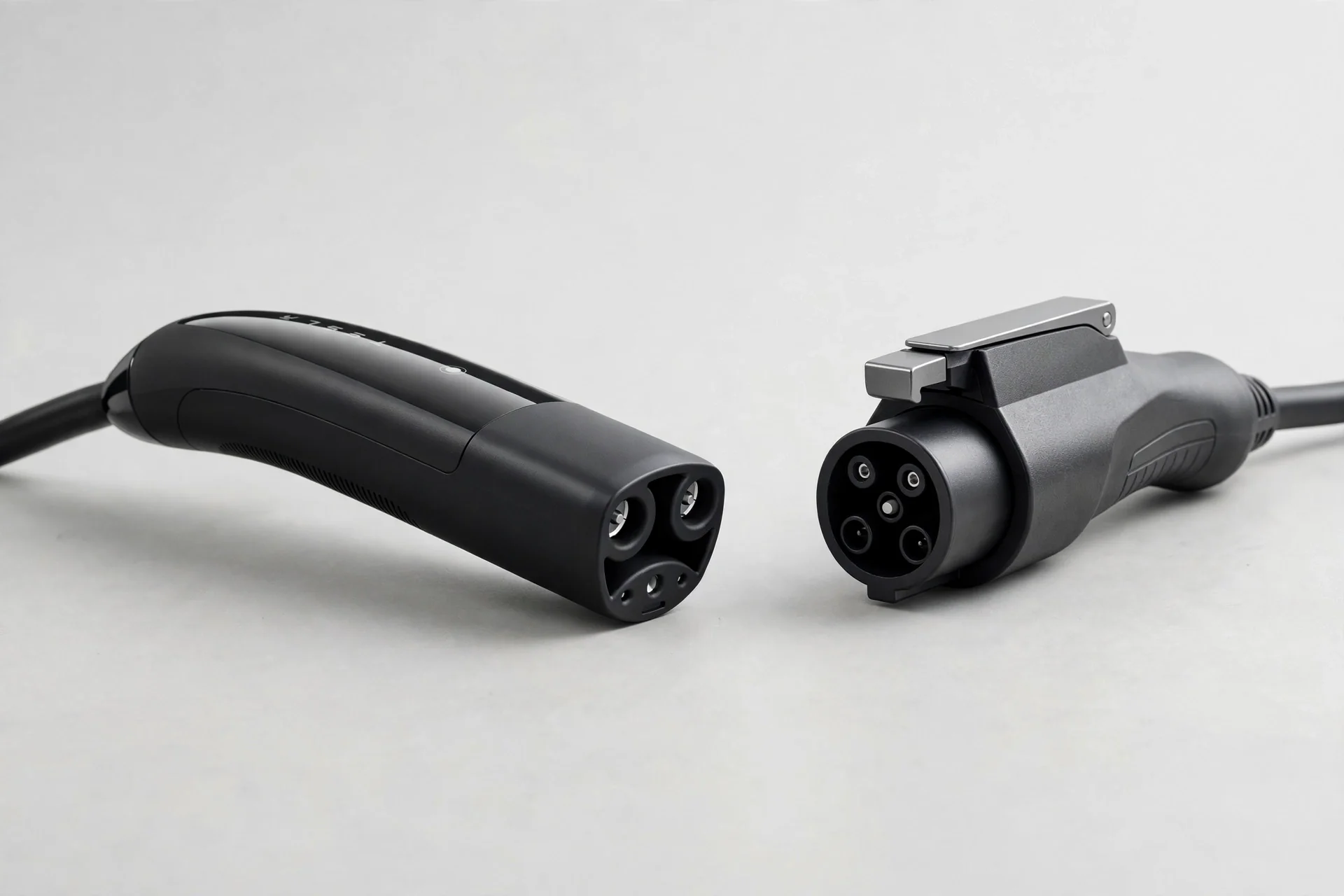
Yes, with attention to connectors. Power-sharing groups generally require chargers of the same brand family, so a mixed household either uses that brand's universal-connector model — Tesla's Universal Wall Connector carries a built-in adapter for non-Tesla cars — or runs chargers from a brand that serves both port types. A mixed household can also simply use two different chargers on separate or managed circuits. An installer can map the options against the two cars you actually own, including which ports each car has.
What if our two EVs leave at different times in the morning?
That usually makes sharing easier, not harder. The earlier-departing car gets plugged in first and, on a power-sharing setup, receives priority by physics — it has more of the night to itself after the other car unplugs, or it can be scheduled first in the evening. With one shared charger, the early car takes the evening slot and the later car takes the overnight slot. Staggered departures stretch the charging window, which is the resource two-EV households actually run on.
Can I add a second charger later if I start with one?
Almost always, and planning for it during the first installation saves money. Tell your installer a second EV is possible: choosing a charger brand whose units can form a power-sharing group later, mounting with the second car's parking spot in mind, and confirming the panel's remaining capacity all make the second install straightforward. Added later on its own circuit or as a sharing partner, the second charger is routine work — the load calculation just gets run again with two chargers in the picture.
Related Posts
- EV Charger Keeps Tripping the Breaker? Causes and Fixes
- Do You Need a Panel Upgrade for an EV Charger?
- How Long Does an EV Charger Last? Lifespan, Wear Signs, and Making Yours Last
Adding a second EV? Call now at (407) 555-0100 — we run the load calculation first, then design the setup — shared, power-sharing, or dual-circuit — that fits your panel and your mornings across Orlando.
Sources consulted: Tesla Wall Connector Group Power Management and Dynamic Power Management documentation (tesla.com); NEC Article 220 load calculation provisions and Article 625 EV charging requirements; two-EV household charging discussions (r/evcharging, Tesla Motors Club).