Quick Answer
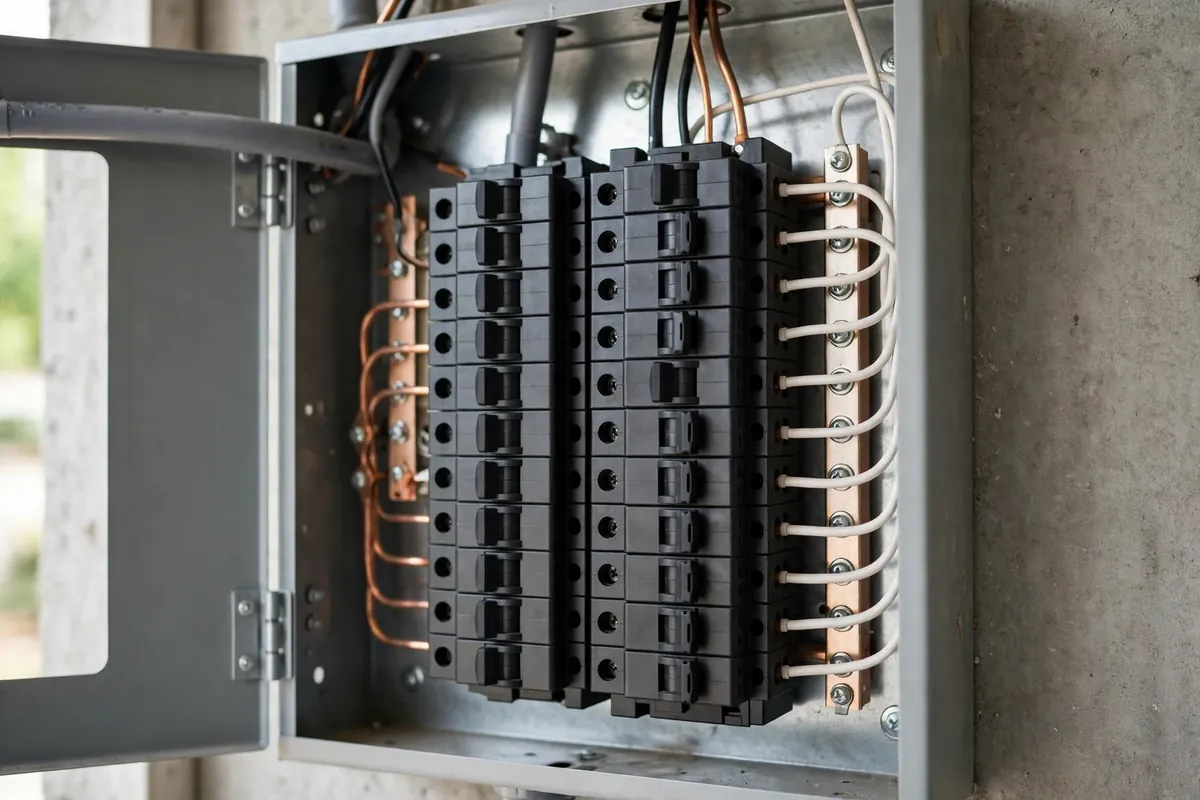
A NEMA 14-50 outlet lets you plug in a portable EV charger and unplug it anytime, while a hardwired charger is permanently wired to its own circuit with no plug or receptacle in between. Hardwired units typically support higher amperage, avoid GFCI-breaker nuisance tripping, and have two fewer connection points that can fail — which is why most electricians recommend hardwiring for a permanent home setup.
1. What a NEMA 14-50 Setup Looks Like
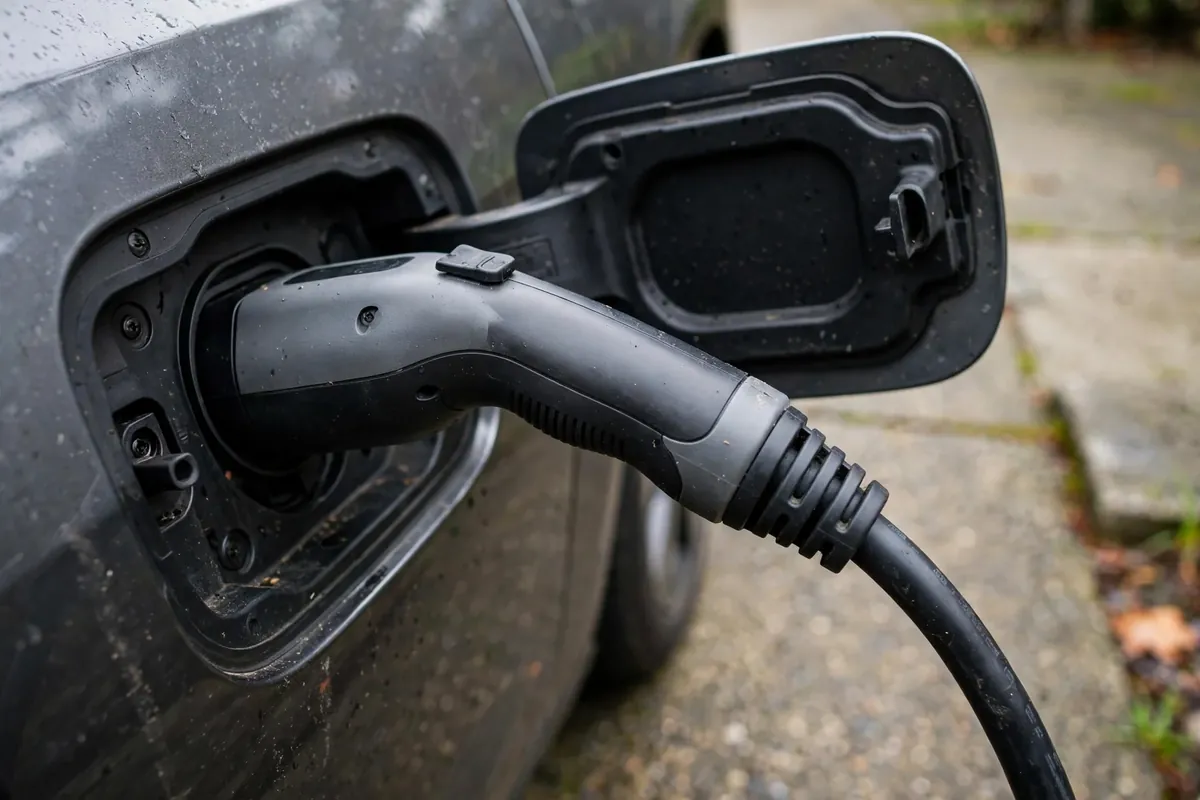
A NEMA 14-50 is the large 240-volt receptacle you may recognize from electric ranges and RV hookups. In an EV setup, an electrician installs the outlet on its own dedicated circuit — usually a 50-amp breaker — and you plug a portable charging cable (like the mobile connector that comes with many EVs) into it. Charging starts when you plug the other end into your car.
The appeal is obvious: it looks familiar, the outlet can serve other purposes later, and if you move, you unplug the charger and take it with you. For renters or anyone who expects to relocate within a year or two, that portability is a genuine advantage. It is also the setup many new EV owners start with, because they can use the portable cord that came with the car while they decide on a permanent solution.
2. What a Hardwired Charger Looks Like
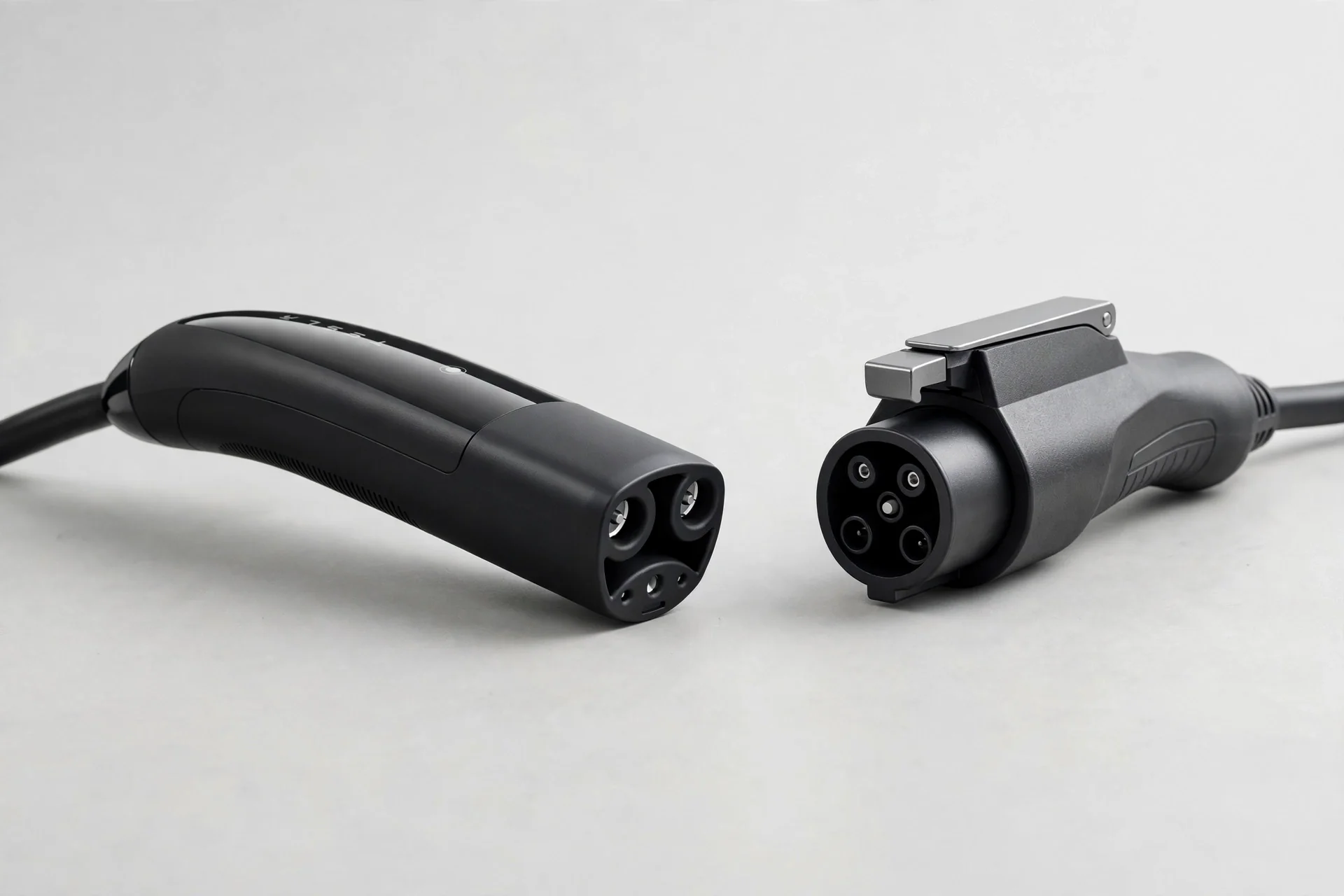
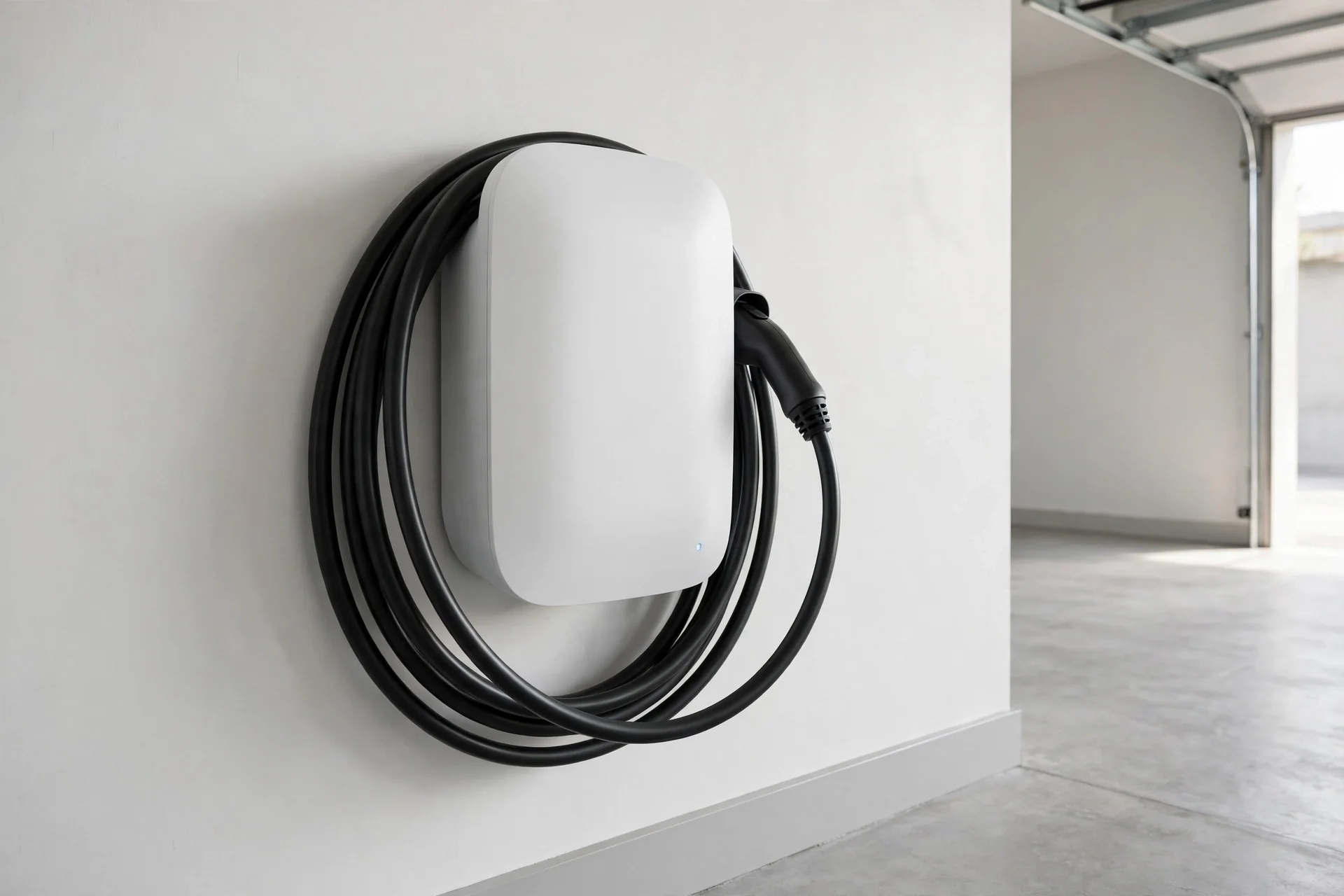
A hardwired charger — often called a wall connector or home charging station — is mounted on the wall and wired directly into its own circuit. There is no plug and no receptacle: the wires run from the breaker panel straight into the back of the unit. Tesla Wall Connector, ChargePoint Home Flex, and similar units are designed to be installed this way, though some models also offer a plug-in version.
The result is a clean, permanent installation. The unit stays on the wall, the cable hangs on its holster, and every charging session is just plug-into-car and walk away. Nothing to connect, disconnect, or wear out at the wall end.
3. Charging Speed: The 40-Amp vs 48-Amp Difference

Here is where the technical difference actually matters. Electrical code requires continuous loads — and EV charging counts as continuous — to stay at 80% of the circuit rating. That gives us:
- NEMA 14-50 on a 50-amp circuit: 50 × 0.8 = 40 amps of charging power (about 9.6 kW).
- Hardwired on a 60-amp circuit: 60 × 0.8 = 48 amps of charging power (about 11.5 kW).
So a hardwired unit on a 60-amp circuit charges roughly 20% faster than a plug-in setup on a 50-amp circuit. In real terms, that is the difference between adding roughly 37 miles of range per hour and roughly 44 miles per hour on a typical EV — meaningful if you drive long distances daily or own an EV with a large battery.
Does the speed difference matter for everyone? Honestly, no. If you drive 30–40 miles a day and charge overnight, a 40-amp plug-in setup refills that in about an hour. The 48-amp advantage matters most for high-mileage drivers, large-battery trucks and SUVs, and two-EV households sharing one charger. An honest electrician will ask about your driving before recommending a circuit size — oversizing for bragging rights is not good design.
4. Reliability: Two Fewer Points of Failure
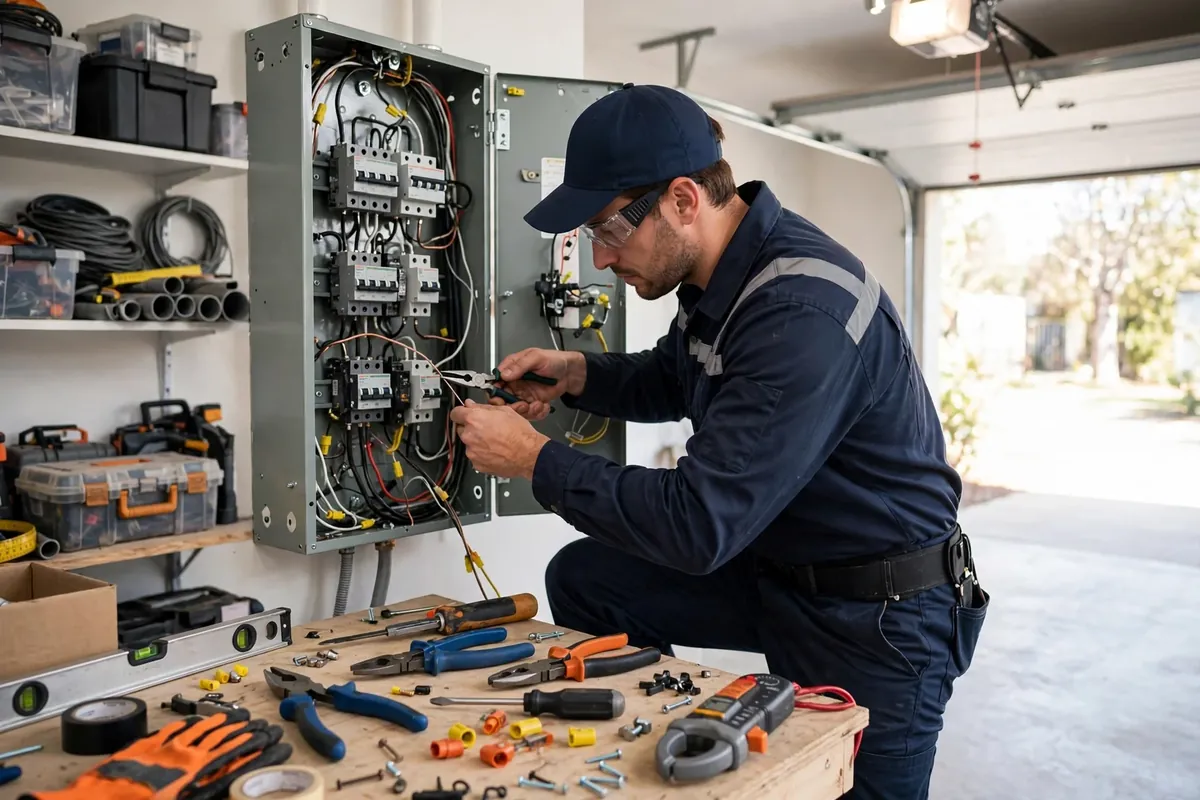
Ask working electricians which they prefer, and you will hear a consistent answer. As one veteran put it on a pro forum: "Hardwire is almost always better — two less points of failure. And with car chargers, these two points seem to fail a lot."
Think about what a plug-in setup adds: the plug blades meeting the receptacle contacts, and the receptacle's internal connections. Both carry high current for hours at a time, night after night. Receptacles can loosen, overheat, and degrade — particularly lower-quality ones or ones installed without proper torque on the terminals. A hardwired connection eliminates both points entirely: wire goes from breaker to charger with nothing in between to work loose.
That does not mean NEMA 14-50 outlets are unsafe — a properly installed, industrial-grade receptacle on a correctly sized circuit is fine. It means hardwired has a structural reliability edge, and over years of nightly charging, that edge compounds.
5. GFCI Rules and Nuisance Tripping
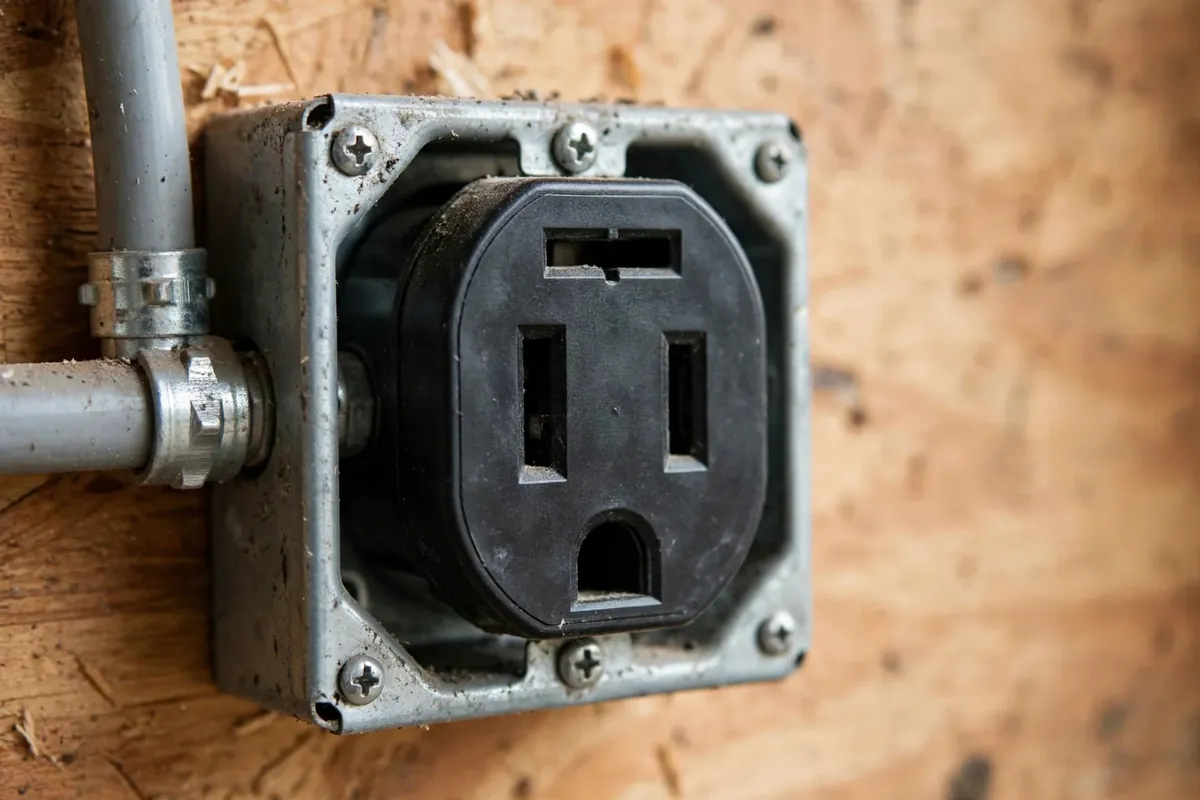
This is the technical detail that has pushed many electricians firmly into the hardwired camp. Current electrical code requires GFCI protection on 240-volt receptacles in garages and similar locations — including a NEMA 14-50 installed for EV charging. That means a GFCI breaker on the circuit.
The problem: EV chargers already have GFCI protection built into the unit itself. Two GFCI devices watching the same circuit can disagree, and owners report nuisance tripping — the breaker shutting off charging sessions for no real fault. Troubleshooting threads are full of owners who fixed repeated tripping by addressing the double-GFCI situation. Hardwired installations sidestep this entirely, because a hardwired charger is not a receptacle and does not trigger the receptacle GFCI requirement. The unit's internal GFCI does the job alone, as designed.
Several electricians now say they simply recommend hardwired for EV chargers since the GFCI receptacle rule took effect. It is one fewer thing to go wrong.
6. Flexibility: Moving, Upgrading, and Taking It With You
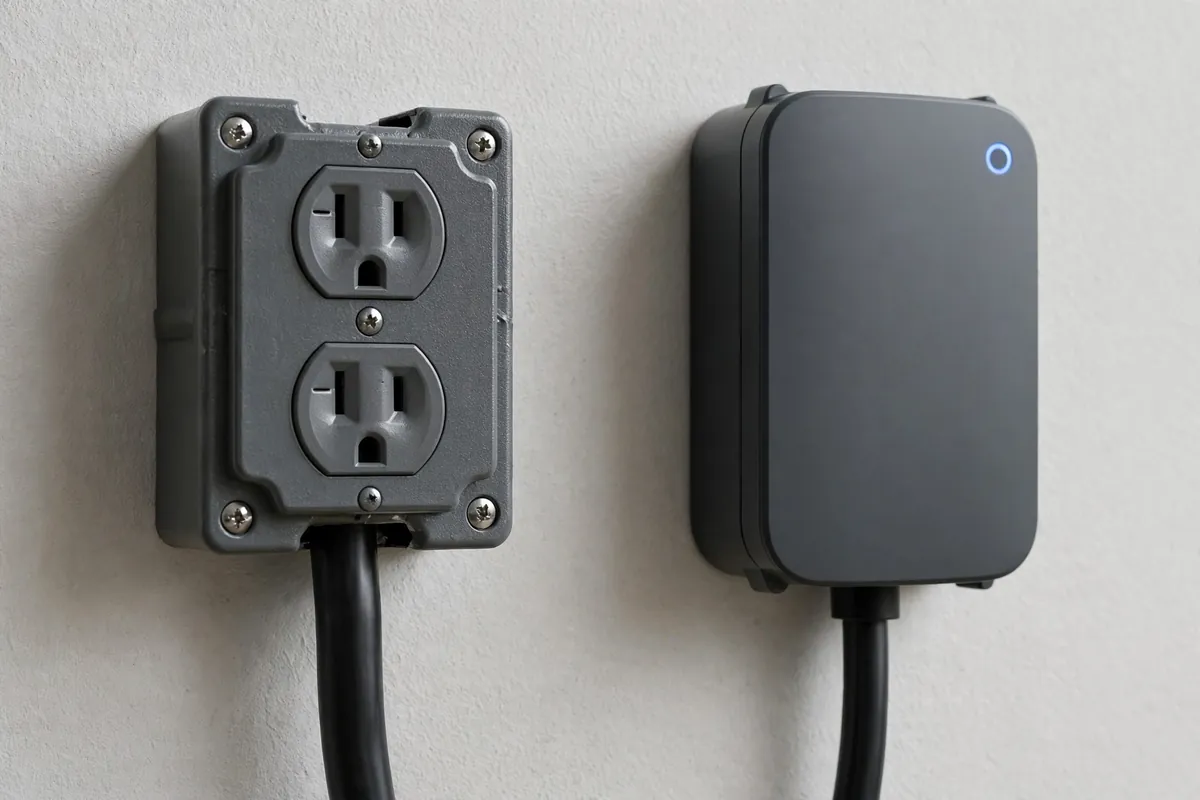
The honest case for the NEMA 14-50 is flexibility:
- Moving soon? Unplug the portable charger, take it along, and the outlet stays as a useful 240V receptacle for the next owner.
- Not sure which EV you will own long-term? A universal outlet works with any portable charger or plug-in wall unit.
- Want a backup? The portable cord lives in the car for road trips and plugs into any 14-50 you find.
The hardwired trade-off: the unit stays with the house unless an electrician removes it. In practice, a wall charger is a selling feature, not a loss — but if you are renting or relocating within a year, plug-in flexibility wins.
One middle path: some wall chargers are sold in plug-in versions with a 14-50 cord. You get the wall-mounted form factor with plug-in flexibility, though you keep the GFCI and failure-point trade-offs of any receptacle setup.
7. Code and Permit Considerations in Florida
Both approaches are permitted electrical work in Florida and generally require a permit and inspection — a receptacle installation is not a loophole around the permit process. Key code points your electrician will handle:
- Dedicated circuit. The charger or outlet gets its own circuit — no sharing with the dryer, no exceptions.
- GFCI protection on the receptacle version, as discussed above.
- Disconnect requirements. Depending on the installation, code may require a disconnecting means within sight of the charger.
- Wire sizing and breaker matching to the charger's configured amperage.
If an installer tells you a 14-50 "doesn't need a permit," get a second opinion. Permitted, inspected work protects your home and your insurance coverage.
- plug-in
- 40A max typical
- portable
- GFCI breaker required
- permanent
- up to 48A
- cleaner install
- no receptacle GFCI issue
8. Which Should You Choose?
- Choose hardwired if: this is your long-term home, you want maximum charging speed, you value reliability, or you drive enough miles that faster overnight charging matters. This is the right answer for most Orlando homeowners.
- Choose NEMA 14-50 if: you may move within a couple of years, you rent, you want to use the portable cord that came with your car, or you want the outlet available for other uses later.
- Either way: hire a licensed electrician, pull a permit, and put the circuit on a proper load calculation — the outlet-vs-hardwired debate matters less than correct installation.
For help deciding based on your panel and driving habits, see our Level 2 charger installation page or read Can You Install a Level 2 Charger on a 100-Amp Panel?.
Key Takeaways
- Both options charge your EV; the difference is in speed ceiling, reliability, and flexibility.
- Hardwired supports up to 48 amps on a 60-amp circuit; plug-in NEMA 14-50 tops out at 40 amps on a 50-amp circuit (80% continuous-load rule).
- Hardwired eliminates the plug and receptacle — two connection points that can loosen or fail over years of nightly charging.
- NEMA 14-50 receptacles require GFCI breaker protection, which can cause nuisance tripping alongside the charger's built-in GFCI.
- NEMA 14-50 wins on portability: unplug and take your charger when you move.
- Both are permitted electrical work in Florida — no shortcuts on permits or licensed installation.
Hardwired vs NEMA 14-50: what changes in day-to-day use?
A hardwired charger is wired directly from your breaker panel into the charging unit — no plug, no outlet. A NEMA 14-50 setup installs a 240-volt receptacle on its own circuit, and you plug a portable charging cable into it. Hardwired is permanent and supports higher amperage; the receptacle version is portable but adds connection points and requires GFCI breaker protection.
Can I charge at the full 48 amps with a plug-in NEMA 14-50?
No. A NEMA 14-50 is on a 50-amp circuit, and code limits continuous loads like EV charging to 80% of the circuit rating — so 40 amps is the ceiling. To charge at 48 amps you need a hardwired charger on a 60-amp circuit. For most daily driving, 40 amps overnight is more than enough.
Why do so many electricians prefer hardwired chargers?
Three reasons come up constantly: fewer failure points (no plug or receptacle to loosen over time), no GFCI-breaker nuisance tripping (hardwired units rely on their own built-in GFCI), and higher charging power on a 60-amp circuit. For a permanent installation in a home you plan to keep, electricians see hardwired as the cleaner, more reliable choice.
Can I take my charger with me if I move?
With a plug-in setup, yes — unplug the portable charger and take it; the NEMA 14-50 outlet stays as a useful receptacle. A hardwired wall unit stays with the house unless an electrician removes and reinstalls it. If you expect to move within a year or two, the plug-in route offers more flexibility.
Does a NEMA 14-50 outlet for EV charging need GFCI protection?
Yes. Current electrical code requires GFCI protection for 240-volt receptacles in garages and similar locations, which includes a NEMA 14-50 installed for EV charging. That means a GFCI breaker on the circuit. Because EV chargers have GFCI built in, the two devices can occasionally conflict and trip — one more reason electricians often steer permanent installs toward hardwired.
Is it safe to use a dryer outlet splitter to charge my EV instead?
Only with a properly listed smart splitter designed for the purpose — and never a simple Y-adapter that can overload the circuit. Dryer outlets were not designed for nightly EV charging loads, and the setup needs to prevent the dryer and car from drawing power simultaneously. A dedicated circuit installed by a licensed electrician is the safer long-term answer.
Related Posts

- Can You Install a Level 2 Charger on a 100-Amp Panel?
- DIY vs Professional EV Charger Installation: What's Safe and What's Not
- Do You Need a Permit for an EV Charger in Florida?
Not sure which setup fits your home? Call now at (407) 555-0100 — we install both NEMA 14-50 outlets and hardwired Level 2 chargers across Orlando, and we will recommend what your panel and driving actually call for.
Sources consulted: ElectricianTalk pro forum ("Is it better to hardwire an EV home charging station" thread); Mike Holt NEC forums on GFCI and continuous-load rules; Tesla Motors Club NEMA 14-50 vs Wall Connector threads; NEC Article 625 (EV charging) continuous-load and GFCI provisions.